


Your Pigmentation Sunscreen Checklist: Daily Protection for Indian Skin
Your Cart
0You May Also Like

₹636 ₹749

₹424 ₹499

₹509 ₹599

₹594 ₹699

₹424 ₹499

₹466 ₹549
Dark spots can feel stubborn, especially after acne or time in the sun. That is not because you missed a step. Melanin-rich skin can produce extra pigment after UV exposure, irritation, or a breakout. A daily sunscreen helps stop that cycle from continuing. For Indian skin, the right formula also needs to feel light enough to reapply in heat and humidity. That is where a pigmentation sunscreen for daily protection and treatment fits into your routine. Asaya formulates for concerns such as acne marks, uneven tone, and dark spots on melanin-rich skin. Use this checklist to choose and use sunscreen with less guesswork.
Choose broad-spectrum SPF 50+ PA++++ for daily sun protection for pigmentation.
Apply enough sunscreen, then reapply after sweat, outdoor time, or when needed.
Pair sunscreen with a simple pigment-care routine. Protection helps treatments do their job.
Melanin gives skin its tone, but it does not make skin immune to sun-triggered dark spots. UV exposure can stimulate melanin production. This may make acne marks, melasma, and uneven skin tone look deeper over time.
A melanin sunscreen should offer strong UVA and UVB protection and suit your skin type, so daily use feels realistic.
UVA exposure can stimulate melanin, which is the pigment in skin. If you are prone to post-acne marks or melasma, this can add to existing uneven tone. Daily sunscreen is therefore part of pigmentation treatment, not just a beach-day step.
A tan is a broad darkening after sun exposure. Hyperpigmentation is extra pigment in specific areas. Acne marks are often post-inflammatory hyperpigmentation. Melasma often appears as larger patches. Sun spots are linked to UV exposure.
Put SPF 50+ and PA++++ at the top of your label checklist. SPF refers to UVB protection. PA++++ signals high UVA protection, which matters for dark spots and uneven tone.
Broad-spectrum coverage is also important. It means the sunscreen is designed to protect against both UVA and UVB rays.
UVA can contribute to melanin stimulation. That makes PA++++ useful when you need sun protection for pigmentation. Unlike UVB rays, UVA penetrates deeper into the skin and can trigger excess melanin production even on cloudy days or indoors near windows — which is why a high PA rating matters specifically for melanin-rich skin prone to dark spots. A high rating does not help much if you apply too little, so formula choice and application both matter.
Start with UV filters and strong SPF ratings. Then look for ingredients that support an even-looking tone. Niacinamide, Vitamin C, licorice extract, Alpha Arbutin, and Kojic Acid are often used in pigmentation care.
Do not treat a brightening ingredient as a replacement for sunscreen. It works alongside protection, not instead of it.
Alpha Arbutin and Kojic Acid are tyrosinase-inhibiting actives. Tyrosinase is linked to melanin production. These ingredients can be part of a routine for existing dark spots, while sunscreen helps limit new UV-triggered pigment.
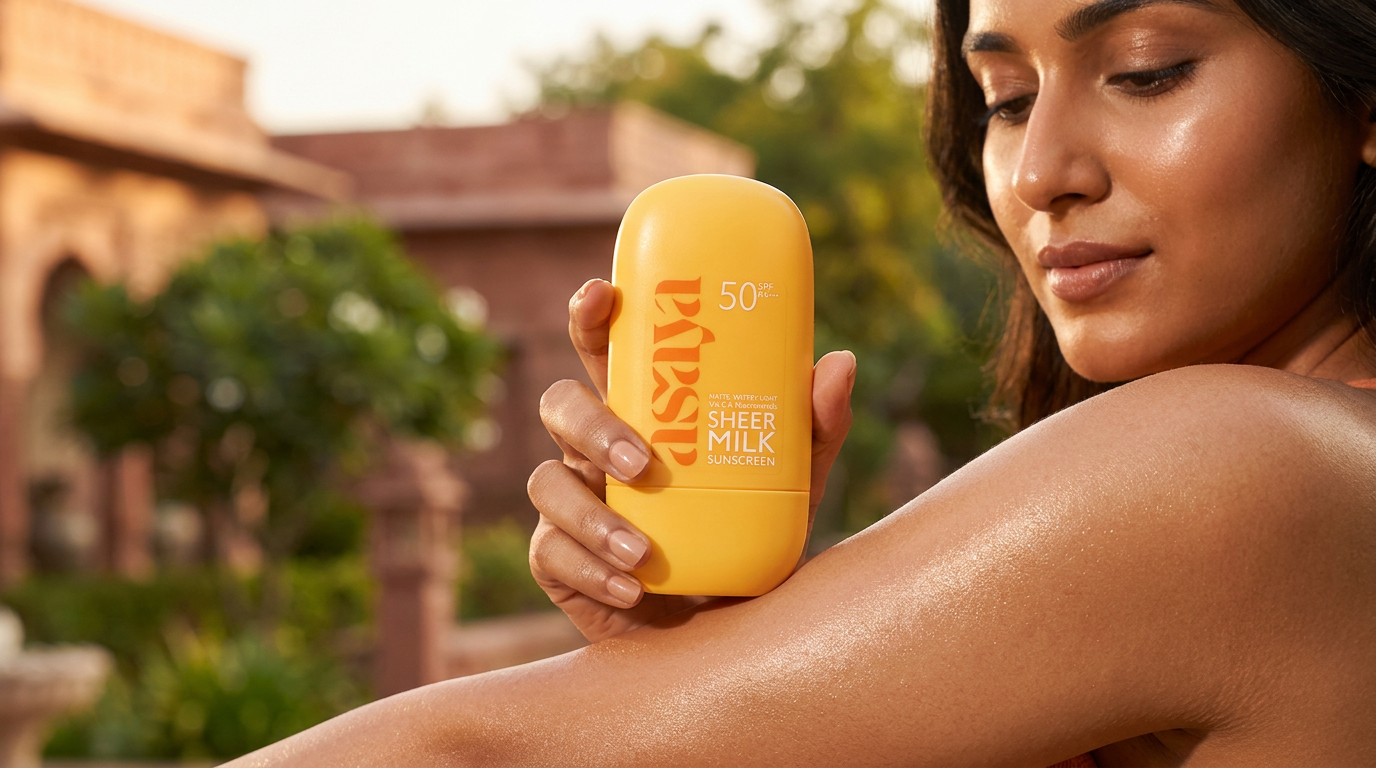
Niacinamide and Vitamin C can support a pigment-care routine. Asaya Sheer Milk Sunscreen combines SPF 50 PA++++ with Vitamin C and Niacinamide. Its matte fluid texture may suit oily, acne-prone, or combination skin in humid weather. If your skin is sensitive or reactive, Asaya Sun Drip Mineral Sunscreen is worth considering — it uses non-nano Zinc Oxide and Cica for a gentler, mineral-based option that suits reactive skin types.
The protection rule stays the same: use high, broad-spectrum SPF daily. The reason you need it may differ. Acne marks follow inflammation. Melasma may appear as patchy pigment. Sun spots are UV-related.
For sunscreen for acne marks, choose a comfortable texture that you will reapply. Asaya Spot Light Sunscreen offers SPF 50 PA++++ with MelaMe™ Complex, Niacinamide, and licorice extract. It is made for dark spots, acne marks, PIH, and melasma.
Keep your morning routine simple. Cleanse, apply any treatment that suits your skin, then apply sunscreen as the final skincare step. Let each layer settle to reduce pilling.
Use SPF 50+ PA++++ and broad-spectrum protection.
Apply sunscreen over the face, neck, and exposed areas.
Reapply after sweating, outdoor activity, or as needed.
Keep a reapply-friendly format in your bag.
Sunscreen testing uses an application amount of 2 mg per cm² of skin. Under-applying may mean you get less protection than the label states. Apply an even, generous layer instead of a thin swipe.
Heat, humidity, sweat, and long outdoor hours can make sunscreen wear off. For quick touch-ups, Asaya Sheerscreen Mist provides SPF 50+ PA++++ in a clear mist. It is made for frequent reapplication and is water-resistant for up to 80 minutes.
Apply leave-on treatments before sunscreen in the morning. Keep sunscreen as your final skincare layer. This helps it form the protective film it is designed to create.
If layers pill, use less product or give each layer time to settle. Avoid adding too many active steps at once. A calm, repeatable routine is easier to maintain.
Skipping sunscreen on indoor days can leave a gap in your routine, especially near daylight through windows. Another common issue is applying too little or forgetting reapplication after sweat.
Using only SPF 15 to 30 may not meet the SPF 50+ PA++++ checklist for pigmentation-prone skin. A sunscreen for uneven skin tone should also feel comfortable enough for daily wear.
Use this quick list when comparing a hyperpigmentation sunscreen. The best sunscreen for Indian skin is the one that meets these protection needs and fits your daily routine.
SPF 50+ and PA++++
Broad-spectrum UV protection
A texture suited to your skin type
No white cast if that affects consistent use
Helpful pigment-care ingredients, where relevant
Clear daily-use and reapplication guidance
For a tinted option, Asaya Hint of Tint offers SPF 50 PA++++, 5% Niacinamide, and sheer coverage in five shades.
Use a broad-spectrum SPF 50 PA++++ sunscreen that suits your skin type. For dark-spot concerns, Asaya Spot Light Sunscreen is formulated with MelaMe™ Complex, Niacinamide, and licorice extract.
Sunscreen protects against UV-triggered darkening. It does not replace targeted pigmentation treatment, but it supports treatment by helping prevent further sun-related pigment.
No sunscreen removes pigmentation on its own, but the right formula can help prevent it from deepening. Asaya Spot Light Sunscreen is specifically formulated for dark spots, acne marks, PIH, and melasma. It combines SPF 50 PA++++ with MelaMe™ Complex, Niacinamide, and licorice extract — ingredients that support pigment care alongside daily UV protection.
Consistency matters more than a complicated routine. Choose SPF 50+ PA++++, apply enough, and reapply when your day calls for it. That consistency is also what makes MelaMe™ Complex work — Asaya's melanin-first molecule that breaks down existing dark spots and slows new ones from forming, with visible results in about two weeks. Together, daily protection and the right formula give dark spots and acne marks less UV exposure to build on.
