


Fade Acne Scars & PIH: Your Pigmentation Sunscreen Checklist
Your Cart
0You May Also Like

₹636 ₹749

₹424 ₹499

₹509 ₹599

₹594 ₹699

₹424 ₹499

₹466 ₹549
Clearing a breakout only to be left with a stubborn dark mark can feel deeply frustrating — especially when the spot seems to linger far longer than the pimple itself. That dark mark is often post-inflammatory hyperpigmentation, or PIH. It can look deeper after sun exposure, which makes daily sun protection part of every PIH treatment plan. A pigmentation sunscreen for acne scars and PIH will not erase a mark on its own. It helps stop extra darkening while your treatment routine works. This matters for Indian and melanin-rich skin, where dark spots can stay visible for longer. Asaya formulates its pigment-focused care with this concern in mind, pairing daily protection with ingredients that support more even-looking tone.
Choose SPF 50, broad-spectrum protection, and PA++++ where possible for daily PIH support.
Pick a comfortable, non-comedogenic texture so you can use enough and reapply it.
Sunscreen prevents marks from deepening. Actives such as niacinamide and Vitamin C support fading.
PIH is a flat dark mark left after acne or irritation. It is not the same as a scar. Sun exposure can encourage more melanin production in that area, so protection helps keep the mark from getting darker.
Think of sunscreen as prevention, not the active fader. It gives your dark-mark routine a fair chance to work.
PIH changes colour, while acne scars change skin texture. A brown or darker flat mark may be PIH. A dent, raised area, or uneven surface is a structural scar. This distinction helps you set realistic expectations from an acne scar sunscreen.
UV exposure can stimulate melanin, the pigment that gives skin its colour. After a breakout, that response can make a dark mark look more noticeable. Daily broad-spectrum sunscreen helps limit this trigger.
SPF measures UVB protection. SPF 50 offers stronger UVB filtration than SPF 30, and that difference can matter when you are managing active hyperpigmentation every day.
Use SPF 50 as your practical starting point for a sunscreen for dark spots. Asaya Sheer Milk Sunscreen offers SPF 50 PA++++ in a matte fluid texture for oily, acne-prone, and combination skin.
UVA also plays a role in pigmentation. Check for broad-spectrum protection and a PA rating, not SPF alone. PA+++ offers high UVA protection, while PA++++ offers very high UVA protection.
For a hyperpigmentation sunscreen, put SPF 50 and PA++++ on your checklist. These labels help you look beyond a single front-of-pack number.
Useful formulas do more than block UV. Niacinamide and Vitamin C can fit well beside daily protection. They support a routine aimed at uneven tone and dark spots.
Also choose a formula your skin can tolerate. Irritation and new breakouts can leave more marks behind.
Niacinamide helps limit melanin transfer in the skin. Used with daily SPF, it supports a steady approach to dark marks. Asaya Spot Light Sunscreen combines SPF 50 PA++++ with niacinamide, licorice extract, and MelaMe™ Complex.
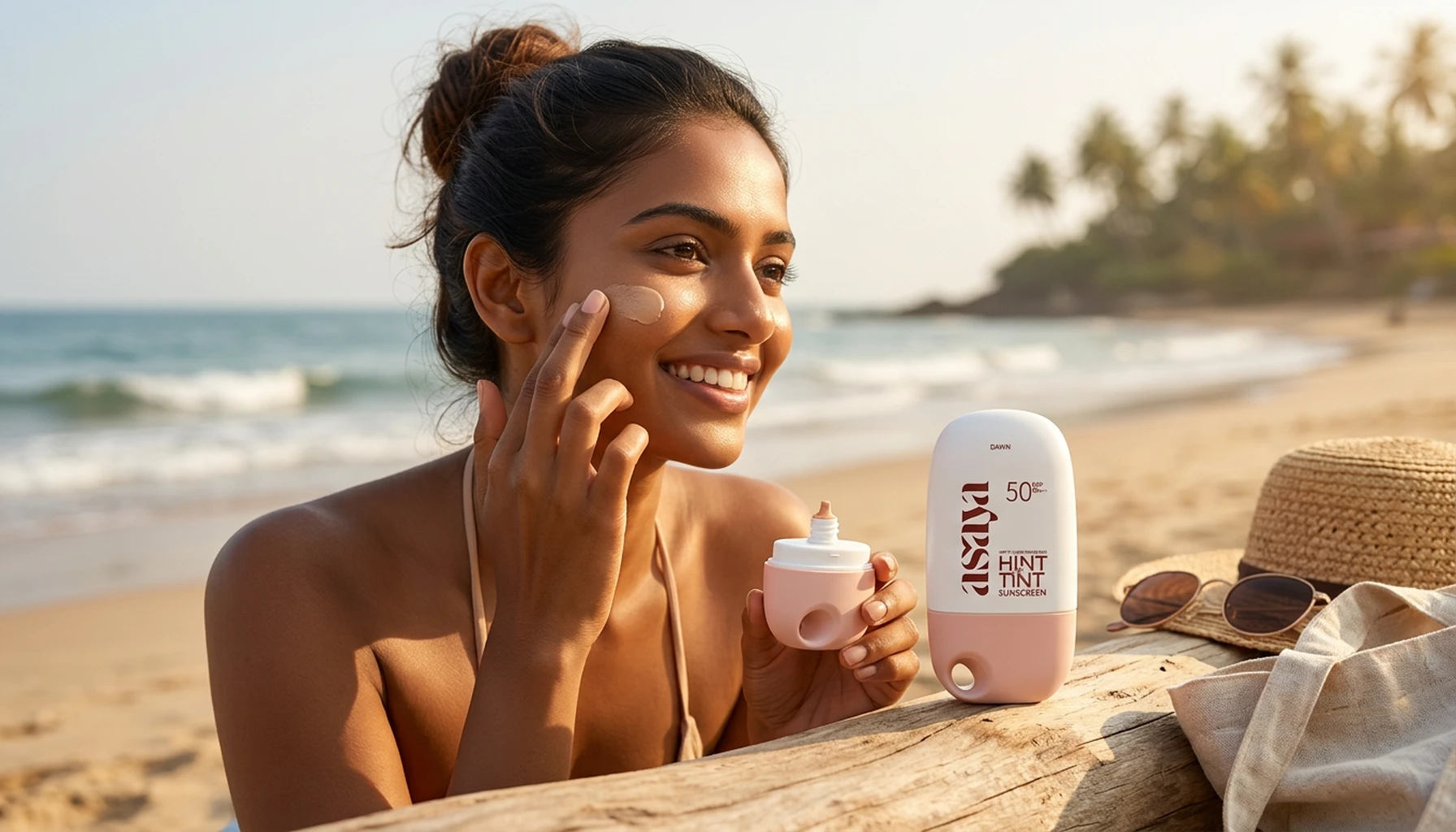
Tinted formulas with mineral pigments can add visible-light protection. This can be useful for melanin-rich skin managing PIH. Asaya Hint of Tint uses titanium oxides to deliver sheer, skin-matching coverage alongside SPF 50 PA++++ and 5% niacinamide. Choose a tint that feels comfortable enough for regular use.
Avoid formulas that feel pore-clogging or sting your skin. A sunscreen that causes breakouts or irritation can work against sun protection for acne, since new inflammation risks leaving fresh dark marks behind. Look for labels that say non-comedogenic and fragrance-free if your skin is reactive, and check that the formula does not contain heavy occlusive oils that may block pores. Patch testing is a practical first step when trying any new formula.
Texture affects consistency. Gel, gel-cream, matte fluid, and silicone-base textures may feel lighter on oily skin. Look for non-comedogenic wording when acne is a concern.
Asaya Sheer Milk Sunscreen is made as a non-greasy, no-white-cast matte fluid. Asaya Sun Drip Mineral Sunscreen uses non-nano zinc oxide and Cica for sensitive, acne-prone, and reactive skin.
White cast is a real reason people skip sunscreen. Yet skipped use can leave dark spots exposed to the triggers that deepen them. A sunscreen for Indian skin should suit your tone and daily climate. A consistent SPF routine is also foundational for anyone managing uneven skin tone alongside PIH, since daily protection helps prevent fresh darkening that makes tone look more patchy over time.
Check for SPF 50, PA++++, and a finish you will wear. Asaya Hint of Tint offers SPF 50 PA++++, 5% niacinamide, and sheer coverage in five shades.
Apply sunscreen as the last step of your morning skincare routine. Use it every day, including days spent near windows or in brief outdoor sun. Reapply during outdoor, sports, travel, or sweat-heavy time. For on-the-go reapplication, Asaya Sheerscreen Mist offers a water-resistant, spray format that makes topping up your SPF easy without disturbing your makeup or routine.
You can layer a Vitamin C or niacinamide serum before sunscreen. Asaya 15% Vitamin C + E Serum with Ferulic Acid is a fast-absorbing option for dark spots, while sunscreen helps prevent fresh sun-driven darkening.
Use this list when choosing a dark mark sunscreen. A formula only helps when it suits your skin well enough for daily use.
SPF 50 for stronger UVB filtration
Broad-spectrum protection and PA++++
Niacinamide or Vitamin C alongside UV filters
A mineral tint with titanium oxides if visible-light coverage matters to you
A non-comedogenic gel, gel-cream, matte fluid, or silicone-base texture for acne-prone skin
Low or no white cast for consistent use on melanin-rich skin
These answers can help you narrow your choice without treating sunscreen as a complete PIH treatment.
Look for SPF 50, broad-spectrum protection, PA++++, and a non-comedogenic texture. Niacinamide can be a useful extra. Asaya Spot Light Sunscreen fits these criteria with SPF 50 PA++++ and niacinamide.
Sunscreen helps prevent PIH from worsening, but it does not actively fade marks alone. Pair it with suitable topical actives, such as Vitamin C, niacinamide, kojic acid, or alpha arbutin.
Choose a lightweight gel, gel-cream, matte fluid, or silicone-base formula with SPF 50+ and PA++++. A tinted option with mineral pigments can also support visible-light protection.
Broad-spectrum SPF 50 formulas help slow PIH darkening. Options with niacinamide or a tint can add support. Asaya Hint of Tint combines SPF 50 PA++++ with 5% niacinamide.
There are no proven home remedies that replace the role of SPF and targeted actives in managing PIH. That said, consistent use of evidence-backed ingredients like niacinamide and Vitamin C — applied daily alongside broad-spectrum sunscreen — is the most reliable non-clinical approach to supporting gradual fading.
To fade acne scars that are actually PIH, focus on consistency rather than quick fixes. Wear your sunscreen daily and pair it with a targeted routine. MelaMe™ Complex is Asaya's advanced skincare-engineered, melanin-first molecule designed to visibly treat discolouration and restore pigment balance within 2 weeks of regular use. It is tested and proven to break existing excess melanin deposits into re-absorbable amino acids, while inhibiting excess melanin production — restoring even-toned, clarified skin more effectively and faster than other ingredients typically used for hyperpigmentation.
