


Quick & Effective Dark Spot Removal: Your Face Pigmentation FAQs
Your Cart
0You May Also Like
If you're looking for a quick and effective way to remove dark spots on your face, the honest answer starts with understanding what's causing them. Dark spots can feel slow to leave, especially after a breakout or a few sunny days. They form when your skin makes extra melanin in one area. Acne, sun exposure, hormones, and irritation can all play a part. The good news is that a calm, steady routine can help fade dark spots. For Indian, melanin rich skin, avoiding irritation matters as much as choosing an active. Asaya formulates its pigmentation care with this in mind, using MelaMe™ Complex to address existing marks and excess melanin production.
Use sunscreen each day, then add one suitable dark spot active.
Dark spots rarely clear in two days, but redness may look calmer.
Skip harsh home remedies if they sting or irritate your skin.
Dark spots happen when melanin production increases in one small area. A pimple, UV exposure, hormonal shifts, or skin irritation can trigger this response. The mark may outlast the original cause.
Knowing the trigger helps you choose a sensible hyperpigmentation treatment. It also helps prevent fresh spots while older ones fade.
Acne marks often sit where a pimple healed. Sun spots tend to appear on areas that get regular light exposure. Hormonal pigmentation can look like broader, uneven patches. These concerns can overlap, so treatment needs patience.
Melanin rich skin can develop visible dark marks after acne or irritation. That makes gentle skincare for Indian skin important. Over scrubbing, stinging acids, or harsh DIY mixes may create more irritation and uneven skin tone.
Full dark spot removal in two or three days is unlikely. A spot formed through melanin buildup, so it needs time to fade. You may see less redness or dryness when you stop irritating the area.
Think in simple time frames. In two days, focus on soothing and sun protection. Over a week, stay consistent with a gentle active. Over several weeks, a regular routine can support more visible fading. Dark spots may return if their trigger, especially sun exposure, continues.
Aloe vera, turmeric, honey, and lemon juice are common home remedies. They are not a substitute for a consistent dark spot routine. Patch test any new mix first, and stop if your skin stings, burns, or turns red. It is also worth knowing that for melanin rich skin, irritation itself is one of the most common triggers for new dark spots. A remedy that causes even mild stinging can set off a fresh round of post inflammatory pigmentation, leaving you with more marks to fade rather than fewer. If a remedy causes redness that does not settle within a few minutes, that is a clear sign to stop and return to a simpler routine.
A simple option is a brief aloe vera application followed by moisturiser. Avoid rubbing the skin. Lemon juice can be especially irritating, so it is not a low risk choice for quick skin brightening.
Gentler care is usually the safer route for darker skin tones. Use plain aloe vera if it suits your skin, and avoid lemon juice on active acne or broken skin. Irritation can lead to more dark spots, not fewer.
Niacinamide, vitamin C, kojic acid, alpha arbutin, and AHAs are common pigmentation solutions. Each works differently, and too many actives at once can upset your skin. Start with one product and use it as directed.
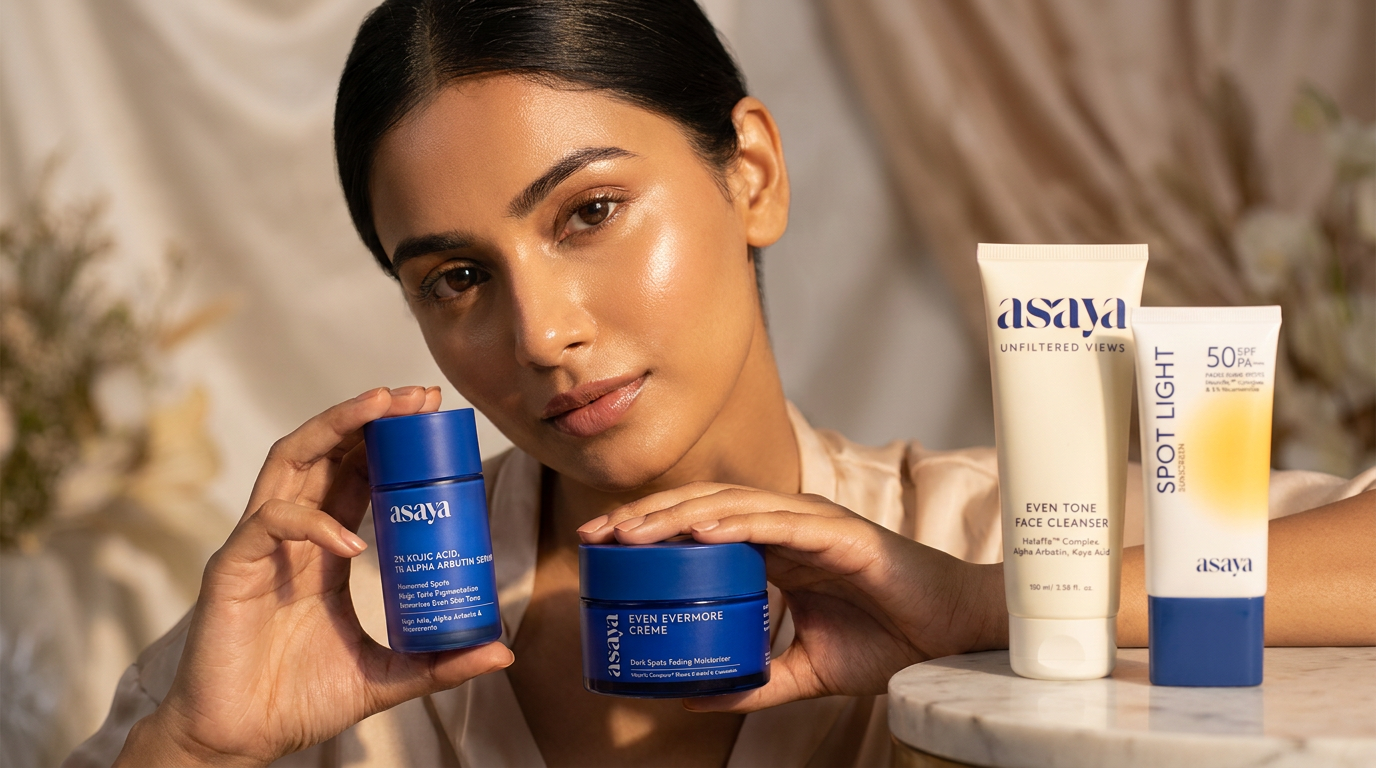
The Asaya Advanced Spot Targeting Serum combines MelaMe™ Complex, 5% niacinamide, and 2% alpha arbutin. For sun related dullness or uneven tone, Asaya 15% Vitamin C + E Serum with Ferulic Acid is another leave on option.
In the morning, cleanse, apply one active if suitable, moisturise, and use sunscreen. At night, cleanse, use your chosen treatment, and moisturise. The Asaya Even Tone Face Cleanser is a low pH cleanser designed for dark spots, acne marks, and uneven tone.
Some marks need professional advice, especially deep or melasma type pigmentation. Chemical peels, laser treatments, and microdermabrasion are clinical options. They require a consultation because skin response and spot type vary.
Do not combine a procedure with several strong home actives without guidance. Your skin needs time to recover. A calm barrier can make it easier to stay consistent with your routine. Building a stable at home routine before and after a clinical procedure can also support better results. The Asaya Advanced Spot Targeting Serum, used as part of a daily regimen, can help maintain a calm and even skin tone during the recovery period between sessions. Focusing on barrier recovery, through gentle cleansing, consistent moisturising, and daily SPF, gives your skin the foundation it needs to respond well to both clinical and topical care.
Sunscreen is foundational because UV exposure can encourage melanin production. Without it, new dark spots may form while you work on existing ones. Use it daily as the final morning step.
The Asaya Rapid Dark Spot Correction Set includes Spot Light Sunscreen SPF 50 PA++++ alongside the Even Tone Face Cleanser, targeting gel, and moisturiser. This keeps protection part of the routine rather than an afterthought.
Post acne marks are different from active acne. Do not pick or scrub a healing pimple, since irritation can leave a darker mark. Use gentle cleansing and targeted care after the skin is no longer open or sore.
For oily, acne prone, or combination skin, the Asaya Advanced Spot Targeting Gel For Dark Spots & Acne Marks is made for targeted daily use. It contains MelaMe™ Complex, alpha arbutin, peptides, and spicules.
Use daily sunscreen, one proven topical active, and a consistent routine. The right approach depends on whether the marks came from acne, sun, or hormones. Asaya Even Evermore Creme can add moisture while supporting care for dark spots and blemishes.
Major fading in two days is unlikely. You can reduce visible redness and inflammation by avoiding picking, harsh scrubs, and irritating remedies. Keep the area moisturised and protected from the sun.
No single product works for every spot type. Clinically studied actives like niacinamide and vitamin C are commonly recommended alongside daily sunscreen. Choose one suitable active and use sunscreen alongside it.
Clinical options such as chemical peels and laser treatments may work faster for some stubborn marks. They need professional guidance. Home routines require steady use over weeks.
Quick fixes often create more irritation, which can worsen uneven tone. A gentle routine, daily SPF, and one suitable active give dark spots a better chance to fade. MelaMe™ is Asaya's proprietary melanin-first molecule. It's engineered specifically for skin that produces more melanin — and needs a smarter approach to fading it. It is clinically tested and designed to show visible fading within two weeks of regular use. It breaks excess melanin deposits into re absorbable amino acids and helps inhibit excess melanin production, supporting melanin clearing by helping the skin break down existing deposits rather than just slowing new ones. This supports fading existing blemishes and preventing new ones.
