


Pollution Skin Damage Delhi FAQ: Your Questions Answered
Your Cart
0You May Also Like
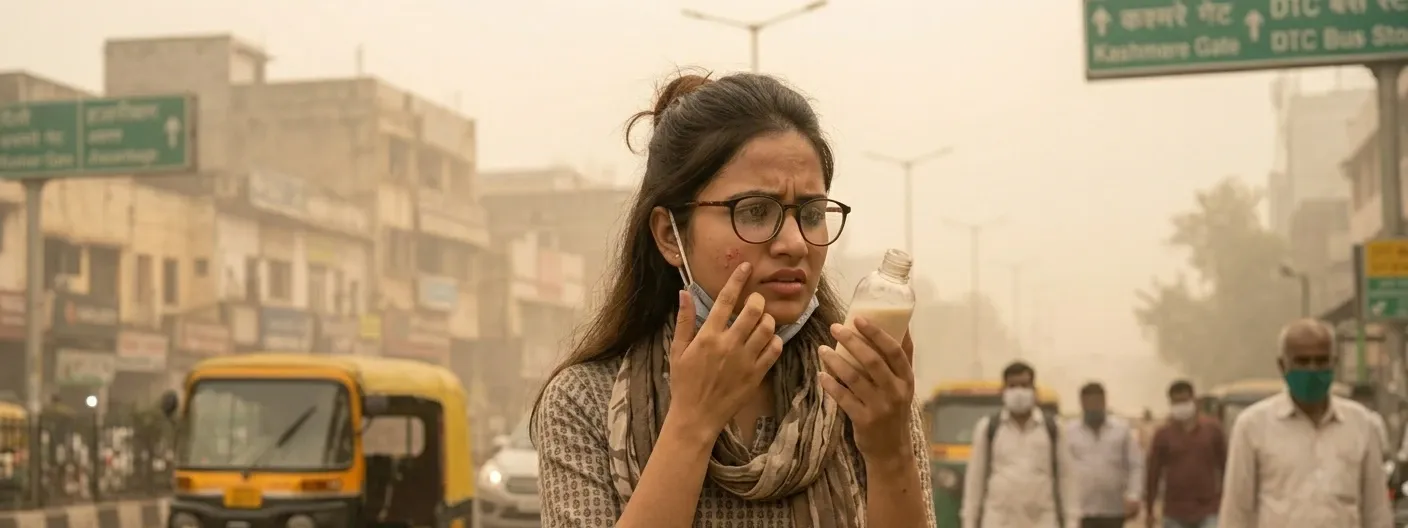
Delhi's air quality has become a serious concern for skin health, with pollution levels often reaching hazardous categories. Many residents notice their skin becoming dull, developing dark spots, or breaking out more frequently during high pollution days. The combination of PM2.5 particles, vehicle emissions, and industrial pollutants creates a toxic environment that directly impacts your skin's health and appearance. Understanding how pollution affects your skin and knowing the right protection strategies can help you maintain healthy, glowing skin despite living in one of the world's most polluted cities.
Air pollution effects on skin go far beyond surface-level dirt and grime. When you step outside in Delhi, your skin encounters a complex mixture of harmful particles and gases that penetrate deep into your pores and disrupt normal cellular functions. The damage happens at multiple levels, from immediate surface irritation to long-term cellular changes that accelerate aging and cause persistent skin problems.
Delhi's air contains PM2.5 particles so small they can penetrate your skin barrier and enter your bloodstream. These microscopic particles carry toxic chemicals like polycyclic aromatic hydrocarbons (PAHs) and heavy metals that trigger inflammatory responses. When AQI levels exceed 300, which happens frequently in Delhi winters, your skin faces an assault equivalent to smoking several cigarettes daily.
Environmental pollution skin damage occurs when pollutants generate free radicals that attack healthy skin cells. These unstable molecules break down collagen, damage DNA, and disrupt your skin's natural repair mechanisms. The result is accelerated aging, increased sensitivity, and compromised barrier function that makes your skin more vulnerable to further damage.
Your skin barrier acts as your first line of defense, but Delhi's pollution gradually weakens this protective layer. Pollutants strip away natural oils, disrupt the acid mantle, and create microscopic tears that allow irritants to penetrate deeper. This explains why many Delhi residents experience increased sensitivity and reactivity to skincare products they previously tolerated well.
Delhi pollution skin problems manifest in several distinct ways that become more pronounced during high pollution seasons. Recognizing these signs early helps you take corrective action before damage becomes permanent. Most people notice changes within 2-3 weeks of exposure to consistently high pollution levels, though some effects appear immediately after particularly bad air quality days.
The most common complaint among Delhi residents is the development of dark spots pollution Delhi causes. Pollution particles create inflammation that triggers excess melanin production, leading to uneven skin tone and stubborn dark patches. These spots typically appear on the forehead, cheeks, and around the nose where pollution exposure is highest.
Pollution acne Delhi residents experience differs from hormonal acne in its distribution and characteristics. Pollution particles mix with sebum to create stubborn blackheads and inflammatory papules, particularly along the T-zone and jawline. The acne often worsens during winter months when pollution levels peak.
Chronic exposure to pollution accelerates skin aging by 10-15 years compared to those living in cleaner environments. Fine lines appear earlier, skin loses its natural glow, and texture becomes rough and uneven. Many people in their late twenties notice aging signs typically associated with their late thirties.
The connection between pollution induced hyperpigmentation and Delhi's air quality is well-established through multiple research studies. Pollution doesn't just worsen existing skin conditions; it actively creates new problems by disrupting normal skin functions. Understanding this connection helps explain why traditional skincare routines often fail in highly polluted environments.
Pollution particles are small enough to penetrate pores and mix with sebum, creating a perfect environment for bacterial growth. The inflammatory response triggered by these foreign particles leads to persistent breakouts that don't respond well to typical acne treatments. This is why many Delhi residents find their acne worsens during high AQI days.
Hyperpigmentation pollution Delhi causes occurs through a two-step process. First, pollution creates inflammation that stimulates melanocyte activity. Second, the combination of pollution and UV exposure creates a synergistic effect that dramatically increases melanin production, leading to dark spots that are much more difficult to fade than sun damage alone.
Effective skin care pollution Delhi protection requires a multi-layered approach that addresses both prevention and repair. The key is creating a barrier against pollutants while supporting your skin's natural defense mechanisms. Consistency is crucial, as sporadic protection offers little benefit against daily pollution exposure.
Start with a gentle cleanser to remove overnight pollutant buildup, followed by antioxidant serums containing vitamin C or niacinamide. Apply a broad-spectrum SPF 50+ sunscreen as your final step, as UV radiation amplifies pollution damage significantly. Reapply sunscreen every 3-4 hours when outdoors.
Double cleansing is non-negotiable for Delhi residents. Use an oil-based cleanser first to dissolve pollution particles, followed by a water-based cleanser to remove remaining impurities. Follow with barrier-repairing ingredients like ceramides and hyaluronic acid to restore overnight damage.
Look for products containing antioxidants like vitamin E, green tea extract, and resveratrol that neutralize free radicals. Niacinamide helps strengthen the skin barrier, while ingredients like kojic acid and alpha arbutin can help fade existing skin damage from pollution. Avoid harsh scrubs that can worsen barrier damage.
Treating existing pollution skin damage Delhi requires patience and the right combination of active ingredients. Most people see initial improvements within 4-6 weeks of starting a targeted routine, though complete healing of severe damage can take 3-6 months. The key is addressing both surface damage and underlying inflammation.
Dermatologists in Delhi often recommend chemical peels containing glycolic or salicylic acid to remove damaged surface layers. Laser treatments can target deeper pigmentation, while professional-grade vitamin C treatments help restore skin brightness. Costs typically range from ₹3,000-₹15,000 per session depending on the treatment type.
Consistent use of proven ingredients like kojic acid, vitamin C, and retinoids can significantly improve pollution damage over time. Focus on products specifically formulated for Indian skin tones, as these are more likely to address hyperpigmentation effectively without causing irritation.
Visible effects can appear within 2-3 weeks of consistent exposure to high pollution levels. Immediate effects like dullness and irritation may occur after just a few days of AQI levels above 300. Long-term damage like premature aging develops over months to years of exposure.
Yes, most pollution-related skin damage is reversible with proper care. Surface damage like dullness and minor pigmentation can improve within 4-8 weeks. Deeper damage like significant hyperpigmentation may take 3-6 months to fade completely with consistent treatment.
Apply protective products like antioxidant serums and sunscreen in the morning before pollution exposure. Evening is ideal for repair-focused ingredients like retinoids and barrier-restoring products. Avoid applying active ingredients immediately before going outside in high pollution.
Indoor air purifiers can significantly reduce your overall pollution exposure, especially during sleep when skin repairs itself. While they won't eliminate outdoor damage, they provide 8-10 hours of cleaner air daily, which supports skin healing and reduces cumulative damage.
Effective pollution protection doesn't require expensive products. A basic routine with cleanser, antioxidant serum, and sunscreen can cost ₹2,000-₹4,000 monthly. Focus on proven ingredients rather than marketing claims, as many affordable products contain the same active ingredients as luxury brands.
Consult a dermatologist if you notice persistent dark spots that don't improve after 8-10 weeks of consistent home care, sudden onset of severe acne, or signs of premature aging like deep wrinkles before age 30. Professional treatment can accelerate healing and prevent permanent damage.
Living in Delhi doesn't mean accepting damaged skin as inevitable. Understanding how pollution affects your skin empowers you to take protective action and treat existing damage effectively. The key is consistency in both protection and treatment, as sporadic efforts won't provide adequate defense against daily pollution exposure. Remember that skin healing takes time, so patience and persistence are essential for seeing real improvements. With the right approach, you can maintain healthy, glowing skin even in Delhi's challenging environment.
