


Body Pigment Treatment Options: In-Office vs. At-Home Solutions
Your Cart
0You May Also Like
Body pigmentation affects millions of people, creating dark patches, uneven skin tone, and stubborn spots that can impact confidence. Unlike facial pigmentation, body hyperpigmentation treatment presents unique challenges due to larger surface areas, different skin thickness, and varying exposure patterns. Whether you're dealing with melasma on your arms, post-inflammatory marks from acne, or dark spots from sun damage, choosing between professional treatments and at-home solutions requires understanding what works best for your specific needs and budget.
Body pigmentation occurs when melanin production becomes irregular, leading to darker patches or spots on various body areas. This condition differs significantly from facial pigmentation due to the body's thicker skin, reduced sensitivity, and different hormonal influences.
Common types include melasma (often appearing on arms and chest), post-inflammatory hyperpigmentation from acne or injuries, age spots from sun exposure, and acanthosis nigricans in skin folds. These skin discoloration treatments require targeted approaches based on the underlying cause and severity.
Sun damage remains the leading cause, especially on exposed areas like arms, shoulders, and legs. Hormonal changes during pregnancy or due to certain medications can trigger melasma-type pigmentation. Inflammation from acne, cuts, or skin conditions often leads to post-inflammatory hyperpigmentation that persists long after healing.
Body skin tolerates stronger concentrations of active ingredients compared to facial skin. The larger treatment areas require cost-effective solutions, while varying skin thickness across different body regions demands customized approaches for optimal results.
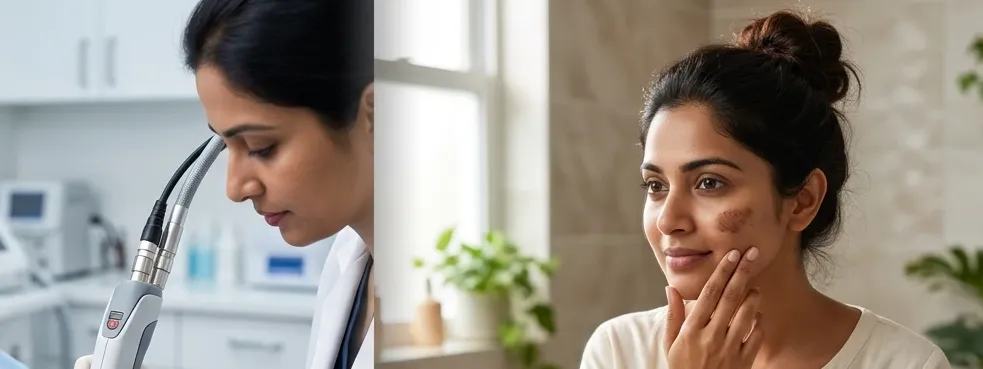
Professional treatments offer faster, more dramatic results for stubborn body pigmentation. These pigmentation removal methods use advanced technology and higher concentrations of active ingredients under medical supervision.
Dermatologists can assess your specific pigmentation type and recommend the most effective treatment protocol. Professional options typically show results within 2-6 months, making them ideal for severe cases or when quick results are needed.
IPL (Intense Pulsed Light) therapy works exceptionally well for large body areas, targeting multiple pigmentation types simultaneously. Treatment sessions typically cost ₹8,000-₹15,000 per session, with 4-6 sessions needed for optimal results.
Picosecond lasers excel at breaking down stubborn dark spots on skin solutions, while Q-switched lasers penetrate deeper for established pigmentation. Most patients see 60-80% improvement after completing their treatment series.
Medium-depth TCA peels effectively treat body pigmentation, with costs ranging from ₹5,000-₹12,000 per session. These peels require 1-2 weeks of downtime but deliver significant improvement in uneven skin tone correction.
Glycolic acid peels offer gentler options for sensitive areas, while combination protocols address multiple pigmentation layers for comprehensive results.
Microneedling with specialized serums enhances product penetration while stimulating collagen production. This treatment works particularly well for acne scar treatment for dark skin, combining mechanical and chemical approaches.
Cryotherapy provides precise treatment for isolated spots, while prescription-strength topical combinations offer ongoing maintenance between professional sessions.
At-home treatments offer convenience, affordability, and gradual improvement for body pigmentation. These skin darkening remedies require consistency and patience but can deliver excellent results over 6-12 months.
The key advantage lies in daily application and long-term maintenance, making them ideal for mild to moderate pigmentation or as maintenance after professional treatments.
Hydroquinone-based products at 2% concentration remain the gold standard for melasma treatment options at home. These products typically cost ₹800-₹2,500 and require 8-12 weeks of consistent use for visible results.
Kojic acid formulations offer gentler alternatives, while niacinamide serums provide anti-inflammatory benefits alongside pigmentation reduction. Vitamin C products protect against further damage while gradually lightening existing spots.
Licorice root extract and arbutin provide natural skin lightening treatments with minimal side effects. Alpha arbutin, in particular, shows clinical efficacy comparable to hydroquinone with better tolerance.
AHA and BHA body products offer gentle exfoliation, removing pigmented surface cells while promoting cell turnover for gradual improvement in skin tone.
Dermatologist-prescribed tretinoin for body use accelerates cell turnover and enhances other treatment effectiveness. Prescription hydroquinone at 4% concentration provides stronger results than over-the-counter options.
Combination therapies mixing hydroquinone, tretinoin, and mild corticosteroids offer comprehensive treatment protocols for stubborn pigmentation cases.
Professional treatments deliver faster results, typically showing 50-70% improvement within 3-6 months. However, costs range from ₹25,000-₹75,000 for complete treatment series, making them significant investments.
At-home treatments require 6-12 months for similar results but cost only ₹2,000-₹8,000 total. The gradual approach often provides more natural-looking results with lower risk of complications.
Professional treatments offer immediate gratification and expert supervision but require significant upfront investment. At-home solutions provide budget-friendly options with flexible scheduling but demand consistent commitment and patience.
Professional treatments carry higher risk of temporary side effects like redness, peeling, or temporary darkening, especially in darker skin tones. At-home treatments generally show fewer adverse reactions but may take longer to show results.
Darker skin tones (Fitzpatrick IV-VI) require modified treatment approaches to prevent post-inflammatory hyperpigmentation. Professional treatments need careful parameter adjustment, while at-home treatments often provide safer options for gradual improvement.
Pregnancy-safe options become crucial for hormonal pigmentation, limiting treatment choices to specific ingredients like vitamin C, niacinamide, and gentle exfoliants.
India's intense sun exposure requires year-round protection during any pigmentation treatment. SPF 30 or higher becomes non-negotiable, with reapplication every 2-3 hours for outdoor activities.
The best treatment depends on your pigmentation type, budget, and timeline. For quick results, professional laser treatments or chemical peels work fastest. For budget-conscious approaches, consistent use of hydroquinone or kojic acid products with proper sun protection delivers excellent long-term results.
While treatments can significantly fade pigmentation, complete permanent removal isn't always possible. Most treatments achieve 70-90% improvement, but ongoing maintenance and sun protection are essential to prevent recurrence.
Professional treatments show initial results in 2-4 weeks, with significant improvement in 3-6 months. At-home treatments typically require 6-8 weeks for initial changes and 6-12 months for substantial improvement.
Start with gentle ingredients like niacinamide or vitamin C, gradually introducing stronger actives like hydroquinone or kojic acid. Always patch test new products, use sunscreen daily, and moisturize regularly to support skin barrier function.
Combination approaches work best: gentle exfoliation with AHA/BHA products, targeted serums with hydroquinone or kojic acid, and consistent sun protection. For severe cases, professional microneedling or light chemical peels accelerate results.
Choosing between professional and at-home body pigment treatment options depends on your specific needs, budget, and timeline. Professional treatments offer faster, more dramatic results but require significant investment and potential downtime. At-home solutions provide affordable, convenient options that deliver gradual but lasting improvements with consistent use.
The most effective approach often combines both strategies: professional treatments for initial improvement followed by at-home maintenance for long-term results. Regardless of your chosen method, daily sun protection remains the foundation of any successful pigmentation treatment plan.
