


9 Best Home Remedies for Pigmentation on Knees, Elbows & Neck
Your Cart
0You May Also Like
Dark patches on your knees, elbows, and neck can feel frustrating, especially when they seem to appear out of nowhere. These areas naturally collect more pigmentation due to friction, pressure, and sometimes underlying health factors. While the darkening is completely normal and common, especially on melanin-rich skin, there are gentle home remedies that can help lighten these patches over time. Understanding why this happens and which treatments actually work can save you from wasting time on ineffective solutions. Asaya's research into pigmentation patterns shows that joint areas often need different care than facial skin, requiring both patience and the right approach.
Joint pigmentation happens due to friction, pressure, and sometimes insulin resistance, making knees, elbows, and neck most vulnerable to darkening.
Nine proven home remedies include lemon-baking soda scrubs, turmeric-milk paste, and aloe vera treatments that work through gentle exfoliation and natural lightening compounds.
Consistency matters more than intensity - gentle daily care shows better results than harsh weekly treatments, with visible improvement typically taking 4-8 weeks.
Body pigmentation on joints happens differently than facial dark spots. Your knees, elbows, and neck develop darker patches through a combination of physical and metabolic factors that create the perfect environment for excess melanin production.
The main culprit is acanthosis nigricans, a condition where skin thickens and darkens in response to insulin resistance or hormonal changes. When your body struggles to process insulin effectively, it can trigger increased melanin production in areas where skin folds or experiences regular friction. This explains why people with diabetes or PCOS often notice more pronounced darkening in these areas.
Friction plays a huge role too. Every time you bend your elbow or knee, or when tight clothing rubs against your neck, you create micro-trauma that signals your skin to produce protective melanin. Over months and years, this builds up into visible darkening.
These areas have thinner skin that's constantly moving and folding. Your neck, especially, has natural creases that trap dead skin cells and create more friction points. Knees and elbows bear weight and pressure throughout the day, making them prime spots for pigmentation to develop.
The skin here also has fewer oil glands, so it stays drier and more prone to irritation. When dry skin rubs against clothing or itself, it creates the perfect storm for hyperpigmentation on neck and joint areas.
Home remedies work well for mild to moderate pigmentation that's primarily friction-based. If you notice sudden, severe darkening or if the patches feel thick and velvety, see a doctor. This could indicate underlying insulin resistance that needs medical attention alongside topical treatment.
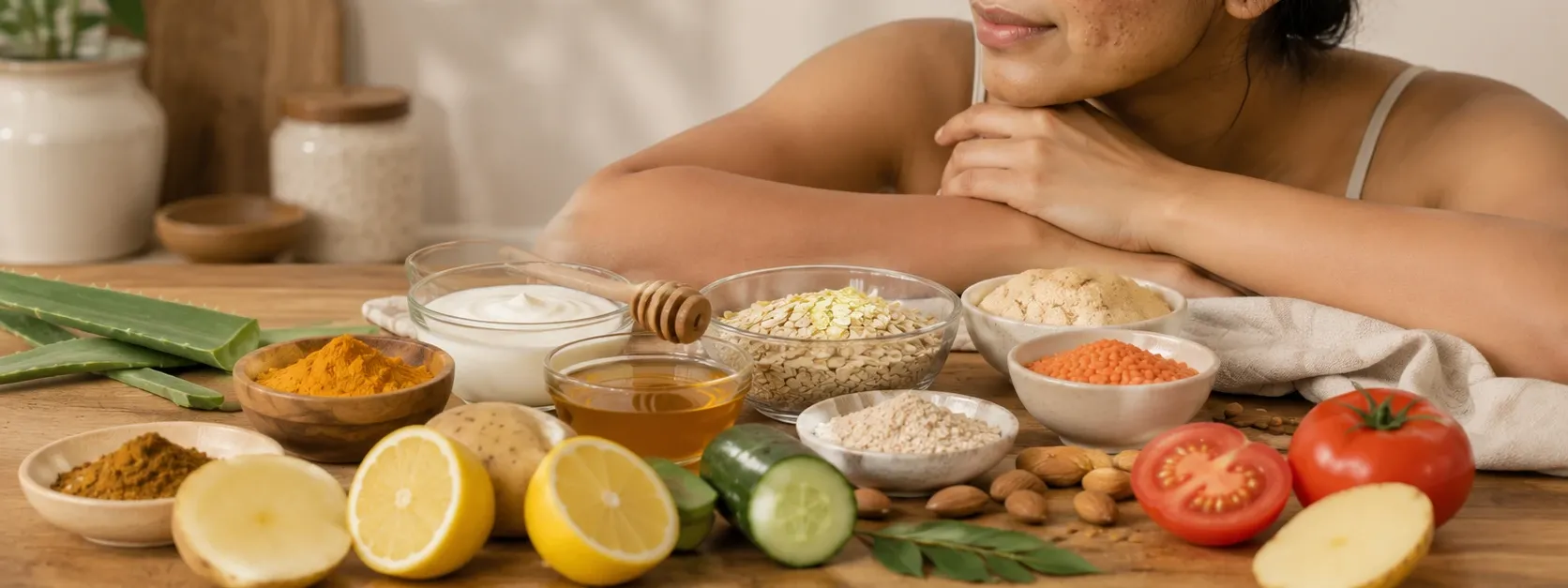
These remedies work through gentle exfoliation, natural bleaching compounds, and ingredients that support healthy skin turnover. The key is consistency rather than intensity.
Lemon's citric acid acts as a natural exfoliant and mild bleaching agent, while baking soda provides gentle physical exfoliation. Mix one tablespoon of fresh lemon juice with half a tablespoon of baking soda to form a paste. Gently massage onto damp skin for 30 seconds, then rinse thoroughly.
Use this twice a week maximum. Lemon can increase sun sensitivity, so always apply sunscreen to treated areas if they'll be exposed to sunlight.
Curcumin in turmeric inhibits tyrosinase, the enzyme responsible for melanin production. Milk's lactic acid provides gentle exfoliation. Mix one teaspoon of turmeric powder with enough milk to form a thick paste.
Apply to clean skin and leave for 15-20 minutes before rinsing with lukewarm water. Use 3-4 times per week. This remedy is particularly effective for elbow pigmentation because the thicker skin there can handle the slightly more intensive treatment.
Ground oatmeal provides physical exfoliation without being too harsh on sensitive joint areas. It also contains compounds that naturally brighten skin. Grind half a cup of oats into a fine powder and mix with enough water to form a scrub.
Massage gently in circular motions for one minute, focusing on darkened areas. This works especially well for knee pigmentation where you need effective but gentle exfoliation.
Pure aloe vera contains aloin, a compound that can help lighten pigmentation while soothing irritated skin. The neck area often benefits from aloe's anti-inflammatory properties since tight clothing frequently irritates this sensitive area.
Apply fresh aloe vera gel twice daily to clean skin. Leave it on for 20 minutes before rinsing, or use it as an overnight treatment if your skin tolerates it well.
Cucumber contains vitamin C and caffeic acid, both of which can help lighten dark spots. Rose water balances pH and provides additional soothing benefits. Blend half a cucumber with two tablespoons of rose water until smooth.
Apply this cooling mask to affected areas for 20 minutes, then rinse with cool water. This remedy works well for all three areas and is gentle enough for daily use.
This combination provides exfoliation while moisturizing, which is crucial for preventing further friction-related darkening. Mix two tablespoons of coconut oil with one tablespoon of granulated sugar.
Massage gently for 2-3 minutes, then leave the oil on for another 10 minutes before rinsing. The moisturizing effect helps prevent the dryness that contributes to skin darkening on joints.
Raw potatoes contain vitamin C, starch, and mild enzymes that can help lighten pigmentation. This is one of the gentlest remedies, making it perfect for sensitive skin or daily use.
Cut a fresh potato into thick slices and rub directly onto darkened areas for 10-15 minutes. The starch creates a mild bleaching effect while vitamin C supports healthy skin cell turnover.
Green tea's antioxidants help repair damaged skin cells, while honey provides antibacterial and moisturizing benefits. Brew strong green tea, let it cool, then mix two tablespoons with one tablespoon of raw honey.
Apply to affected areas for 20 minutes. This combination works particularly well for neck hyperpigmentation because it addresses both the darkening and any irritation from clothing or jewelry.
Diluted apple cider vinegar helps balance skin pH and provides gentle exfoliation through its natural acids. Mix one part apple cider vinegar with three parts water.
Apply with a cotton pad and leave on for 10 minutes before rinsing. Start with once every other day to test your skin's tolerance. This remedy helps prevent new pigmentation from forming while gently lightening existing dark spots.
Effective treatment combines active remedies with prevention strategies. You can't fix pigmentation if you're still creating the conditions that caused it in the first place.
Morning routine should focus on protection and moisture. Apply a gentle moisturizer to prevent friction, and use sunscreen on any exposed areas. Evening is when you apply your chosen treatment remedy, followed by a heavier moisturizer to support overnight repair.
Keep it simple - one active treatment at a time, consistent moisturizing, and gentle cleansing. Your joint skin doesn't need a complex routine, just consistent care.
Loose-fitting clothing reduces friction significantly. If you notice darkening around your neck, check that your shirts and jewelry aren't too tight. For knees and elbows, avoid leaning on hard surfaces and consider using cushions when kneeling.
Weight management can help if insulin resistance is contributing to your pigmentation. Even modest weight loss can improve insulin sensitivity and reduce the hormonal triggers for acanthosis nigricans.
Foods that help stabilize blood sugar can reduce pigmentation over time. Focus on whole grains, lean proteins, and plenty of vegetables. Limit processed foods and added sugars, which can worsen insulin resistance and contribute to skin darkening.
Home remedies excel at treating mild to moderate pigmentation caused primarily by friction and everyday wear. They're also excellent for maintenance once you've achieved your desired results.
Most people see initial improvement in 4-6 weeks with consistent use. Significant lightening typically takes 2-3 months. Joint pigmentation responds more slowly than facial dark spots because the skin is thicker and the underlying causes are often ongoing.
Track progress with photos taken in the same lighting every two weeks. Changes happen gradually, so photos help you see improvement that might not be obvious day-to-day.
If pigmentation appears suddenly, feels thick or velvety, or doesn't respond to home treatment after three months, see a dermatologist. Severe acanthosis nigricans might need prescription treatments or management of underlying health conditions.
Many dermatologists recommend continuing gentle home care alongside professional treatments. The key is communication - tell your doctor what home remedies you're using to avoid interactions with prescribed treatments.
The biggest mistake is being too aggressive. Joint skin is already irritated from friction, so harsh scrubbing or strong acids will make pigmentation worse, not better.
Scrubbing daily or using multiple exfoliating treatments creates more irritation and can actually increase pigmentation. Stick to 2-3 times per week maximum for physical exfoliants.
Undiluted lemon juice, strong acids, or abrasive scrubs can damage your skin barrier and worsen darkening. Always dilute acidic ingredients and test on a small area first.
Using remedies sporadically won't give you results. Pigmentation responds to consistent, gentle pressure over time, not occasional intensive treatments.
If you don't address the friction, tight clothing, or health factors causing the pigmentation, even effective treatments will only provide temporary improvement.
Most people see initial lightening in 4-6 weeks with consistent daily use. Significant improvement typically takes 2-3 months. Joint pigmentation responds more slowly than facial dark spots because the skin is thicker and experiences ongoing friction.
Home remedies can significantly lighten pigmentation, but "complete cure" depends on the underlying cause. Friction-based darkening responds well to natural treatments, while pigmentation from insulin resistance might need medical management alongside topical care.
Most are gentle enough for sensitive skin, but start with milder options like aloe vera or cucumber. Always test on a small area first and dilute acidic ingredients like lemon juice or apple cider vinegar.
Normal darkening develops gradually from friction and appears in areas that rub against clothing or surfaces. Medical conditions like acanthosis nigricans create thicker, velvety patches that appear more suddenly and might be accompanied by other symptoms.
Asaya recognizes that body pigmentation behaves differently than facial dark spots, especially on melanin-rich skin. Their formulations account for the thicker skin and ongoing friction that joint areas experience, requiring different active concentrations and supporting ingredients.
Yes, if the underlying causes aren't addressed. Continued friction, tight clothing, or untreated insulin resistance will cause pigmentation to return. Successful long-term results require both treatment and prevention strategies.
Joint pigmentation responds well to patient, consistent care rather than aggressive treatments. The best home remedy for body pigmentation combines gentle exfoliation, natural lightening agents, and prevention strategies that address the root causes. Remember that this type of darkening took time to develop, so it takes time to fade too.
While home remedies can be highly effective, advanced pigmentation might benefit from scientifically formulated treatments. Asaya's MelaMe™ Complex represents a breakthrough in pigmentation treatment, specifically engineered for melanin-rich skin. This advanced molecule works by breaking down existing melanin deposits into re-absorbable amino acids while preventing new excess melanin production. Tested and proven to deliver visible results within 2 weeks of regular use, MelaMe™ offers a more targeted approach to pigmentation that works faster and more uniformly than traditional ingredients alone. For persistent joint pigmentation that hasn't responded to home remedies, this melanin-first technology provides the scientific precision that natural treatments sometimes lack.
