


Humectant vs. Moisturizer: Which Is Best for Your Skin Hydration?
Your Cart
0You May Also Like

₹599 ₹749

₹424 ₹499

₹479 ₹599

₹559 ₹699

₹424 ₹499

₹439 ₹549
If you've ever layered a serum and still woken up to tight, dry skin, you're not alone — and the answer often comes down to understanding what's actually in your products. A gel may leave your face feeling tight, while a rich cream may feel too heavy. The key is knowing what each formula does. What is the difference between a humectant and a moisturizer? A humectant is one type of ingredient. A moisturizer is the full product, which may use several ingredient types. This matters for skin hydration, especially when air conditioning, heat, or a damaged skin barrier leaves skin feeling dry. Worth noting: humectants appear in both food and skincare — this post focuses entirely on their role in skin hydration. Asaya formulas reflect this balance: light hydration can suit oily skin, while ceramide-rich care can support dry skin without making the routine feel complicated.
Humectants draw in water. Moisturizers can combine humectants, emollients, and occlusives.
For dry skin relief, pair water-drawing ingredients with barrier-supporting ingredients.
In dry air, use a humectant under a moisturizer rather than alone.
A humectant helps bind and hold water near the skin's surface. A moisturizer is a broader product category made to hydrate, soften, and help protect skin.
So, humectant vs moisturizer is not a like-for-like comparison. One is an ingredient role. The other is often a blend of several roles.
A moisturizer may contain humectants, emollients, occlusives, or all three. This mix affects how it feels and what it does. A water-gel can focus on light hydration, while a creme may add more support for dry or rough skin.
Humectants are ingredients that attract and hold water — the technical term for this is hygroscopic. They can pull water from the air and from deeper skin layers toward the surface, which can help skin feel more hydrated.
The three types of moisturizing ingredients are humectants, emollients, and occlusives — each working differently to hydrate, soften, and protect skin.
Most useful moisturizers do more than one job. Each ingredient group supports skin in a different way.
Knowing these groups makes label reading much easier. It also helps you choose a texture that suits your skin and climate.
Common humectants include glycerin, hyaluronic acid, and aloe vera. They support water content in the upper layers of skin. They are often useful in light serums and gels for skin that needs hydration without a heavy finish.
Emollients smooth the feel of rough, dry skin. Ceramides for skin and fatty acids are common examples. Their skin-conditioning role can make texture feel softer and support a more comfortable barrier.
Occlusive moisturizers form a seal that slows water loss. Petrolatum and shea butter are examples. They can be especially helpful when skin feels very dry or exposed to dry indoor air.
Humectants help bring water toward the skin's surface and retain it there. This can ease that tight, thirsty feeling that often comes with dehydration.
They work well in many routines, but they are not always enough by themselves. A humectant gives skin water support; an emollient or occlusive can help keep that water from leaving too quickly.
Your skin barrier helps limit water loss from the surface. When it feels compromised, skin may feel rough, dry, or less comfortable.
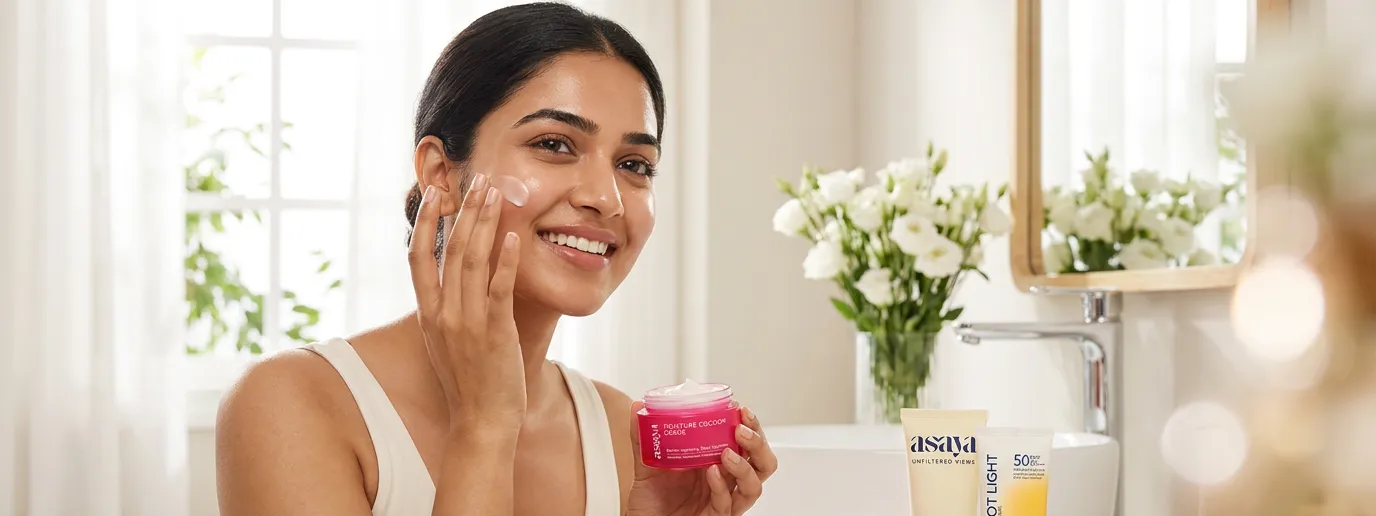
Emollients improve the feel of roughness, while occlusives help seal in moisture. For normal to dry skin, Asaya Moisture Cocoon Creme — formulated for normal to dry skin — combines ceramides, niacinamide, and watermelon extract in a featherlight creme made for daily barrier care.
A light humectant-led formula may suit oily or acne-prone skin in humid weather. A full moisturizer may suit dry skin, air-conditioned spaces, or colder, drier conditions.
Apply in a simple order: humectant first, then emollient support, then an occlusive layer if needed. For oily or acne-prone skin dealing with pores and post-acne marks, Asaya 10% Niacinamide & 1% Alpha Arbutin Serum has a lightweight, quick-absorbing texture that sits comfortably before a moisturizer. Asaya New Light Gel Face Moisturiser — with hyaluronic acid, snow mushroom, prickly pear, and five ceramides — is a fast-absorbing water-gel well suited to oily or acne-prone skin.
Look for a formula with a water-binding ingredient, a smoothing ingredient, and a water-loss limiting ingredient. This combination can support both immediate hydration and a more comfortable skin barrier.
For example, hyaluronic acid can act as a humectant, ceramides can support emollient benefits, and richer ingredients can provide an occlusive finish. Choose the texture based on how dry your skin feels, not just on its skin type label.
Humectants can give short-term skin hydration by drawing in water. A complete moisturizer usually offers more lasting dry skin relief because it also helps soften skin and reduce water loss.
If your skin feels dry after a humectant serum, follow with a moisturizer suited to your skin type. For dry skin, Asaya Moisture Cocoon Creme's ceramide-rich formula can provide that added barrier support.
Be careful in low-humidity or very dry conditions if you have no moisturizer over it. Add an emollient or occlusive layer to help reduce moisture loss from the surface.
Glycerin, hyaluronic acid, and aloe vera can all support hydration. The right choice depends on your skin feel and the full formula. For oily skin, an option like Asaya New Light Gel Face Moisturiser may feel more comfortable than a rich creme.
Yes, humectants can be helpful for most skin types because they support water retention. They work best when the rest of your routine suits your environment and barrier needs.
Humectants bring water to the surface. Moisturizers combine that support with ingredients that soften skin and help limit water loss. For dry skin, the full combination often makes more sense than a humectant alone. And if post-acne marks or uneven tone are also part of your skin story, a targeted serum like Asaya's MelaMe™ Complex-powered formulas can sit alongside your hydration routine to address pigmentation while you support your barrier.
