


How to Get Rid of Cystic Acne: Solutions for Melanin-Rich Skin
Your Cart
0You May Also Like

₹599 ₹749

₹424 ₹499

₹479 ₹599

₹559 ₹699

₹424 ₹499

₹439 ₹549
Cystic acne can feel especially unfair on melanin-rich skin. The painful bump may settle, yet a dark spot can stay long after. That is because deep inflammation can trigger extra melanin production. Picking, harsh scrubs, and over-drying acne products can add more irritation and raise the risk of hyperpigmentation. The aim is not to attack your skin. It is to calm active breakouts while protecting your barrier. Asaya formulates for this concern because dark spots and uneven tone often need as much care as the breakout itself.
Treat cystic acne gently and early to limit inflammation, dark spots, and acne scars.
Use acne products slowly, avoid picking, and support your skin barrier.
See a dermatologist for recurring, painful, or scarring cysts.
Cystic acne is a deep, inflammatory form of acne that forms beneath the skin's surface. Getting rid of cystic acne requires a calm, consistent approach — reducing irritation, supporting your skin barrier, and targeting dark spots once active breakouts have settled. On melanin-rich skin, early and gentle treatment is especially important to prevent lasting dark spots.
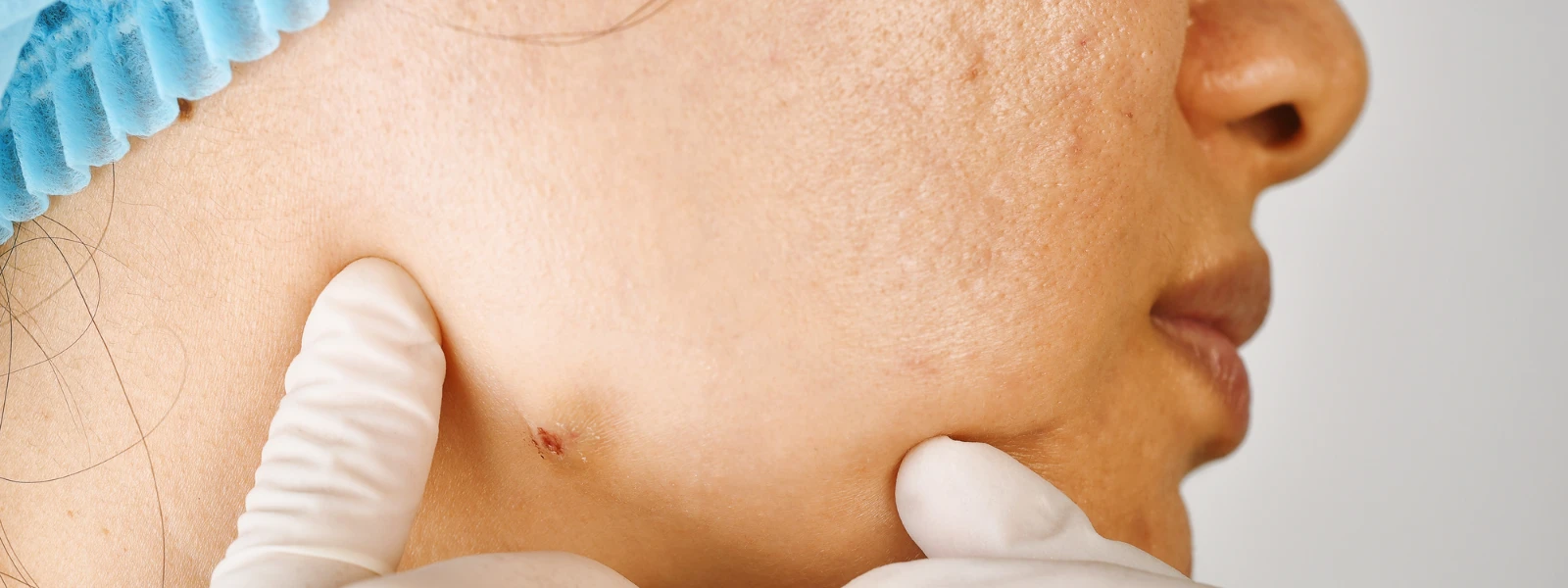
Cystic acne forms deeper under the skin than a surface pimple. It can be sore, swollen, and slow to settle. On melanin-rich skin, that inflammation can also leave dark spots after the cyst is gone.
This is why gentle blemish control matters. Irritation can worsen the cycle of breakouts and hyperpigmentation. Two factors make this particularly relevant for melanin-rich skin: the way cysts trigger excess pigment, and the hormonal patterns that often drive recurring breakouts.
Inflammation can signal the skin to produce more melanin. That extra pigment may remain as a dark spot, also called post-inflammatory hyperpigmentation. Do not squeeze or scrub a cyst. Both can increase inflammation and raise the chance of a lasting dark spot or scar.
Hormonal acne often appears along the jawline, chin, and lower face. Hormonal shifts can trigger deeper breakouts. Some people with PCOS also notice persistent cystic acne. A dermatologist can help assess recurring patterns, especially when breakouts affect your comfort or leave dark spots.
There is no true overnight cure for a deep cyst. Getting rid of cystic acne safely means reducing irritation and leaving the area alone rather than reaching for harsh treatments. Start one active at a time, especially if you have sensitive skin.
Asaya Daily Clear Salicylic Face Cleanser uses salicylic acid, lactic acid, and Zinc PCA for oily, acne-prone skin. It is a rinse-off option for daily cleansing without relying on harsh scrubs.
Benzoyl peroxide is a common acne treatment, but it can feel drying. It may also bleach fabric, towels, or hair, not your natural skin tone. Use it carefully, add moisturiser, and stop if your skin becomes very irritated. Ask a dermatologist or pharmacist which strength suits your skin.
A warm compress may soothe a tender cyst. An acne patch can protect a spot from touching and picking. Ice wrapped in a clean cloth may ease swelling for a short time. These steps may help comfort, but they do not remove a deep cyst overnight.
Keep your skincare routine simple while a cyst is active. Cleanse, use one acne treatment, moisturise, and protect exposed skin from sun. Too many actives can damage the barrier and make dark spots harder to manage.
Asaya 2% Salicylic Acid & 5% Niacinamide Serum is a leave-on option for active acne, clogged pores, and oil control. It contains salicylic acid, tea tree oil, and niacinamide. Use it once or twice daily, and ease back if your skin feels dry.
Use a gentle, non-stripping cleanser and lukewarm water. Avoid rough towels and frequent cleansing. Follow with a moisturiser that feels comfortable on your skin. Barrier care is not extra work; it helps your skin tolerate acne products with less irritation.
Wait until active irritation settles before focusing on dark spots. Niacinamide and azelaic acid are common ingredients used in routines for uneven tone. Introduce one product at a time. For facial dark spots, the Asaya Spot Fade Duo includes an Advanced Spot Targeting Serum with MelaMe™ Complex and the Fade Forward Roll-On, working together to target and fade dark spots after breakouts.
Natural approaches may support your routine, but they do not cure cystic acne. Some people notice a link between breakouts and dairy or high-sugar foods. Others explore zinc, probiotics, or herbal supplements. Your triggers can be personal.
Try not to change everything at once. Note breakouts, your cycle, stress, and diet patterns for a few weeks. Speak with a qualified professional before using supplements. Avoid putting undiluted oils or harsh kitchen remedies on a cyst, as they can irritate sensitive skin.
See a dermatologist if cysts are painful, frequent, leaving acne scars, or affecting your confidence. Cystic acne may improve over time for some people, but chronic hormonal acne can need medical care. A dermatologist can discuss prescription treatments, including isotretinoin, when appropriate.
Getting help early can also reduce the chance of long-term dark spots. You do not need to wait until every home remedy has failed.
Use a warm compress, avoid picking, and consider a patch to protect the area. Benzoyl peroxide may help some acne types, but deep cysts rarely disappear overnight. If a cyst is very painful, seek professional advice.
Hormonal shifts, inflammation, and individual diet patterns can play a role. Dairy and sugar are possible triggers for some people. PCOS may also be linked with persistent hormonal acne.
It can improve, but recurring cysts may need professional treatment. A consistent gentle cleansing routine — like using a salicylic acid face wash daily — may support blemish control, while a dermatologist can address ongoing causes.
Natural steps can support skin health, but they are not a cure. Diet notes, gentle care, and avoiding irritation may help. Persistent cysts still deserve medical guidance.
Cystic acne needs patience, not punishment. Calm active breakouts, protect your barrier, and treat dark spots once skin feels settled. Asaya's MelaMe™ Complex is an advanced, skincare-engineered, melanin-first molecule — tested and proven to visibly treat discolouration and restore pigment balance within two weeks of regular use. It works by breaking down excess melanin deposits into re-absorbable amino acids. This helps inhibit further excess melanin production, supporting the fading and prevention of dark spots while helping restore more even-toned, clarified skin.
