


9 Affordable Acne Mark Serums for Sensitive Skin
Your Cart
0You May Also Like
Acne is frustrating enough on its own. But for a lot of us with Indian skin, the breakout itself is almost the smaller problem. It's what comes after — the dark mark that sits there for weeks, sometimes months — that really gets to you. You've probably tried products that promised to help and either did nothing or left your skin feeling raw and irritated. That's not a you problem. It's a formulation problem. Most acne and post-acne products weren't built with melanin-rich skin in mind, and sensitive skin makes it even trickier. The good news is that understanding what's actually happening under your skin makes it a lot easier to find what works.
Acne on Indian skin often leaves dark marks behind because melanin-rich skin produces more pigment in response to inflammation.
Gentle, targeted actives like Salicylic Acid, Niacinamide, and Kojic Acid can treat active acne and fade post-acne marks without irritating sensitive skin.
Consistency matters more than intensity — a simple, well-chosen routine beats an aggressive one every time.
When your skin gets inflamed — from a breakout, a picked spot, or even friction — it responds by producing extra melanin in that area. This is called post-inflammatory hyperpigmentation, or PIH. On deeper skin tones, this response is stronger, which is why the dark spot left behind can look more intense and take longer to fade than the original pimple.
This isn't a flaw. It's just how melanin-rich skin is wired. But it does mean that treating acne on Indian skin requires a two-part approach: clearing the active breakout and then addressing the mark it leaves behind. Skipping either step means you're only solving half the problem.
Not all acne is the same, so not all treatments work the same way. The key is matching the right ingredient to what your skin is actually dealing with.
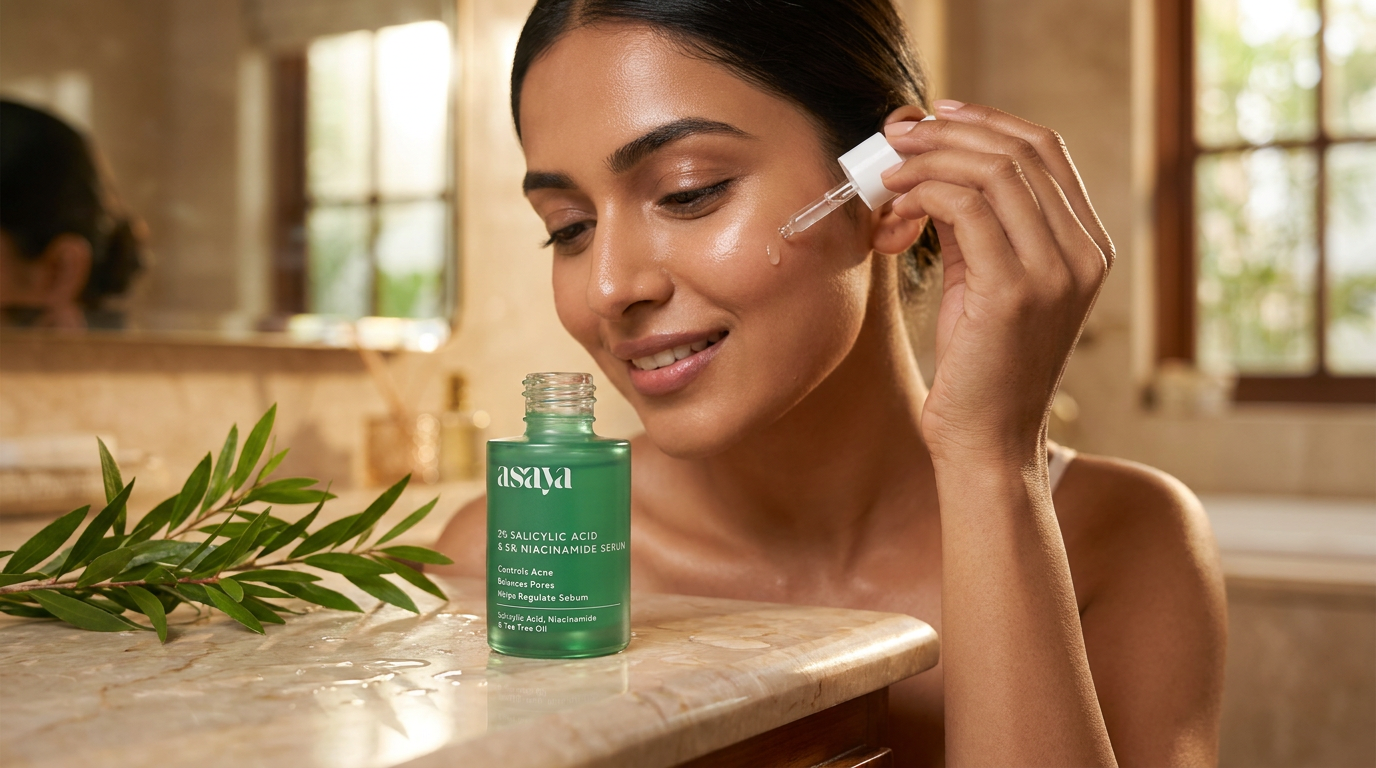
Salicylic Acid is a BHA — a beta hydroxy acid — that works by getting inside the pore and dissolving the buildup of oil and dead skin that causes blackheads, whiteheads, and breakouts. It's oil-soluble, which means it can actually reach where the problem starts. The Asaya 2% Salicylic Acid and 5% Niacinamide Serum pairs this with Niacinamide and Tea Tree Oil, making it effective for active acne and excess oil without stripping the skin. It's a good option if your skin tends to be oily or congested, and it works well even on sensitive skin because the Niacinamide helps keep the barrier calm while the Salicylic Acid does its job.
A lot of people underestimate how much a good cleanser can do. If your face wash isn't clearing out excess oil and dead skin, your serums have to work harder. The Asaya Daily Clear Salicylic Face Cleanser combines 2% Salicylic Acid with 2% Lactic Acid and Zinc PCA — a combination that clears pores, controls oil, and helps reduce blemishes without over-drying. It's a rinse-off product, so the actives don't sit on your skin, which makes it a gentler entry point if you're new to acids or have reactive skin.
Once the active breakout is under control, the focus shifts to the marks it left behind. This is where a lot of people get impatient and reach for the strongest thing they can find — which often backfires on sensitive skin. The better approach is to use ingredients that inhibit melanin production and gently fade existing pigment without triggering more inflammation.
Both Kojic Acid and Alpha Arbutin work by slowing down the enzyme that triggers melanin production. Used together, they're more effective than either one alone. The Asaya 2% Kojic Acid and 1% Alpha Arbutin Serum is formulated specifically for this — it targets post-acne marks, uneven tone, and PIH with a gentle, leave-on formula that works for all skin types, including sensitive skin. Most people start seeing a visible difference in tone within a few weeks of consistent daily use.
If your skin is dealing with post-acne redness alongside dark marks, Niacinamide is worth paying attention to. It helps reduce redness, strengthens the skin barrier, and regulates oil — all without irritating sensitive skin. It's already present in the Asaya 2% Salicylic Acid and 5% Niacinamide Serum, so if you're using that for active acne, you're already getting this benefit built in.
This one gets skipped more than it should. UV exposure makes dark spots darker and slows down the fading process significantly. If you're using actives to treat acne marks and not wearing sunscreen, you're working against yourself. The Asaya Sheerscreen Mist Sunscreen Spray SPF 50+ is a broad-spectrum SPF 50+ PA++++ mist that goes on clear, dries quickly, and leaves no white cast — which matters a lot on deeper skin tones. It's water-resistant for up to 80 minutes, so it holds up through a full day, and it's easy to reapply over makeup or on the go.
Yes, but the formulation matters. A serum that pairs Salicylic Acid with a calming ingredient like Niacinamide — the way the Asaya 2% Salicylic Acid and 5% Niacinamide Serum does — is much less likely to cause irritation than a standalone acid product. Start with once daily and see how your skin responds before increasing frequency.
It depends on how deep the pigmentation is and how consistently you're using the right ingredients. Mild post-acne marks can start fading visibly in 2 to 4 weeks with daily use of a targeted serum. Deeper or older marks take longer — sometimes 6 to 8 weeks. Sunscreen use during this period makes a real difference in how fast things move.
Generally yes, but layering too many strong actives at once can overwhelm sensitive skin. A practical approach: use a Salicylic Acid-based cleanser in the morning, a pigment-targeting serum like the Asaya 2% Kojic Acid and 1% Alpha Arbutin Serum in your routine, and always finish with SPF during the day. Keep it simple and give each product time to work before adding more.
Usually, yes. Actives that clear active acne (like Salicylic Acid) work differently from those that fade pigment (like Kojic Acid or Alpha Arbutin). Using both — in the right order and at the right time — gives you better results than trying to find one product that does everything.
Acne on Indian skin is a two-part challenge — the breakout and the mark it leaves. The most effective approach is a routine that addresses both, with ingredients matched to what your skin actually needs, not just what's trending. Gentle, consistent, and targeted beats aggressive every time, especially on sensitive skin.
One ingredient worth knowing about in this space is Asaya's MelaMe™ Complex — a melanin-first molecule developed specifically for deeper skin tones. It works by breaking down excess melanin deposits into re-absorbable amino acids and inhibiting further overproduction, which means it fades existing dark spots while helping prevent new ones from forming. In clinical testing, visible fading was seen within 2 weeks of regular use. It's present in Asaya's Even Tone Face Cleanser and the full Anti-Pigmentation Sets, making it a strong option if post-acne pigmentation is your main concern. If you've been dealing with marks that just won't budge, that's a good place to start.
