


7 Easy Ways to Fade Acne Scars for Clearer Indian Skin
Your Cart
0You May Also Like

₹599 ₹749

₹424 ₹499

₹479 ₹599

₹559 ₹699

₹424 ₹499

₹439 ₹549
Acne can heal, yet the dark spot it leaves behind can stay in view. This is common on Indian, melanin-rich skin. After a breakout, your skin may make extra melanin at that spot. That can leave acne marks and an uneven skin tone. If you are looking for easy ways to remove acne scars or methods to fade acne marks, the answer often starts with calm, steady care. Asaya formulates for this pattern, with a focus on dark spots that can behave differently in Indian skin. The key is to prevent new breakouts, avoid irritation, and protect marks from the sun while they fade.
Flat acne marks often fade with sunscreen, gentle actives, and time.
Textural acne scars need a dermatologist-led plan more often.
Do not pick acne or use harsh DIY acids. Both can deepen dark spots.
Indian skin often has more active melanin production. Inflammation from acne can signal the skin to produce extra pigment. This creates post-inflammatory hyperpigmentation, also called PIH.
PIH is not a sign that you did anything wrong. It is a normal skin response, but the reason it can linger is rooted in how melanin-rich skin reacts to inflammation — even mild irritation can trigger excess pigment production, which is why sun protection and a calm routine matter so much during the healing phase.
PIH is a flat brown, red, or grey mark. Topical dark spot treatment and daily SPF can help it fade. True acne scars change the skin's texture. They may look indented or raised, and often need in-clinic acne scar removal options.
Retinoids, glycolic acid, lactic acid, and niacinamide can support dark spot treatment. They help renew surface skin or support a more even pigment response. Start slowly, especially if your skin gets irritated easily.
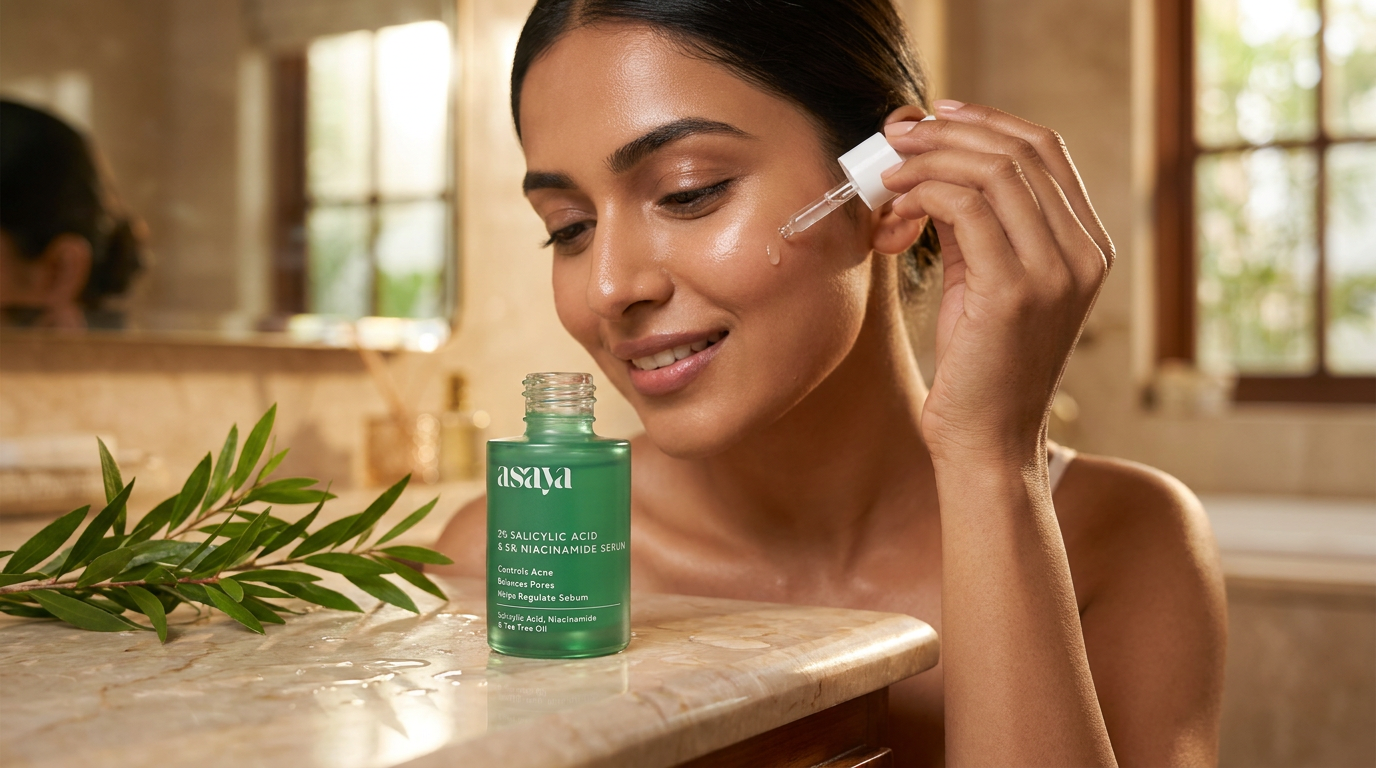
For active acne and oil, Asaya 2% Salicylic Acid & 5% Niacinamide Serum combines BHA with niacinamide and Tea Tree Oil. It targets clogged pores and may help reduce the breakouts that leave new acne marks.
Use one strong active at a time when you begin. Patch-test first and add products on separate nights. Too much exfoliation can irritate skin and worsen dark spots. Follow with a simple moisturiser and wear sunscreen each morning.
Aloe vera, honey, rosehip oil, and black seed oil may feel soothing for some people. They are not proven replacements for a planned dark spot treatment. Use them only if your skin tolerates them.
Skip lemon juice and harsh scrubs. High-strength acidic DIY treatments can irritate skin. Irritation can trigger more darkening in melanin-rich skin.
Aloe vera may feel calming.
Honey may suit a short wash-off mask.
Oils may support dryness, but do not erase acne marks.
AHAs work on surface buildup and can help uneven skin tone look clearer and support skin brightening over time. BHAs can help unclog pores, which matters if you still get acne. Strong peels need care because overuse can cause more irritation.
Asaya Daily Clear Salicylic Face Cleanser uses 2% salicylic acid, 2% lactic acid, and Zinc PCA for oily, acne-prone skin. For weekly exfoliation, Asaya Super Fade Regenerative Peel contains AHA, BHA, PHA, and a barrier-calm complex. Follow its use guidance and do not combine it with several strong actives at once.
Microneedling, chemical peels, and laser treatments are options for textural scars or persistent dark marks. The right choice depends on your scar type, skin sensitivity, and pigment response. During a consultation, a dermatologist will typically assess whether your marks are flat PIH or true textural scars, as each responds differently to clinical intervention. Some procedures carry a risk of triggering further darkening in melanin-rich skin, so professional guidance is especially important.
See a dermatologist before any procedure. A professional can assess the risk of post-treatment darkening and choose a plan that suits your skin.
Sunscreen is a core part of skincare for Indian skin. UV exposure can encourage melanin production and make existing acne marks look darker. Use broad-spectrum SPF daily and reapply when needed.
Asaya Sheer Milk Sunscreen provides SPF 50 PA++++ in a matte fluid texture for oily, acne-prone skin. Do not pick spots. Keep your routine gentle so your barrier can recover.
Dark marks fade gradually, not overnight. Flat PIH marks can begin to look lighter within a few weeks of consistent sunscreen use and a gentle active routine, though full fading may take three to six months depending on how deep the mark is. Textural scars tend to change more slowly and may require several rounds of clinical treatment before a visible difference appears.
If marks keep getting darker, acne stays active, or scars affect your confidence, speak with a dermatologist. A focused plan is usually safer than adding more and more products.
These are common questions about acne marks, scars, and dark spots.
Flat PIH marks can fully fade. Indented or raised scars can improve, but they may not disappear completely without clinical care.
Korean skincare routines often focus on layered hydration, barrier-first approaches, and ingredients like snail mucin and centella asiatica to calm skin and support recovery. These practices can help maintain a healthy skin barrier and reduce irritation. For Indian skin, however, consistent sunscreen use and active acne control remain the most important steps, as melanin-rich skin is more prone to post-inflammatory darkening that hydration alone cannot address.
This question is about active acne, not scars. Tea tree oil and honey are often used at home, but they can irritate some skin. Patch-test first and stop if you feel stinging.
Older scars are harder to improve, but treatment may still help. A dermatologist can discuss options such as microneedling, peels, or lasers. Asaya skincare can support daily dark spot care, but it cannot replace a scar assessment.
What are some easy methods to remove acne scars? Start with the basics: control new acne, use gentle actives, and protect every mark from the sun. For dark spots, Asaya's MelaMe™ Complex is an advanced, melanin-first complex designed to visibly treat discolouration and restore pigment balance within 2 weeks of regular use. It is tested and proven to help break down excess melanin deposits into re-absorbable amino acids while helping inhibit excess melanin production. That means it supports existing dark spots and helps prevent new blemishes from looking darker.
