


13 Top-Rated Acne Marks Treatments for Women's Clearer Skin
Your Cart
0You May Also Like
If you've ever watched a breakout heal, only to leave behind a dark mark that sticks around for weeks, you're not imagining things. Acne on Indian skin doesn't just come and go — it often leaves a trail. The breakout clears, but the spot stays, and that's a whole separate frustration. Understanding why this happens, and what actually helps, makes the whole process a lot less overwhelming. Asaya was built around exactly this — the specific way acne behaves on melanin-rich skin, and what it actually takes to treat it.
Acne on Indian skin often leads to post-acne dark spots because melanin-rich skin produces more pigment in response to inflammation.
Treating acne and the marks it leaves behind requires different ingredients — salicylic acid for active breakouts, and melanin-inhibiting actives like kojic acid and alpha arbutin for the spots after.
Consistency matters more than intensity — most people see visible improvement in 2 to 4 weeks with the right routine.
Acne itself is frustrating enough. But for most people with deeper skin tones, the breakout is only half the story. Once the pimple heals, the skin often responds by producing extra melanin at that spot — a process called post-inflammatory hyperpigmentation, or PIH. This is your skin's natural response to inflammation, and it's more pronounced in melanin-rich skin because there's simply more pigment-producing activity happening at baseline.
This isn't a flaw. It's just how your skin works. But it does mean that effective acne treatment for Indian skin needs to address two things: the active breakout, and the mark it leaves behind. Most generic skincare only targets one.
Every time your skin gets inflamed — whether from a pimple, picking, or even a harsh product — it sends a signal to your melanocytes to produce more pigment. The more inflamed the breakout, the darker the mark it tends to leave. This is why gentle, consistent treatment works better than aggressive spot-treating that irritates the skin further.
Dark spots from acne sit in the upper layers of the skin. They fade as your skin naturally turns over, but that process takes time — usually 4 to 8 weeks without targeted treatment, and 2 to 4 weeks with the right actives. Patience is part of the process, but the right ingredients genuinely speed things up.
When you're dealing with active breakouts — the kind that are red, raised, or under the skin — the goal is to clear the pore, reduce inflammation, and stop new ones from forming. A few ingredients do this reliably and are well-studied enough to trust.
Salicylic acid is the most effective option for most people. It's oil-soluble, which means it can get inside the pore and dissolve the buildup that causes blackheads, whiteheads, and cystic spots. At 2%, it's strong enough to work without being harsh. Niacinamide at 5% works alongside it — it calms redness, regulates oil production, and helps prevent the inflammation that leads to post-acne marks in the first place.
A lot of people skip straight to serums, but your cleanser sets the foundation. If it strips your skin, your skin overproduces oil to compensate — which feeds more breakouts. The Asaya Daily Clear Salicylic Face Cleanser combines 2% salicylic acid, 2% lactic acid, and zinc PCA in a gel formula that clears pores and controls oil without leaving your skin feeling tight or dry. It's the kind of daily wash that actually does something, without making your skin worse in the process.
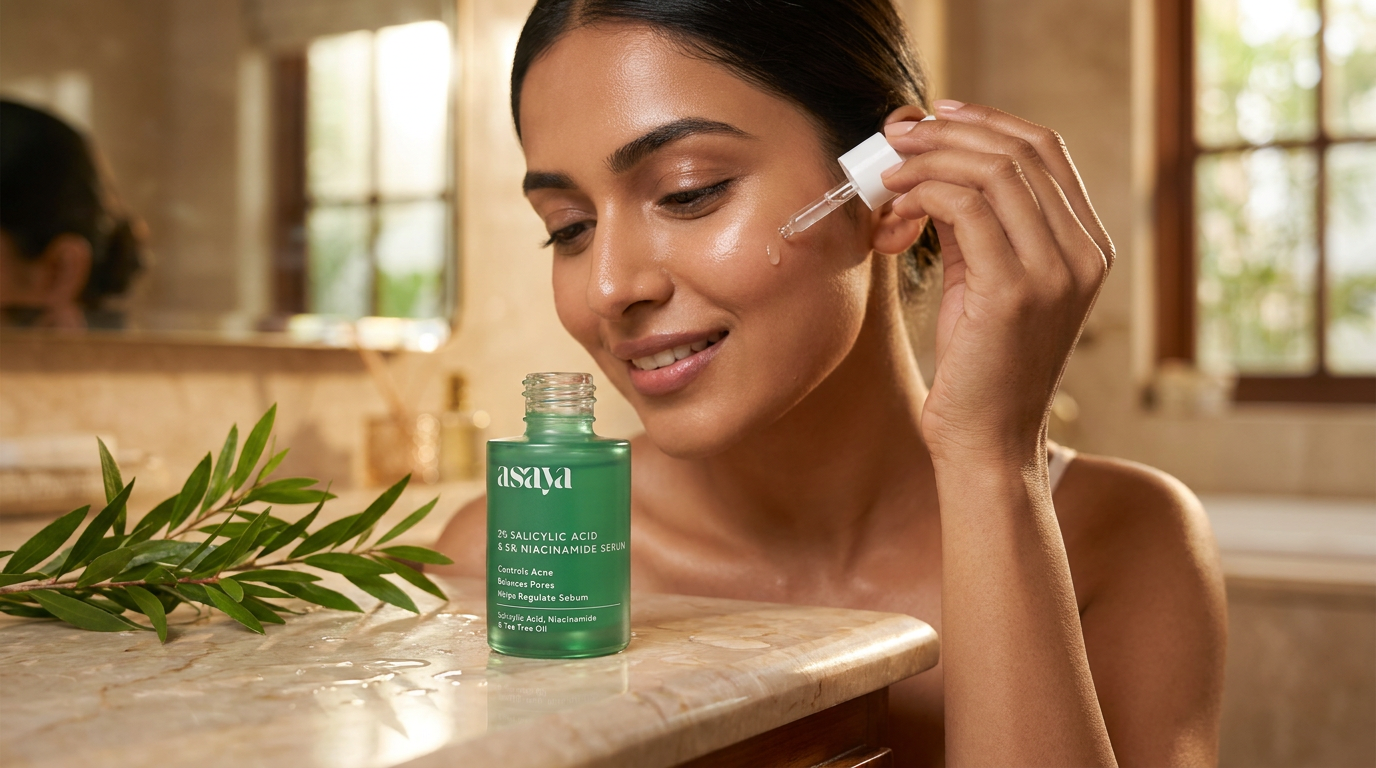
For oily and acne-prone skin, a leave-on serum with salicylic acid works continuously between washes. The Asaya 2% Salicylic Acid and 5% Niacinamide Serum combines BHA with niacinamide and tea tree oil — a trio that targets active breakouts, reduces pore size, and calms the inflammation that leads to dark spots. It absorbs quickly and doesn't leave a greasy finish, which matters when you're already dealing with excess oil.
Once the active breakout is under control, the focus shifts to the dark spots. These need ingredients that work on melanin — either by slowing down how much your skin produces, or by breaking down existing pigment deposits so they can fade faster.
Two of the most reliable options for this are kojic acid and alpha arbutin. Both inhibit the enzyme that triggers melanin production, which means they work on the root cause of the dark spot rather than just lightening the surface. Used consistently, they produce visible fading in about 2 to 4 weeks.
The Asaya 2% Kojic Acid and 1% Alpha Arbutin Serum pairs these two actives in one formula. Kojic acid works on melanin production at the source, while alpha arbutin adds a gentler, sustained inhibiting effect. Together, they're more effective than either ingredient alone — and the formula is gentle enough for daily use on all skin types, including sensitive skin.
Vitamin C is another strong option, especially if your skin also looks dull or uneven from sun exposure. At 15%, it's potent enough to make a visible difference. The Asaya 15% Vitamin C and E Serum with Ferulic Acid combines vitamin C with vitamin E and ferulic acid — a combination that's well-studied for its ability to fade dark spots, support collagen, and protect against the kind of oxidative stress that makes pigmentation worse. It works in both AM and PM routines.
The most common mistake people make is treating acne and dark spots as separate problems that need separate routines. They're connected. Clearing active breakouts reduces the inflammation that causes new dark spots. Fading existing spots while preventing new ones is the actual goal.
A simple, effective routine for acne-prone skin with post-acne marks looks like this:
Cleanser with salicylic acid, morning and night
Salicylic acid and niacinamide serum on breakout-prone areas
Kojic acid and alpha arbutin serum on existing dark spots
SPF every morning, without exception
Sunscreen isn't optional when you're treating dark spots. UV exposure makes existing pigmentation darker and slows down fading significantly. Any progress you make with actives gets undone without sun protection.
Without any targeted treatment, post-acne dark spots can take 4 to 8 weeks to fade on their own. With consistent use of melanin-inhibiting actives like kojic acid and alpha arbutin, most people see visible fading in 2 to 4 weeks. The key word is consistent — skipping days slows the process down.
Yes, but layer them thoughtfully. Use your salicylic acid serum first, let it absorb, then apply your kojic acid or alpha arbutin serum. Avoid using multiple strong actives at the same time if your skin is sensitive — start with one and add the second once your skin has adjusted.
The Asaya 2% Kojic Acid and 1% Alpha Arbutin Serum is a strong starting point for post-acne dark spots. If you're also dealing with active breakouts, pairing it with the Asaya 2% Salicylic Acid and 5% Niacinamide Serum covers both concerns. For a more complete routine, the Asaya Advanced Anti-Pigmentation Set includes a cleanser, serum, moisturizer, and SPF 50 sunscreen — everything you need in one place.
Most leave-on acne treatments with salicylic acid at 2% are formulated for daily use. If you're new to the ingredient, start with once a day and see how your skin responds before moving to twice daily. If you notice dryness or irritation, scale back — more isn't always better.
Acne on Indian skin is a two-part problem — the breakout, and what it leaves behind. Treating both at the same time, with ingredients that are actually suited to melanin-rich skin, is what makes the difference between a routine that works and one that just feels like effort.
The science behind fading post-acne marks has come a long way. Asaya's MelaMe™ Complex is built specifically for this — it works on existing dark spots by breaking down excess melanin deposits into re-absorbable amino acids, while also inhibiting further melanin production. That means it's addressing the mark that's already there and preventing new ones from forming at the same time. Most people see visible results within 2 weeks of regular use. It's not a shortcut — it's just a smarter approach to how pigmentation actually works on deeper skin tones.
If acne marks have been the stubborn part of your skin journey, you're not stuck with them. The right ingredients, used consistently, do make a visible difference. Give it a few weeks, protect your skin from the sun, and let the actives do their job.
