


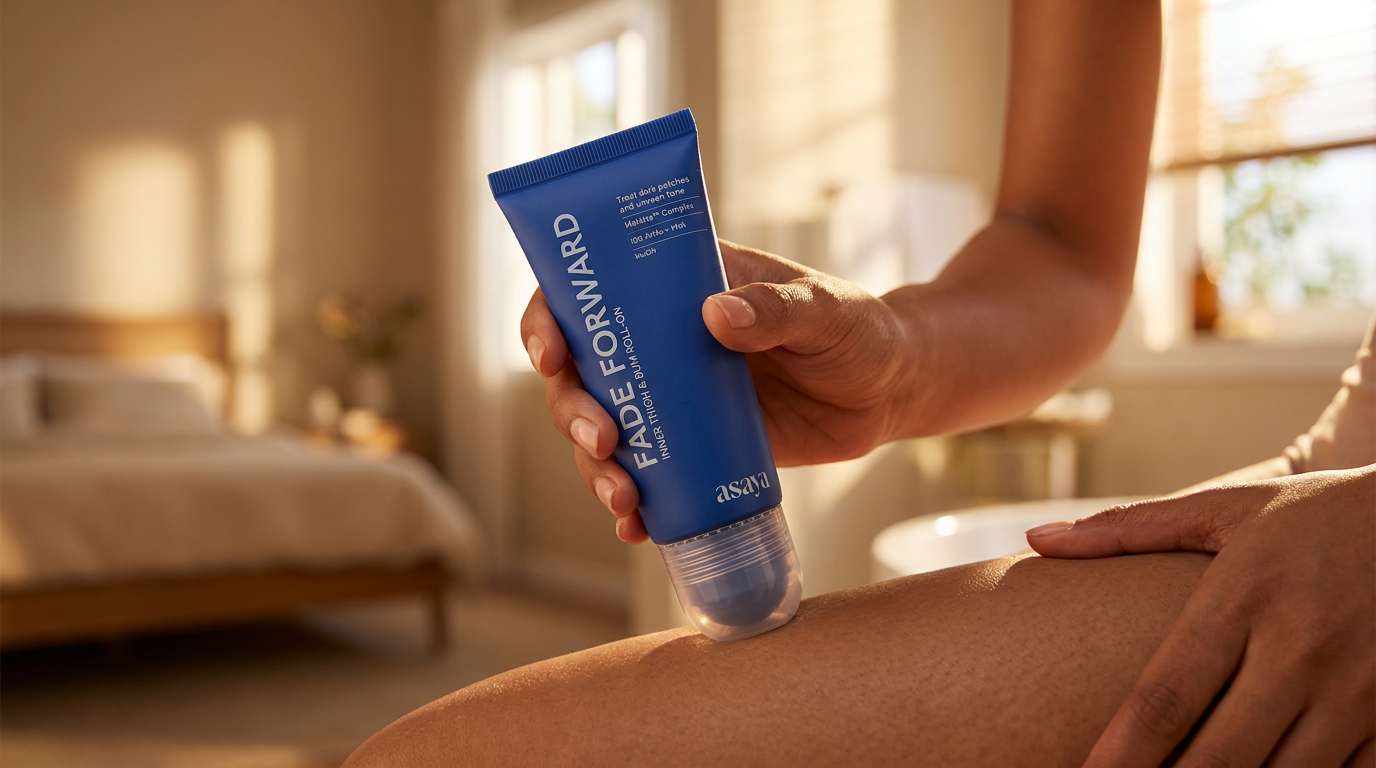
Dark skin on inner thighs is common and treatable. Asaya explains why friction, moisture, and pigmentation happen in this area, and shares practical steps to address it. Learn what causes darkening and how targeted skincare can help even out your tone.
Featured why inner thighs get dark Collection
Dark inner thighs are something many people deal with, and if it's been bothering you, you're not alone. Asaya is here to break down exactly why this happens and what you can actually do about it.
Why Do Inner Thighs Get Dark?
Inner thighs darken for a few main reasons, and most of them come down to friction, moisture, and how your skin naturally produces melanin. The skin in this area is thinner and more sensitive than most other parts of your body, which means it reacts faster to irritation. When skin rubs against itself or clothing repeatedly, it can trigger inflammation. Your body responds to that inflammation by producing extra melanin in that spot—that's what creates the darker patches. Add sweat and moisture to the mix, and you've got a perfect environment for darkening to happen. It's not a sign that anything is wrong with you; it's just how your skin works.
Friction and Moisture: The Main Culprits
Friction is the biggest driver of darkening on inner thighs. Whether it's from walking, exercise, or even just the way your thighs naturally touch, repeated rubbing irritates the skin. That irritation signals your melanocytes (the cells that make melanin) to produce more pigment as a protective response. Moisture makes this worse. Sweat trapped in that area keeps the skin damp, which softens it and makes it more prone to irritation. If you live in a humid climate or exercise regularly, you're creating the ideal conditions for darkening to develop or get worse.
Hormones and Post-Inflammatory Hyperpigmentation
Sometimes darkening on inner thighs isn't just about friction—it can also be triggered by hormonal shifts or by skin that's healing from irritation, ingrown hairs, or minor cuts. When your skin heals from any kind of injury or inflammation, it can leave behind darker patches. This is called post-inflammatory hyperpigmentation, and it's especially common on darker skin tones. Hormonal changes during your cycle or from hormonal contraceptives can also make your skin more prone to producing extra melanin in response to irritation.
How to Address Dark Inner Thighs
The first step is to reduce friction and keep the area dry. Wear breathable, loose-fitting clothing when you can, and change out of sweaty clothes quickly. For actual darkening, targeted skincare with proven actives makes a difference. Look for ingredients like Kojic Acid or Alpha Arbutin, which work by slowing down melanin production. Niacinamide is also helpful because it strengthens your skin barrier and reduces irritation. Consistency matters more than speed—you'll typically see visible fading in 4 to 6 weeks with regular use. Sunscreen on the area when it's exposed also prevents new darkening from forming.
Q: How long does it take to fade dark inner thighs?
A: Most people see visible fading in 4 to 6 weeks with consistent use of the right actives. Darker spots take time to form, so they take time to fade too. Stick with it, and be patient with your skin.
Q: Can I prevent dark inner thighs from getting worse?
A: Yes. Wear loose, breathable clothing, keep the area dry, and use sunscreen if the area is exposed. These simple steps stop friction and sun damage from making darkening worse.
Q: Are dark inner thighs a sign of something serious?
A: No. Dark inner thighs are a normal response to friction and moisture, not a medical condition. If you notice sudden changes or other symptoms, check with a dermatologist, but darkening alone is just your skin doing its job.
Q: Which ingredients work best for darkening on inner thighs?
A: Kojic Acid and Alpha Arbutin are the gold standard for slowing melanin production. Niacinamide helps reduce irritation and strengthen your barrier. Look for serums or targeted treatments with these actives.
Q: Can I use the same pigmentation serum on my inner thighs as I use on my face?
A: Yes, if the formula is gentle and doesn't irritate. The skin on inner thighs is sensitive, so avoid anything with high concentrations of acids or strong actives. A simple, hydrating serum with Kojic Acid or Alpha Arbutin is your best bet.
