


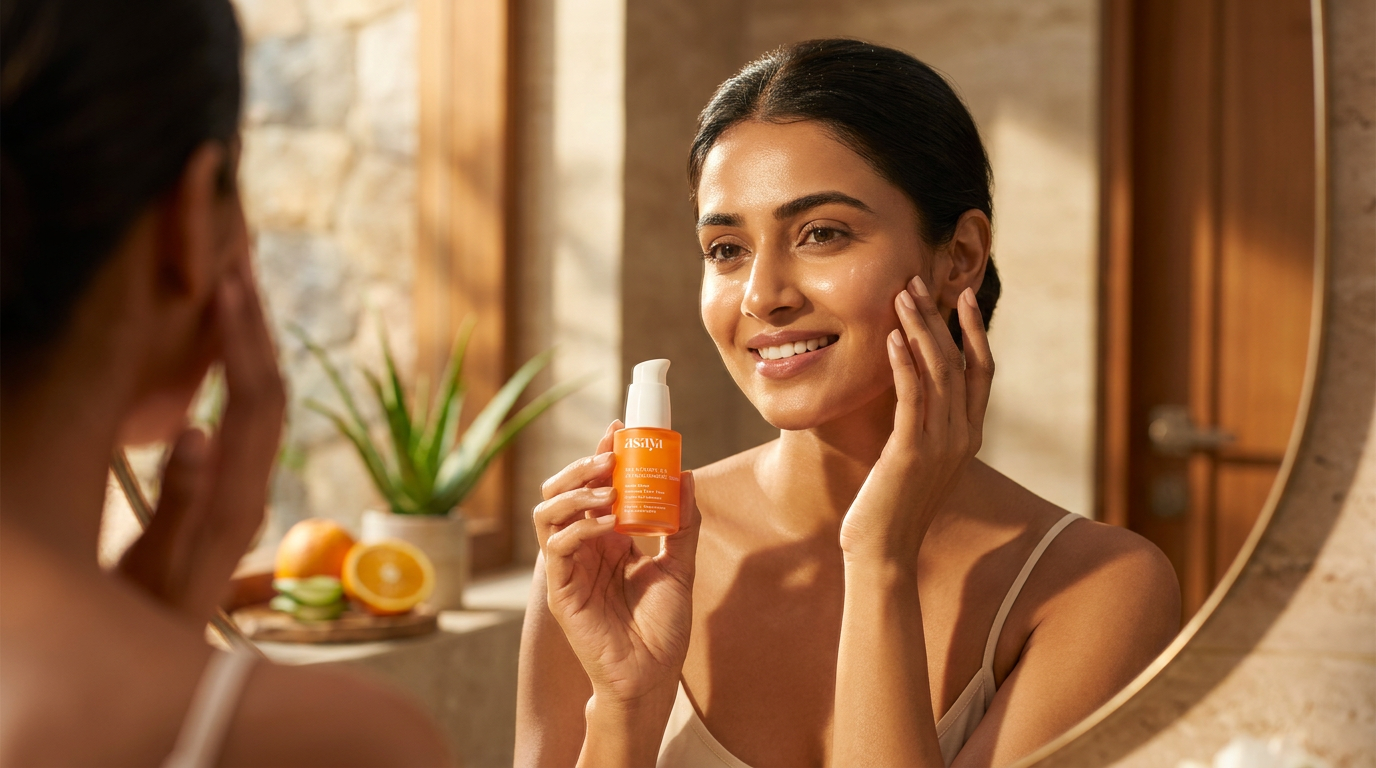
Dark spots on dry skin need more than just pigmentation support—they need hydration too. Asaya's serums for dark spots are formulated to fade hyperpigmentation while keeping your skin barrier intact. Clinically tested actives like Kojic Acid and Alpha Arbutin work to visibly reduce spots in weeks, without the dryness or irritation you've faced before. For Indian skin tones dealing with post-acne marks and sun spots, this is targeted relief that actually works.
Featured serum for dark spots dry skin Collection
Dark spots on dry skin are frustrating because most pigmentation serums feel stripping or irritating. Asaya's dark spot serums are built differently—they fade hyperpigmentation while respecting your skin barrier, so you get visible results without the tightness or flaking.
Why Dark Spots Show Up on Dry Skin
Dark spots form when your skin produces extra melanin in one spot, usually after a breakout, sun exposure, or irritation. On dry skin, the barrier is already compromised, so spots often look darker and feel more stubborn. Add dehydration to the mix, and pigmentation becomes harder to address. The fix isn't just about fading the spot—it's about hydrating while you fade it.
How Asaya Serums Work on Dark Spots and Dryness
Our serums use clinically-backed actives like Kojic Acid and Alpha Arbutin to interrupt melanin production at the source. These aren't gentle ingredients—they work—but we pair them with humectants and hydrating bases so your skin doesn't feel dry or tight while using them. Most people see visible fading in 2 to 3 weeks with consistent use, morning and night. The key is consistency and sun protection (dark spots get worse with UV exposure, so sunscreen is non-negotiable).
What to Expect When You Start
Week 1: Spots may look slightly less dark as hydration improves. Week 2-3: Visible fading becomes noticeable, especially on newer spots. Week 4+: Older, deeper spots continue to lighten. If your skin feels dry at any point, layer a hydrating toner or moisturizer underneath the serum—pigmentation actives work better on hydrated skin anyway. Skip the overcomplication: serum, moisturizer, sunscreen. That's the routine.
Dark Spot Serums for Indian Skin Tones
Mainstream serums often ignore the fact that melanin-rich skin tones show pigmentation differently. Dark spots can look almost blue-black, and the surrounding skin may be uneven in tone. Asaya formulas are tested on Indian skin tones specifically, so you're not guessing whether something will work on you. No generic, one-size-fits-all approach—just targeted actives that address what you actually see in the mirror.
Q: How long does it take to see results on dark spots?
A: Most people notice visible fading in 2 to 3 weeks with daily use, morning and night. Older, deeper spots take longer—sometimes 6 to 8 weeks. Consistency matters more than waiting for a miracle.
Q: Can I use a dark spot serum if my skin is very dry?
A: Yes, but layer it carefully. Apply the serum to damp skin, then follow with a hydrating toner and moisturizer. Dry skin actually responds better to pigmentation actives when it's properly hydrated first.
Q: Will a dark spot serum make my dry skin worse?
A: Not if you're using the right formula and supporting it with hydration. Asaya serums are designed to fade spots without stripping. If you feel tightness, you may be skipping the moisturizer step—don't.
Q: Do I need sunscreen with a dark spot serum?
A: Absolutely. Dark spots get worse with sun exposure, so SPF 30 or higher, every single day, is essential. Without it, you're working against yourself.
Q: Can I use this serum with other actives like Niacinamide or Vitamin C?
A: Yes, but start slow. If you're new to actives, use the dark spot serum alone for 2 weeks first. Once your skin is used to it, you can layer Niacinamide (which also helps with pigmentation) or a Vitamin C serum in the morning. Just don't overload—your skin will tell you if it's too much.
