


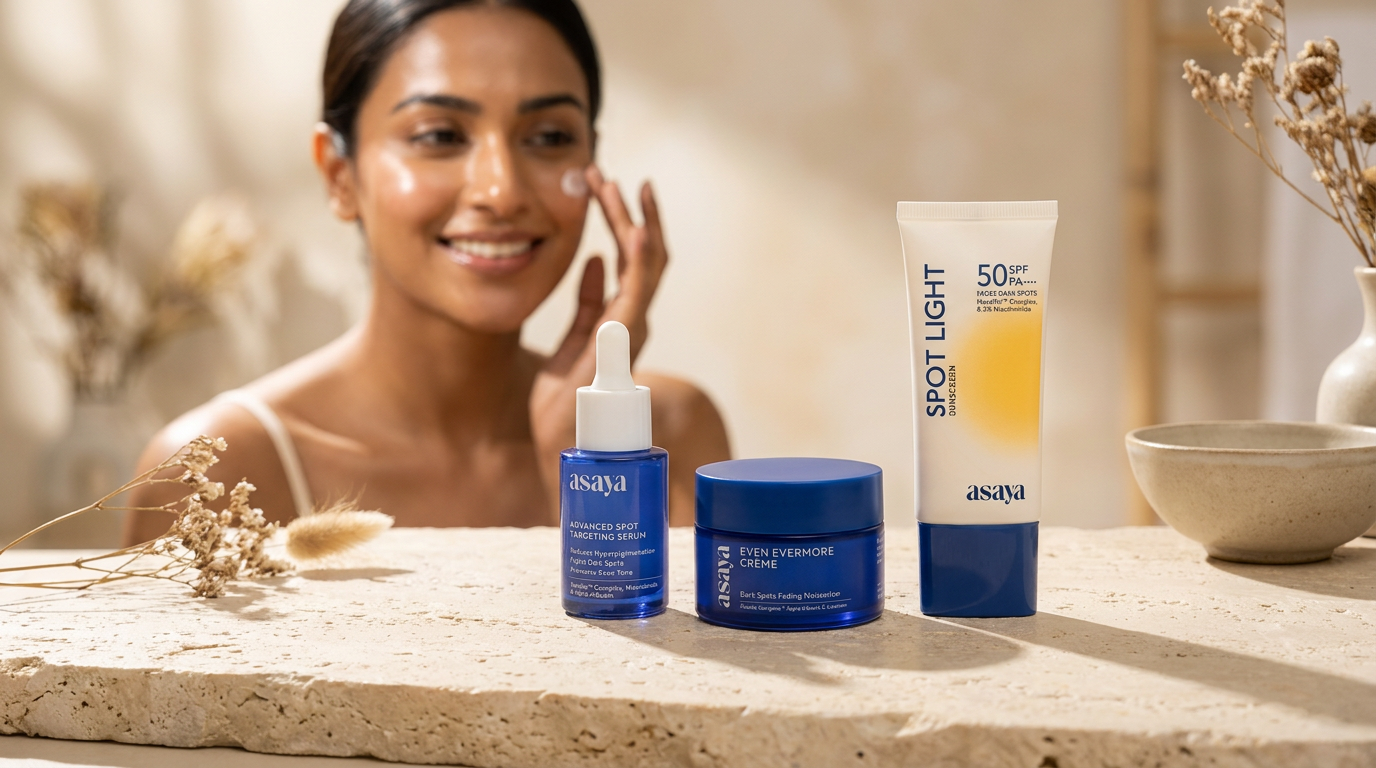
Asaya's Kojic Acid Face Serum targets dark spots and uneven tone with clinically-backed actives designed for melanin-rich skin. See visible fading in 2-3 weeks with consistent use. No hype, just results backed by dermatology and real skin science.
Featured kojic acid face serum ad Collection
Dark spots happen. Whether it's from a breakout, sun exposure, or just your skin's natural response to irritation, that extra melanin shows up in patches. Asaya's Kojic Acid Face Serum is built to address exactly this—not with empty promises, but with a clinically-studied active that actually works on melanin-rich skin tones.
How Kojic Acid Works on Dark Spots
Kojic acid works by slowing down the enzyme tyrosinase, which is responsible for melanin production. When you apply it consistently, your skin gradually produces less melanin in those dark spot areas, and the existing spots fade over time. It's not instant—dark spots took weeks or months to form, so they take a few weeks to fade too. Most people see visible lightening in 2-3 weeks with daily use, and more significant results in 6-8 weeks. It's gentle enough for regular use but strong enough to actually make a difference.
Why Kojic Acid Matters for Your Skin Tone
A lot of skincare is designed for lighter skin tones first, then adapted for everyone else. Kojic acid is different—it's particularly effective on deeper skin tones because it targets melanin production directly, without disrupting your skin's natural tone. You're not lightening your whole face; you're evening out the spots. That's why dermatologists often recommend it for post-inflammatory hyperpigmentation and melasma, both of which show up more visibly on melanin-rich skin.
How to Use Kojic Acid Serum Correctly
Apply a few drops to clean, dry skin before your moisturizer. Use it morning and night for best results. Kojic acid can make your skin slightly more sun-sensitive, so sunscreen during the day is non-negotiable—not optional. If you're new to it, you can start with once-daily use and work up to twice daily as your skin adjusts. Avoid mixing it with vitamin C or retinol in the same step; space them out or use them on different days if you're layering actives.
Real Results, Real Timeline
If you've been burnt by products that promised overnight results, we get it. Kojic acid doesn't work like that. What it does is work consistently. Stick with it for at least 4 weeks before deciding if it's right for you. Take a photo of your dark spots now, then check in after 3 weeks and 6 weeks. You'll see the difference. And if pigmentation's been bothering you, this is a good place to start.
Q: Can I use kojic acid if I have sensitive skin?
A: Kojic acid is generally gentle, but if your skin is reactive or you're dealing with active inflammation or a compromised barrier, start slow. Use it 2-3 times a week first, then gradually increase. If irritation persists, take a break and introduce it again after your skin has settled.
Q: How long before I see results with kojic acid?
A: Most people see visible fading of dark spots in 2-3 weeks with consistent, twice-daily use. Deeper or older spots may take 6-8 weeks. Results depend on how dark the spots are and how consistently you use the serum.
Q: Can I use kojic acid with other actives?
A: Yes, but space them out. Kojic acid works well with niacinamide and hyaluronic acid. Avoid using it in the same step as vitamin C or retinol—use them on alternate nights or at different times of day to avoid over-irritation.
Q: Will kojic acid make my skin lighter overall?
A: No. Kojic acid targets melanin production in the dark spot areas, not your overall skin tone. You'll see the spots fade and your tone even out, but your natural skin color stays the same.
Q: Is sunscreen really necessary when using kojic acid?
A: Yes. Kojic acid can increase photosensitivity slightly, meaning your skin is more prone to sun damage. Daily SPF 30 or higher is essential to protect your skin and prevent new dark spots from forming.
