


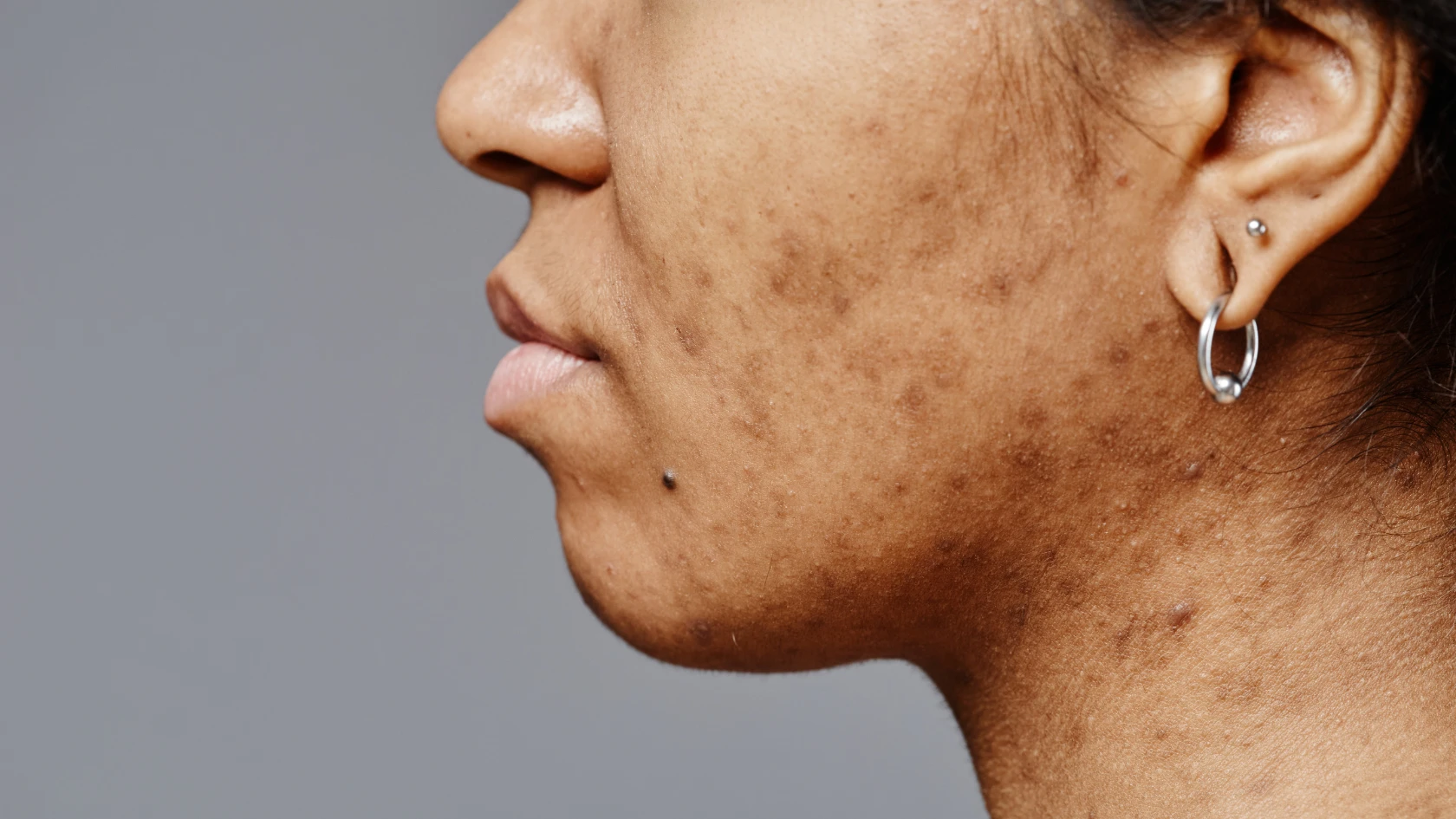
Wedding season has a way of making you hyper-aware of every dark spot and acne scar on your face. If you've been staring at old breakout marks or uneven patches and wondering what to do about them before the big day, you're not alone. The first thing worth knowing is that dark spots and acne scars are actually two different things, and they respond to different ingredients. Dark spots, also called post-inflammatory hyperpigmentation, happen when your skin produces extra melanin after a breakout or irritation. They sit on the surface layers of skin and tend to respond well to actives like Alpha Arbutin, Kojic Acid, and Niacinamide. Acne scars, on the other hand, involve a change in skin texture, either a depression or raised area, caused by damage deeper in the skin. These take longer to address and often need a different approach. The good news is that for most people dealing with flat dark marks before a wedding, consistent use of the right brightening actives can show visible fading in as little as two to four weeks. Asaya's hyperpigmentation range is formulated specifically for Indian, melanin-rich skin, so you're not guessing whether it'll work for your tone.
Featured dark spots before wedding vs acne scars Collection
At Asaya, we hear this a lot: "My wedding is coming up and I need these dark spots gone." Whether it's old acne marks, sun-induced patches, or post-breakout discolouration, understanding what you're actually dealing with is the first step to doing something about it. This guide breaks down the difference between dark spots and acne scars, what works for each, and what's realistic to expect before your wedding day.
Dark Spots vs Acne Scars: What's the Actual Difference?
Dark spots, or post-inflammatory hyperpigmentation (PIH), are flat patches of discolouration left behind after a breakout, rash, or sun exposure. Your skin produced extra melanin in that spot as part of its healing response. They're extremely common on Indian and deeper skin tones because melanin-rich skin is more reactive to inflammation. Acne scars are different. They involve a physical change in skin texture, either a pitted depression (atrophic scar) or a raised bump (hypertrophic scar), caused by collagen disruption during a severe breakout. If you're running your finger over your skin and feeling unevenness, that's likely scarring. If the skin feels smooth but looks darker in patches, those are dark spots. The distinction matters because the treatments are different.
What Actually Works for Dark Spots Before a Wedding
For flat dark marks, the right actives can make a real difference in a few weeks. Alpha Arbutin works by slowing down melanin production at the source, so new pigment doesn't keep forming while existing spots fade. Kojic Acid does something similar and is particularly effective on stubborn post-acne marks. Niacinamide helps by reducing the transfer of melanin to the skin's surface and also calms any ongoing inflammation that might be making things worse. Consistent daily use matters more than how much you apply. Most people see visible fading in two to four weeks. If your wedding is six to eight weeks away, that's a reasonable window to start and see results. Asaya's formulations are built around these actives and tested for Indian skin tones, so you're not adapting a product designed for a different skin profile.
What to Expect If You're Dealing with Acne Scars
Textural scars take longer to address than dark spots, and it's worth being honest about that. In the weeks before a wedding, the realistic goal is to improve the appearance of scars rather than fully resolve them. Ingredients like Retinol and Peptides support collagen remodelling over time, but they work on a months-long timeline. What you can do in the short term is focus on keeping skin calm, hydrated, and protected from sun exposure, which prevents existing marks from darkening further. A good SPF every single morning is non-negotiable here. For the wedding day itself, a well-prepped skin barrier makes a significant difference in how makeup sits and lasts.
A Realistic Pre-Wedding Skin Timeline
Eight weeks out is a good time to start a targeted brightening routine. Introduce one active at a time so your skin can adjust without getting overwhelmed. Six weeks out, your skin should be tolerating the routine well and you may start seeing early fading on dark spots. Four weeks out, stay consistent and don't introduce anything new. Two weeks out, focus on barrier support, hydration, and SPF. The week of the wedding, keep things simple. Stick to what your skin knows. No new products, no aggressive treatments. The goal is calm, even, well-hydrated skin that holds makeup beautifully and doesn't react to stress.
Q: Can dark spots fully fade before a wedding that's four weeks away?
A: It depends on how dark and how old the spots are. Fresh, lighter marks can fade noticeably in four weeks with consistent use of actives like Alpha Arbutin or Kojic Acid. Older, deeper spots may lighten but not fully clear in that time. Starting as early as possible gives you the best outcome.
Q: Is it safe to use brightening actives every day leading up to the wedding?
A: Yes, if your skin has already been introduced to them and is tolerating them well. If you're starting fresh, give yourself at least a week or two to build up usage before going daily. And always pair actives with SPF in the morning, otherwise you risk making dark spots worse.
Q: What's the difference between a dark spot and a scar?
A: A dark spot is flat discolouration caused by excess melanin. A scar involves a change in skin texture, either a depression or raised area. Run your finger over the area. If it feels smooth, it's likely a dark spot. If you feel unevenness, it's more likely a scar.
Q: Can I use Asaya products if I have sensitive skin?
A: Asaya's formulations are designed with Indian skin in mind, including skin that tends to be reactive. That said, if you have sensitive skin, patch test any new product on your inner arm for a few days before applying it to your face. Introduce one product at a time so you can identify what your skin responds to.
Q: Should I see a dermatologist before starting a pre-wedding skin routine?
A: If you're dealing with active acne, deep scarring, or a skin condition that hasn't responded to over-the-counter products, a dermatologist visit is worth it. For most people managing dark spots and mild post-acne marks, a well-formulated brightening routine with proven actives is a solid starting point.
