


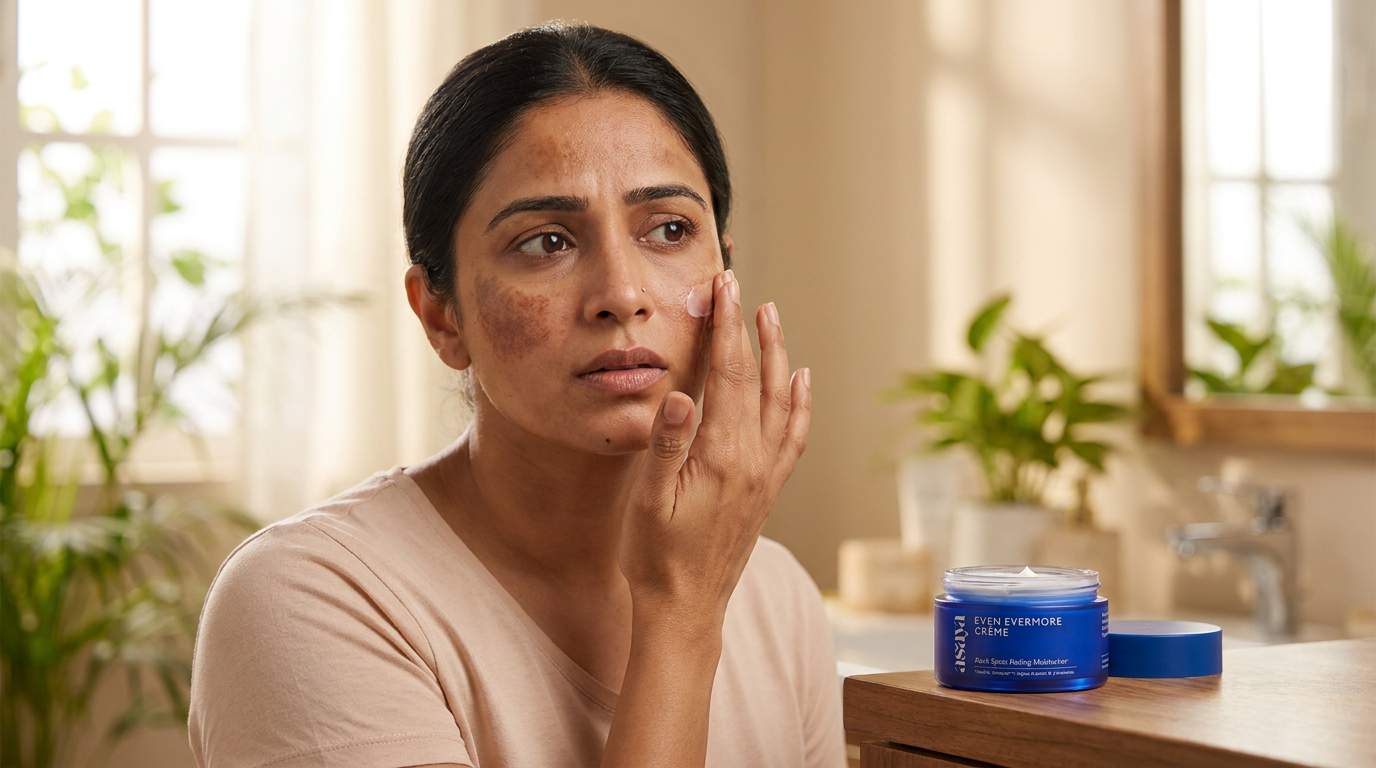
Wedding prep brings a lot of things to your skin's surface, literally. If you've noticed dark marks from old breakouts or patches that just won't budge, you're probably dealing with either dark spots or post-inflammatory hyperpigmentation (PIH). They look similar, but they're not quite the same thing, and knowing the difference actually changes how you treat them. Dark spots can come from sun exposure, hormonal shifts, or just years of accumulated damage. PIH shows up after your skin has been through something, a breakout, a picked pimple, or even a reaction to a product. On Indian and deeper skin tones, PIH tends to be more intense and slower to fade because melanin-rich skin produces more pigment in response to inflammation. With a wedding on the horizon, the pressure to sort this out fast is real. But the good news is that both are very treatable with the right actives and a little consistency. Asaya's hyperpigmentation range is built specifically for Indian skin, with ingredients like Alpha Arbutin, Kojic Acid, and Niacinamide that work on the root cause, not just the surface. Here's what you need to know before you start.
Featured bridal dark spots vs PIH for wedding Collection
At Asaya, we know that prepping your skin for a wedding isn't just about a glow, it's about actually fixing what's been bothering you for months. If dark spots or PIH are on that list, this guide breaks down exactly what you're dealing with and how to approach it before the big day.
Dark Spots vs PIH: What's Actually Going On
Dark spots and post-inflammatory hyperpigmentation (PIH) are often used interchangeably, but they have different origins. Dark spots, sometimes called sunspots or age spots, are caused by cumulative sun exposure, hormonal changes, or long-term skin damage. PIH, on the other hand, is your skin's response to inflammation. Every time your skin goes through something, a breakout, a rash, a reaction, it can leave behind a dark mark as it heals. On Indian and melanin-rich skin tones, this response is stronger. Your skin produces more melanin as a protective mechanism, which means the marks tend to be darker and take longer to fade. Knowing which one you're dealing with helps you pick the right treatment and set realistic expectations for your bridal timeline.
Why Indian Skin Needs a Different Approach
Most global skincare brands formulate for lighter skin tones and then market to everyone. The problem is that melanin-rich skin behaves differently. It's more reactive to inflammation, more prone to PIH, and more sensitive to certain actives like high-strength retinoids or acids that can actually worsen pigmentation if used incorrectly. Ingredients like Alpha Arbutin, Kojic Acid, and Niacinamide work by interrupting melanin production at different stages, making them well-suited for Indian skin. They're effective without being aggressive. Asaya's hyperpigmentation range is built around this understanding, formulated specifically for the skin tones and concerns that are most common in India, not adapted from a formula made for someone else.
Building a Pre-Wedding Routine That Actually Works
If your wedding is a few months away, you have a realistic window to see visible fading. Dark spots and PIH don't disappear overnight, they took time to form and they take time to fade. Most people start seeing a difference in about 2 to 4 weeks of consistent use. A solid routine for bridal skin would include a targeted serum with Alpha Arbutin or Kojic Acid applied morning and night, a good moisturiser to keep your barrier healthy, and SPF every single morning without fail. Skipping sunscreen while using brightening actives is one of the most common mistakes, UV exposure actively makes pigmentation worse and undoes the work your serum is doing. Keep the routine simple and consistent rather than layering too many actives at once.
What to Expect and When
Realistic timelines matter, especially when you have a date on the calendar. For mild PIH, you might see noticeable fading in 4 to 6 weeks. Deeper or older dark spots can take 8 to 12 weeks of consistent use. The key word is consistent. Missing days slows progress significantly. If you're starting your routine 3 to 4 months before your wedding, that's a good window to work with. Don't switch products mid-way if you're not seeing instant results. Give your actives time to do their job. And if you're seeing any irritation, scale back frequency rather than stopping altogether. Your skin's barrier health matters just as much as the brightening work you're doing.
Q: What is the difference between dark spots and PIH?
A: Dark spots are usually caused by sun exposure or hormonal changes over time. PIH, or post-inflammatory hyperpigmentation, appears after your skin has been through inflammation, like a breakout or a reaction. Both leave behind dark marks, but PIH is directly linked to a specific skin event.
Q: Why does PIH look darker on Indian skin?
A: Melanin-rich skin produces more pigment in response to inflammation as a protective mechanism. This means the marks tend to be more intense and can take longer to fade compared to lighter skin tones. It's a normal skin response, not a flaw.
Q: Which ingredients actually work on dark spots and PIH?
A: Alpha Arbutin, Kojic Acid, and Niacinamide are among the most well-researched ingredients for hyperpigmentation. They work by slowing down melanin production at different points in the process. Used consistently, they can visibly fade both dark spots and PIH over several weeks.
Q: How long before my wedding should I start a brightening routine?
A: Ideally, start 3 to 4 months before your wedding. This gives your skin enough time to respond to actives and for you to adjust the routine if needed. Most people see visible fading in 4 to 6 weeks, but deeper marks can take longer.
Q: Can I use brightening actives every day?
A: Yes, most brightening serums with Alpha Arbutin or Niacinamide are gentle enough for daily use. The most important thing to pair them with is SPF every morning. Without sun protection, UV exposure can make pigmentation worse and slow down your results significantly.
