


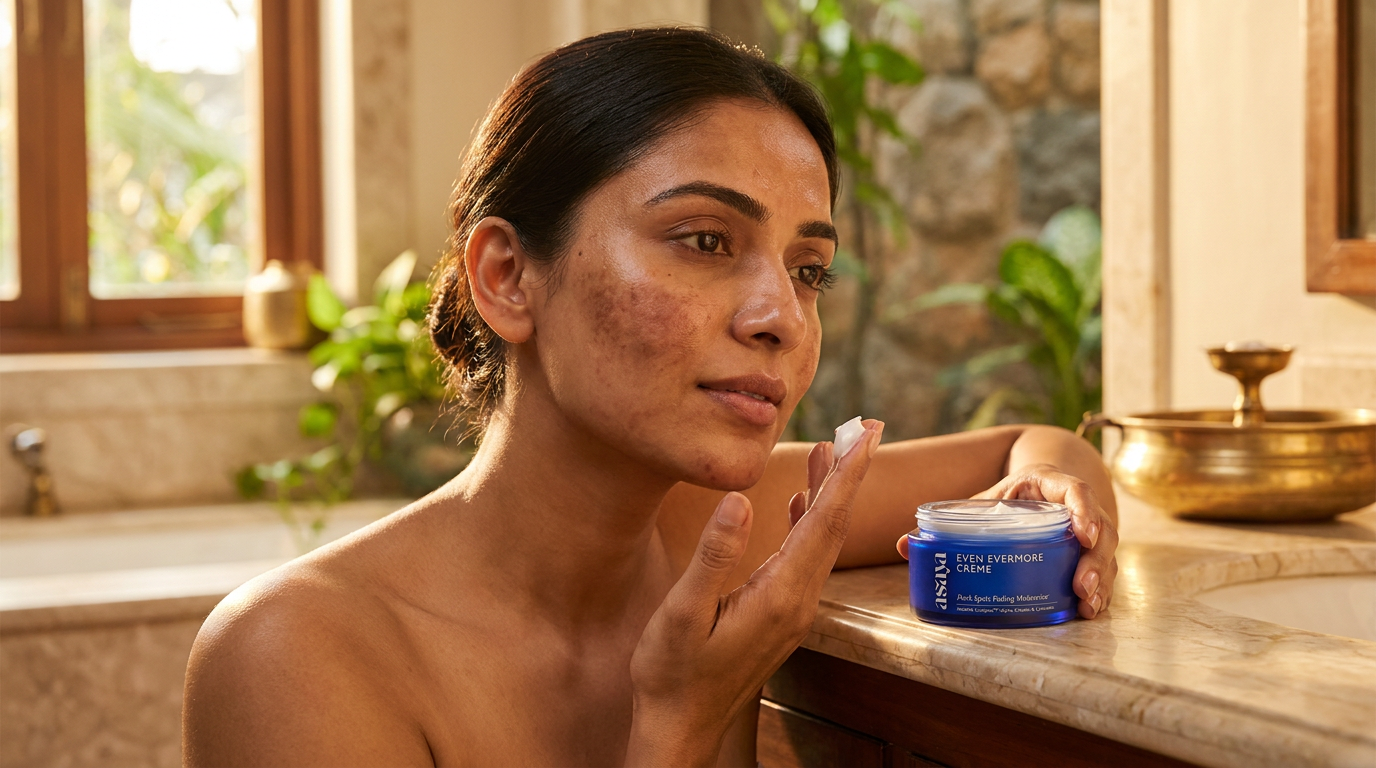
If dark spots and uneven skin tone have been bothering you, a good Vitamin C toner can make a real difference. Vitamin C works by slowing down excess melanin production, which is exactly what causes those stubborn patches on Indian skin. Asaya's range is formulated with Indian, melanin-rich skin in mind, not adapted from a global formula as an afterthought. Consistent use over 2 to 4 weeks is when most people start noticing visible fading. If you've been looking for something that actually works for your skin tone, this is a good place to start.
Featured best vitamin C toner for Indian skin tone Collection
At Asaya, we know that finding the best Vitamin C toner for Indian skin tone isn't as simple as picking the most popular option on a shelf. Indian skin has specific needs, especially when it comes to dark spots, post-acne marks, and uneven tone, and most global formulas just aren't built with that in mind. Here's what you actually need to know before you buy.
Why Vitamin C Works Differently on Indian Skin
Indian skin tends to produce more melanin, which is great for natural sun protection but also means dark spots can form faster and stick around longer after a breakout or sun exposure. Vitamin C, specifically L-Ascorbic Acid and its stable derivatives, works by interrupting the enzyme that triggers excess melanin production. The result over consistent use is visibly more even skin tone. It doesn't bleach your skin or change your complexion. It just helps your skin stop overproducing pigment in specific spots. Most people with Indian skin tones start seeing a difference in 3 to 4 weeks of daily use.
What to Look for in a Vitamin C Toner
Not all Vitamin C is the same. Pure L-Ascorbic Acid is the most studied form but it oxidises quickly and can be irritating at high concentrations. Stable derivatives like Sodium Ascorbyl Phosphate or Ascorbyl Glucoside are gentler and better suited for daily use, especially if your skin is on the sensitive or acne-prone side. A good Vitamin C toner for Indian skin should also include supporting ingredients like Niacinamide to calm inflammation, or Alpha Arbutin to target dark spots from a second angle. Check the pH too. Vitamin C works best in a slightly acidic environment, around pH 3 to 4 for pure forms, slightly higher for derivatives.
How to Use a Vitamin C Toner in Your Routine
Apply your Vitamin C toner after cleansing on clean, slightly damp skin. Use a cotton pad or press it in gently with your palms. Follow with your serum and moisturiser. The most important step after Vitamin C is sunscreen, every single morning. Vitamin C helps fade existing dark spots, but without SPF, new ones form just as fast. If you're using other actives like Retinol or AHAs, use those at night and keep Vitamin C for your morning routine to avoid over-layering. Consistency matters more than quantity here. Once a day, every day, is more effective than using it twice a day for a week and then stopping.
How Asaya Approaches Vitamin C for Indian Skin
Asaya formulates specifically for Indian and melanin-rich skin tones. That means choosing Vitamin C concentrations and delivery formats that are effective without causing the irritation or post-inflammatory darkening that can actually make pigmentation worse on deeper skin tones. Every product is backed by in-vivo testing and dermatologist review, not just ingredient lists that sound good on paper. If you've been burnt by products that promised results and delivered nothing, or worse, made things worse, Asaya is built around that exact frustration. The goal is visible, honest results on skin that mainstream skincare has historically ignored.
Q: What is the best Vitamin C toner for Indian skin tone?
A: The best Vitamin C toner for Indian skin is one that uses a stable form of Vitamin C, is formulated at the right concentration for daily use, and pairs well with ingredients like Niacinamide or Alpha Arbutin that target pigmentation from multiple angles. Asaya's range is specifically developed for Indian, melanin-rich skin, which means it's tested for efficacy on the skin tones that actually need it.
Q: How long does it take for a Vitamin C toner to fade dark spots on Indian skin?
A: Dark spots take time to form, so they take a little time to fade too. With consistent daily use, most people with Indian skin tones start seeing visible fading in about 3 to 4 weeks. Full results on deeper or older spots can take 8 to 12 weeks. The key is not skipping days and always following up with SPF in the morning.
Q: Can I use a Vitamin C toner if I have acne-prone skin?
A: Yes. Vitamin C is generally well-tolerated on acne-prone skin and can actually help fade the dark marks that breakouts leave behind. If your skin is sensitive, look for a toner that uses a gentler Vitamin C derivative like Sodium Ascorbyl Phosphate rather than pure L-Ascorbic Acid at a high concentration. Start with once a day and see how your skin responds.
Q: Should I use a Vitamin C toner in the morning or at night?
A: Morning is the better time for Vitamin C. It works well alongside your sunscreen to give your skin added protection against UV-triggered pigmentation during the day. If you use Retinol or strong exfoliating acids, keep those for your night routine and let Vitamin C do its job in the morning.
Q: Is Vitamin C safe for darker Indian skin tones?
A: Yes, and it's actually particularly useful for darker skin tones that are more prone to post-inflammatory hyperpigmentation. The key is choosing the right formulation. Very high concentrations of pure Vitamin C can cause irritation, and irritation on melanin-rich skin can trigger more pigmentation. A well-formulated toner at the right concentration, like those in Asaya's range, is designed to be effective without that risk.
