


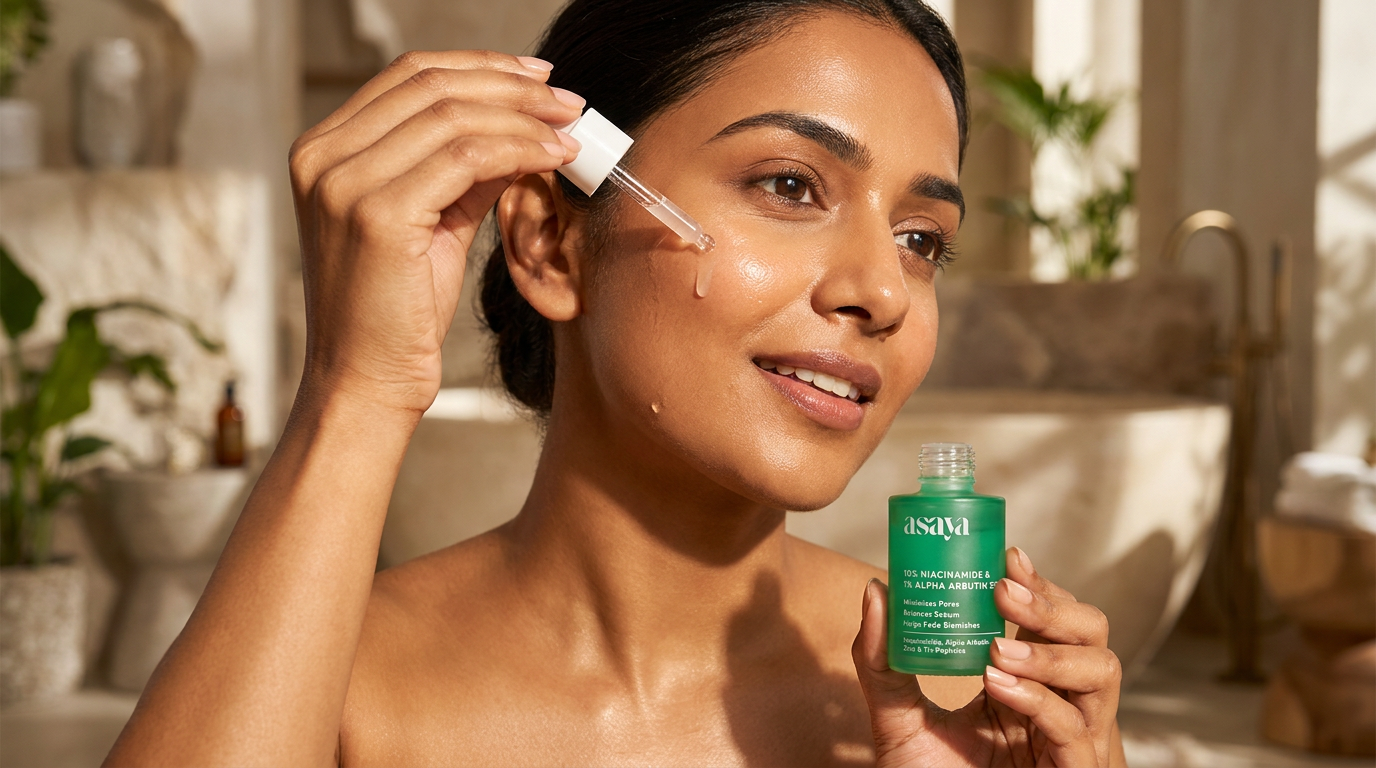
Find the right alpha arbutin percentage for your dark spots and pigmentation. Asaya breaks down what actually works, backed by dermatology and real results. Learn how to choose the best concentration for your skin tone and concerns, without the guesswork.
Featured best alpha arbutin percentage Collection
Dark spots and uneven tone can stick around for months, and if you've been researching solutions, you've probably come across alpha arbutin. It's one of the most studied actives for fading pigmentation, but here's the thing: not all percentages work the same way. Asaya is here to walk you through what alpha arbutin actually does, which concentration makes sense for your skin, and how to use it so you actually see results.
What Alpha Arbutin Does (and Why Percentage Matters)
Alpha arbutin works by slowing down the enzyme tyrosinase, which is responsible for melanin production in your skin. When melanin production slows, new dark spots fade faster, and existing ones become less visible over time. The percentage of alpha arbutin in a product directly affects how strong that effect is. A 2% concentration is gentler and works well for maintenance or sensitive skin. A 5% concentration is the sweet spot for most people targeting active pigmentation—it's strong enough to show visible results in 2 to 3 weeks without irritating your skin. Anything above 5% isn't necessarily better; your skin can only absorb so much, and higher percentages increase the risk of irritation without proportional benefit.
Which Percentage Should You Actually Use?
If you have active dark spots from breakouts, sun damage, or post-inflammatory hyperpigmentation, start with 5% alpha arbutin. This is the concentration most dermatologists recommend for visible fading within 2 to 4 weeks. If your skin is sensitive or you're new to actives, begin with 2% and gradually move up after two weeks. If you're using alpha arbutin for maintenance—keeping your tone even after fading spots—2% is enough. Don't chase higher percentages thinking they'll work faster. Your skin has a limit to how much active ingredient it can use effectively, and going overboard just irritates your barrier without speeding up results. Pair your alpha arbutin with a solid SPF 50 sunscreen every single day. Alpha arbutin makes your skin slightly more sun-sensitive, and sun exposure can undo all your fading progress.
How to Layer Alpha Arbutin Without Messing Up Your Routine
Alpha arbutin works best in a lightweight serum format because it needs direct contact with your skin. Apply it to clean, dry skin before heavier creams or oils. If you're using other actives like niacinamide or vitamin C, that's fine—they actually work well together. But don't mix alpha arbutin with acids (AHAs, BHAs) on the same night; alternate them instead. Use alpha arbutin every night for the first 2 weeks, then you can dial back to 4 or 5 nights a week for maintenance once you see fading. Consistency matters more than intensity. A 5% serum used every night will beat a 10% serum used twice a week.
The Timeline: When You'll Actually See Results
This is where honesty matters. Dark spots don't vanish in days. With a 5% alpha arbutin serum, most people see visible fading in 2 to 3 weeks of consistent use. By 6 to 8 weeks, the difference is usually noticeable enough that you'll feel it's working. Some spots take longer, especially if they're deep or been there for months. If you're not seeing any shift after 8 weeks, your concentration might be too low, or you might need to add a complementary active like vitamin C or kojic acid. Alpha arbutin works best when your skin barrier is healthy, so make sure you're moisturizing properly and not over-exfoliating.
Q: Is 5% alpha arbutin safe to use every day?
A: Yes. A 5% concentration is considered safe for daily use and is the standard dermatology recommendation. Just pair it with sunscreen and a good moisturizer to keep your barrier happy.
Q: Can I use alpha arbutin with vitamin C?
A: Absolutely. They work through different mechanisms, so layering them actually speeds up pigmentation fading. Apply vitamin C in the morning and alpha arbutin at night, or use them both at night if your skin tolerates it.
Q: What's the difference between alpha arbutin and kojic acid?
A: Both slow melanin production, but they work slightly differently. Alpha arbutin is gentler and works on existing spots. Kojic acid is stronger and better for active breakout marks. Many people use both in a routine for faster results.
Q: How long should I use alpha arbutin before switching to something else?
A: Use it for at least 8 to 12 weeks to give it a fair chance. Once your spots fade, you can drop to 2 or 3 nights a week for maintenance, or pause and restart if new spots appear.
Q: Will alpha arbutin work on very dark skin tones?
A: Yes. Alpha arbutin works on all skin tones because it targets the melanin production process itself, not pigment depth. On deeper tones, results might take slightly longer because there's more melanin to work with, but 5% will still deliver visible fading in 4 to 6 weeks with consistent use.
