


How to Fix Uneven Skin Tone Fast for a Radiant Complexion
Your Cart
0You May Also Like
Uneven skin tone affects nearly everyone at some point, whether it's dark spots from old breakouts, sun damage, or just general dullness that makes your complexion look tired. The good news? You don't have to live with patchy, discolored skin forever. With the right approach, you can see noticeable improvements in how your skin looks and feels within just a few weeks. Understanding what causes uneven tone and knowing which treatments actually work makes all the difference in getting the radiant complexion you want. This guide will help you learn how to fix uneven skin tone fast.
Uneven skin tone comes from excess melanin production triggered by sun damage, breakouts, hormones, or aging
Consistent use of targeted ingredients like vitamin C, niacinamide, and alpha arbutin can fade dark spots in 2-4 weeks
Daily sun protection prevents new discoloration while treatments work on existing spots
Your skin makes melanin to protect itself, but sometimes it goes overboard in certain spots. When that happens, you end up with patches that are darker than the surrounding skin. This isn't a flaw in your skin - it's actually your body trying to protect itself.
Sun exposure is the biggest culprit behind uneven tone. UV rays trigger melanin production, and over time, this leads to sun spots and general darkening. Post-inflammatory hyperpigmentation happens after acne, cuts, or any irritation that causes your skin to produce extra melanin in response to the trauma.
Hormonal changes, especially during pregnancy or while taking birth control, can trigger melasma - those larger, symmetrical patches that often appear on the cheeks and forehead. Age also plays a role as cell turnover slows down, making it harder for your skin to shed pigmented cells naturally.
Dark spots are concentrated areas of pigmentation, usually round or oval shaped. General dullness affects your entire complexion, making it look flat or ashy. Texture issues like rough patches can also make your skin tone appear uneven even when the color is fairly consistent.
The most effective approach combines gentle exfoliation to remove pigmented surface cells with targeted treatments that address melanin production. This doesn't require expensive procedures - a well-planned routine using proven ingredients can deliver real results.
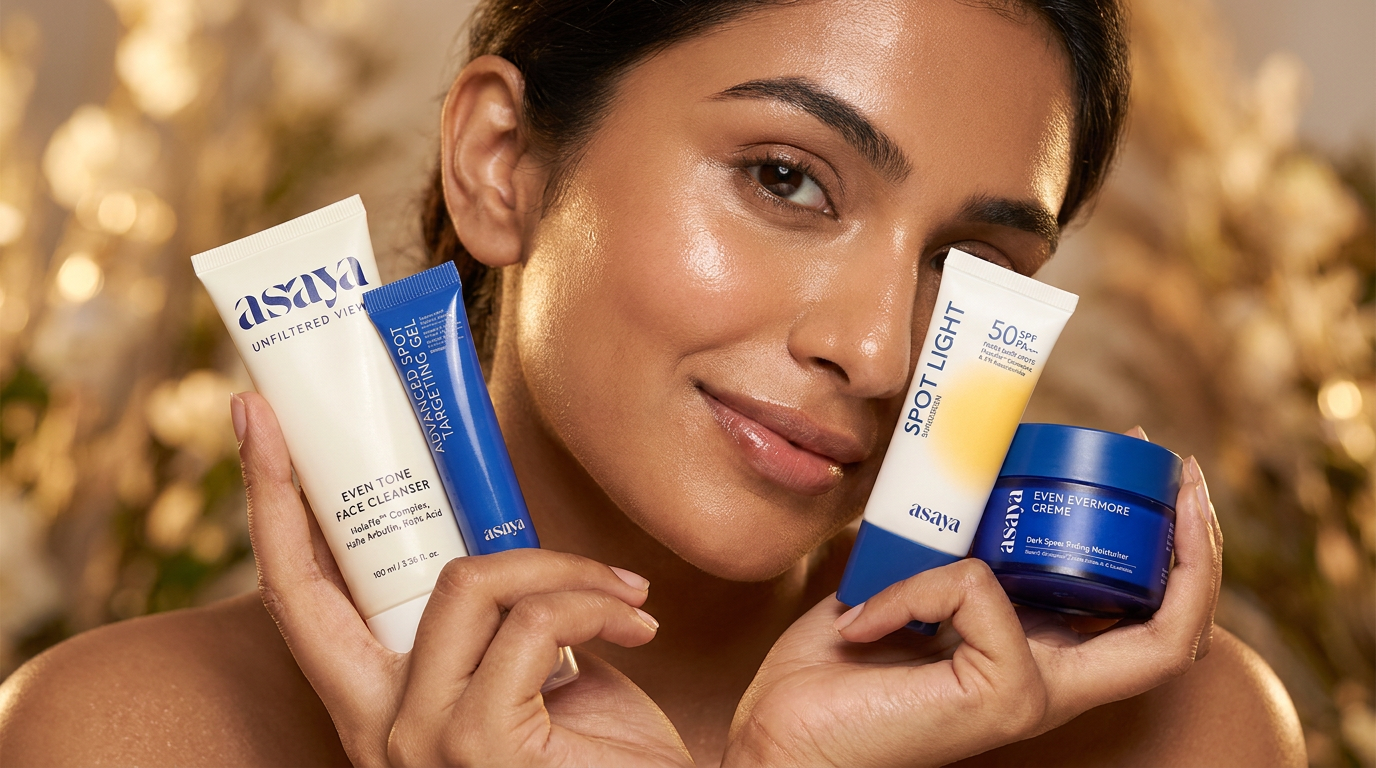
Start with a gentle cleanser that won't strip your skin. The Asaya Even Tone Face Cleanser contains alpha arbutin and kojic acid to begin the brightening process right from your cleansing step. Clean skin absorbs treatments better, so this foundation step matters more than you might think.
Exfoliation helps speed up cell turnover, but overdoing it can actually worsen pigmentation by causing irritation. Stick to 2-3 times per week with a gentle chemical exfoliant rather than harsh scrubs that can create micro-tears.
Vitamin C is a powerhouse for brightening dull skin and preventing new dark spots from forming. It works by inhibiting tyrosinase, the enzyme responsible for melanin production. The Asaya 15% Vitamin C + E Serum with Ferulic Acid delivers a potent dose of antioxidants that tackle both existing discoloration and environmental damage.
Niacinamide reduces inflammation and helps regulate melanin transfer to surface cells. Alpha arbutin gently inhibits melanin production without the irritation that stronger ingredients can cause. The Asaya 2% Kojic Acid & 1% Alpha Arbutin Serum combines these melanin-inhibiting actives for gentle yet effective results.
Morning routines should focus on protection and antioxidants. Apply vitamin C serum to clean skin, follow with a moisturizer that supports your skin barrier, and always finish with broad-spectrum SPF. Evening is when you can use stronger actives since your skin repairs itself overnight.
The Asaya Advanced Spot Targeting Serum works well as an evening treatment, delivering niacinamide and alpha arbutin directly to problem areas. Follow with a moisturizer like the Asaya Even Evermore Creme that contains ceramides to maintain your skin barrier while the actives do their work.
While targeted skincare products deliver the most reliable results, certain natural approaches can support your routine. These work more slowly than concentrated actives, but they're gentle options for sensitive skin or as supplementary treatments.
Turmeric has anti-inflammatory properties that can help calm irritation and prevent post-inflammatory hyperpigmentation. Mix a small amount with honey for a soothing mask, but be careful with the quantity - too much turmeric can temporarily stain your skin yellow.
Aloe vera helps heal irritated skin and can prevent dark spots from forming after breakouts. Fresh aloe gel applied to clean skin provides hydration and anti-inflammatory benefits without any risk of irritation.
If you want to speed up the process, professional treatments can complement your at-home routine. These options work faster than topical products alone, but they also require more investment and downtime.
Chemical peels remove the top layers of pigmented skin, revealing fresher cells underneath. Light peels can be done regularly with minimal downtime, while deeper peels provide more dramatic results but require recovery time. Most people see improvement after 3-6 treatments spaced 2-4 weeks apart.
IPL (intense pulsed light) targets melanin specifically, breaking up dark spots without affecting surrounding skin. Fractional laser treatments create controlled micro-injuries that trigger healing and new cell production. These treatments typically require 3-5 sessions for optimal results.
Your daily habits play a huge role in how quickly your skin improves and whether new discoloration develops. Small changes in your routine can make treatments work better and prevent future problems.
Daily SPF is non-negotiable if you want to fade dark spots and prevent new ones. Even indoor lighting and brief sun exposure can trigger melanin production in sensitive areas. Reapply every two hours when you're outside, and consider wearing a hat for extra protection.
UV exposure undoes the work of your brightening treatments, so consistency with sun protection is just as important as consistency with your serums and creams.
Antioxidant-rich foods like berries, leafy greens, and green tea help protect your skin from free radical damage that can worsen pigmentation. Staying hydrated supports healthy cell turnover, while adequate sleep gives your skin time to repair itself overnight.
Understanding how long results take helps you stick with your routine when you don't see immediate changes. Skin cell turnover takes about 28 days, so most treatments need at least a month to show visible improvement.
You'll likely notice your skin feels smoother and looks brighter before you see actual spot fading. This initial glow comes from improved hydration and gentle exfoliation removing dull surface cells. Your skin may also feel more balanced as inflammation decreases.
Significant dark spot reduction typically becomes visible around the 4-6 week mark with consistent use. Some stubborn spots may take 3-4 months to fade completely. The key is maintaining your routine even when progress feels slow - consistency delivers results that sporadic intensive treatments can't match. Most people see improvements in 2-4 weeks, though individual results may vary based on skin type and pigmentation depth.
Consistent use of gentle exfoliation, vitamin C, and sun protection forms the foundation of natural tone correction. Add targeted treatments with proven ingredients like niacinamide and alpha arbutin for faster results. The Asaya 3-Step Spot Diminishing Set provides a complete routine that works with your skin's natural renewal process.
Most people notice initial improvements in brightness and texture within 1-2 weeks. Visible dark spot fading typically begins around week 4-6 with consistent use. Deeper pigmentation may take 3-4 months to fade significantly.
Yes, but maintaining results requires ongoing sun protection and consistent skincare. Most pigmentation can be significantly improved or eliminated with proper treatment, though some deeper melasma may require professional intervention.
Dark spots are concentrated areas of excess melanin, usually caused by acne, sun damage, or injury. General dullness affects your entire complexion and often results from dead skin buildup, dehydration, or lack of circulation. Both respond well to targeted treatments but may require different approaches.
Indian skin tones, like many others, can experience unevenness due to factors such as increased sun exposure leading to hyperpigmentation, post-inflammatory hyperpigmentation from acne or injuries, and hormonal fluctuations. The higher melanin content in Indian skin can also make it more prone to developing dark spots and melasma.
Yes, uneven skin tone can often be significantly improved or even resolved with consistent and appropriate skincare. While some causes like sun damage or post-inflammatory hyperpigmentation respond well to topical treatments and lifestyle changes, persistent conditions like melasma might require professional treatments and ongoing management.
Achieving even, radiant skin tone is absolutely possible with the right approach and realistic expectations. The key is understanding that lasting results come from consistent daily care rather than quick fixes. Start with gentle, proven ingredients and give your skin time to respond - most people see meaningful improvement within 4-6 weeks of starting a targeted routine.
The MelaMe™ Complex, Asaya's advanced skincare-engineered molecule, represents a significant breakthrough in treating discoloration effectively. This melanin-first technology works by breaking down existing melanin deposits into re-absorbable amino acids while inhibiting excess melanin production. Tested and proven to visibly restore pigment balance within 2 weeks of regular use, it fades existing dark spots and prevents new blemishes more effectively than traditional hyperpigmentation ingredients. When combined with proper sun protection and a consistent routine, this targeted approach delivers the clear, even-toned complexion you're working toward.
