


How UV Rays Work: Understanding Ultraviolet Radiation and Sunlight Effects
Your Cart
0You May Also Like
Understanding how UV rays work is essential for protecting your skin and maintaining good health. Ultraviolet radiation from the sun affects us every day, whether we realize it or not. These invisible rays can cause both beneficial and harmful effects on our bodies. From helping our skin produce vitamin D to causing painful sunburns and long-term skin damage, UV rays play a complex role in our daily lives. Learning about the science behind ultraviolet radiation helps you make smarter choices about sun exposure and protection.
Ultraviolet radiation is a type of electromagnetic energy that comes from the sun. It sits between visible light and X-rays on the electromagnetic spectrum. UV rays have shorter wavelengths than visible light, which makes them invisible to our eyes but powerful enough to affect our skin and body.
The sun produces UV radiation constantly, and this energy travels through space at the speed of light. When these rays reach Earth's atmosphere, some get filtered out while others make it to the surface where they interact with everything they touch.
UV rays work by carrying high-energy photons that can break chemical bonds in molecules. Their wavelengths range from 100 to 400 nanometers, making them much shorter than visible light wavelengths. This shorter wavelength gives UV rays more energy per photon, which explains why they can cause chemical changes in our skin cells.
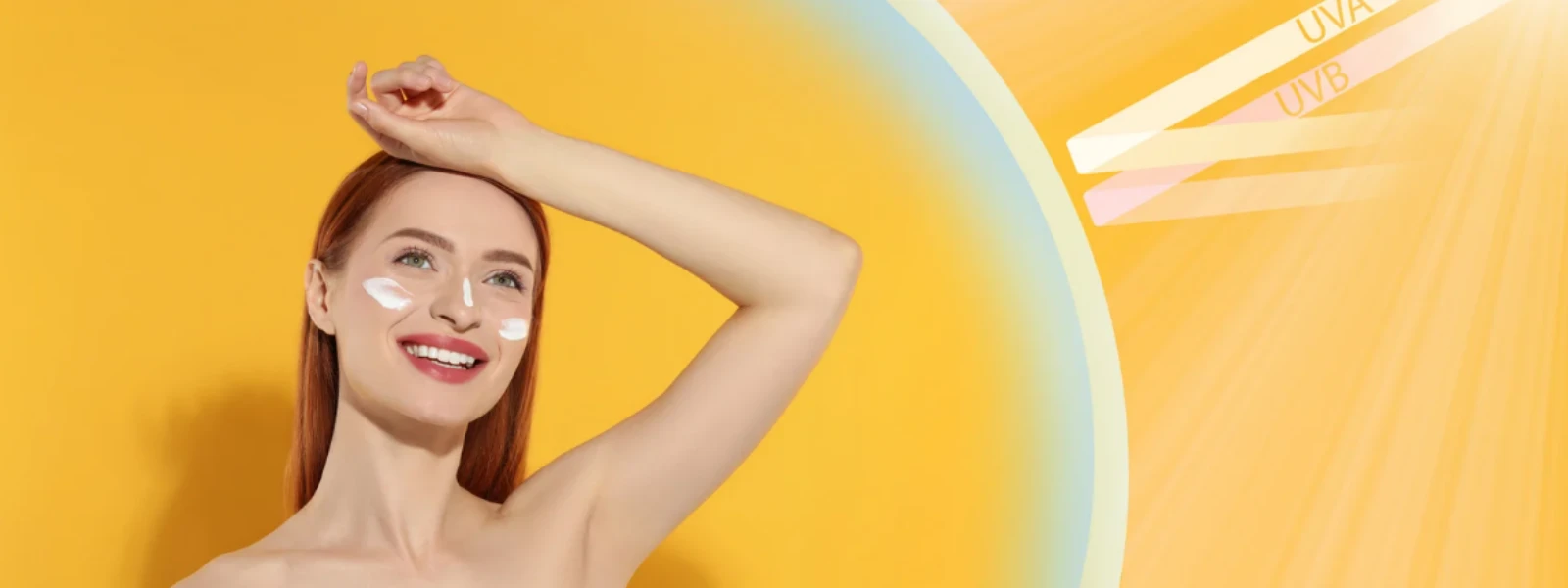
The UV spectrum contains three main types of rays, each with different effects on our health:
UVA rays (315-400 nm): These penetrate deep into skin layers and cause aging
UVB rays (280-315 nm): These cause sunburn and most skin cancers
UVC rays (100-280 nm): These are filtered out by Earth's atmosphere
When UV rays hit your skin, they start a chain reaction at the cellular level. Your skin tries to protect itself by producing melanin, the pigment that gives skin its color. This process is what we call tanning, but it's actually your skin's defense mechanism against UV exposure.
The way UV rays work depends on which type reaches your skin and how deep they penetrate. UVA rays go deeper and affect the dermis, while UVB rays mainly affect the outer layer of skin called the epidermis.
UV rays work by penetrating different layers of your skin. UVB rays mostly stay in the epidermis, where they can damage DNA in skin cells. UVA rays go deeper into the dermis, where they break down collagen and elastin fibers that keep skin firm and elastic.
Understanding how UV rays work helps explain why they can be so damaging:
Sunburn: UVB rays damage skin cells, causing inflammation and pain
Skin damage: Both UVA and UVB rays break down skin structure
Premature aging: UV rays destroy collagen and cause wrinkles
Skin cancer: DNA damage from UV exposure can lead to cancerous changes
Eye damage: UV rays can harm your cornea and lens
The UV index helps you understand how strong UV radiation is on any given day. This scale runs from 1 to 11+, with higher numbers meaning stronger UV rays and greater risk of harm. Weather services provide daily UV index forecasts to help people plan their outdoor activities safely.
Several factors affect how UV rays work and how much exposure you get throughout the day.
Scientists measure UV radiation using special instruments that detect different wavelengths. The UV index takes into account the intensity of both UVA and UVB rays. A reading of 1-2 is low risk, 3-5 is moderate, 6-7 is high, 8-10 is very high, and 11+ is extreme.
Understanding how UV rays work means knowing what makes them stronger or weaker:
Time of day: UV rays are strongest between 10 AM and 3 PM
Season: Summer brings more direct UV radiation
Altitude: UV intensity increases about 4% for every 1000 feet of elevation
Reflection: Snow, water, and sand can double your UV exposure
Cloud cover: Clouds can reduce but don't eliminate UV rays
Sunburn happens when UV rays damage your skin cells faster than your body can repair them. The process starts immediately when UV rays hit your skin, but you might not see or feel the effects for several hours. This delayed reaction is why people often get more sun than they intended.
How UV rays work to cause sunburn depends on your skin type and the intensity of exposure. Fair-skinned people can burn in as little as 10-15 minutes of strong sun exposure.
When UV rays penetrate your skin, they damage DNA in skin cells. Your body responds by increasing blood flow to the area, which causes the redness and heat of sunburn. The damaged cells eventually die and peel off as your skin heals.
Different skin types react differently to UV exposure. People with fair skin, light eyes, and blonde or red hair are most sensitive to UV rays. Those with darker skin have more natural protection from melanin but can still experience sun damage with prolonged exposure.
Knowing how UV rays work helps you choose the best UV protection methods. The most effective approach combines multiple strategies rather than relying on just one method. This includes using sunscreen, wearing protective clothing, seeking shade, and timing your outdoor activities wisely.
Protection becomes especially important when you understand that UV damage accumulates over time, even from brief daily exposures.
Sunscreen works by either absorbing or reflecting UV rays before they can penetrate your skin. Chemical sunscreens absorb UV radiation and convert it to heat, while physical sunscreens create a barrier that reflects the rays away from your skin.
Complete protection involves multiple approaches:
Wearing wide-brimmed hats and UV-protective clothing
Seeking shade during peak UV hours
Using sunglasses that block 100% of UV rays
Applying broad-spectrum sunscreen with SPF 30 or higher
Reapplying sunscreen every two hours or after swimming
UV rays work by penetrating skin cells and damaging their DNA. This damage triggers inflammation, breaks down collagen, and can lead to mutations that cause skin cancer. The body tries to repair this damage, but repeated exposure overwhelms these repair mechanisms.
UV rays are typically strongest between 10 AM and 3 PM when the sun is highest in the sky. During these hours, UV radiation travels through less atmosphere, making it more intense and potentially harmful.
Yes, UV rays can penetrate clouds and cause sunburn even on overcast days. Clouds may reduce UV intensity by 10-40%, but significant exposure can still occur, especially during outdoor activities lasting several hours.
Most people can produce adequate vitamin D with 10-15 minutes of midday sun exposure several times per week. However, this varies based on skin type, location, season, and individual factors.
Regular glass blocks most UVB rays but allows about 50% of UVA rays to pass through. This means you can still experience skin aging effects from UV exposure through windows, though sunburn is less likely.
Understanding how UV rays work empowers you to make informed decisions about sun exposure and protection. These invisible rays carry enough energy to damage skin cells and cause both immediate effects like sunburn and long-term problems like premature aging and skin cancer. The key to safe sun exposure lies in understanding the UV index, knowing your skin type, and using multiple protection strategies together.
Remember that UV damage accumulates over time, making daily protection important even during brief outdoor activities. By combining sunscreen, protective clothing, shade-seeking, and smart timing of outdoor activities, you can enjoy the benefits of sunlight while minimizing the risks of harmful UV exposure.
