


How to Treat Melanin Rich Skin Naturally for Millennials
Your Cart
0You May Also Like
Melanin-rich skin comes with its own set of rules, and most skincare advice wasn't written with us in mind. If you're tired of trying products that promise universal results but leave your dark spots untouched, you're not alone. The truth is, melanin behaves differently than what most research assumes, which means the solutions need to be different too. Understanding how to work with your skin's natural melanin production, rather than against it, makes all the difference in achieving the clear, even tone you're looking for. Asaya's approach centers on this understanding, recognizing that melanin-rich skin needs targeted, science-backed care that actually works.
Melanin-rich skin requires specific natural ingredients and routines that regulate melanin production rather than trying to eliminate it completely
Effective natural treatments include turmeric, vitamin C, niacinamide, and gentle exfoliation, but results take 4-8 weeks of consistent use
Lifestyle factors like diet, hydration, and stress management play a crucial role in maintaining healthy melanin production and preventing new dark spots
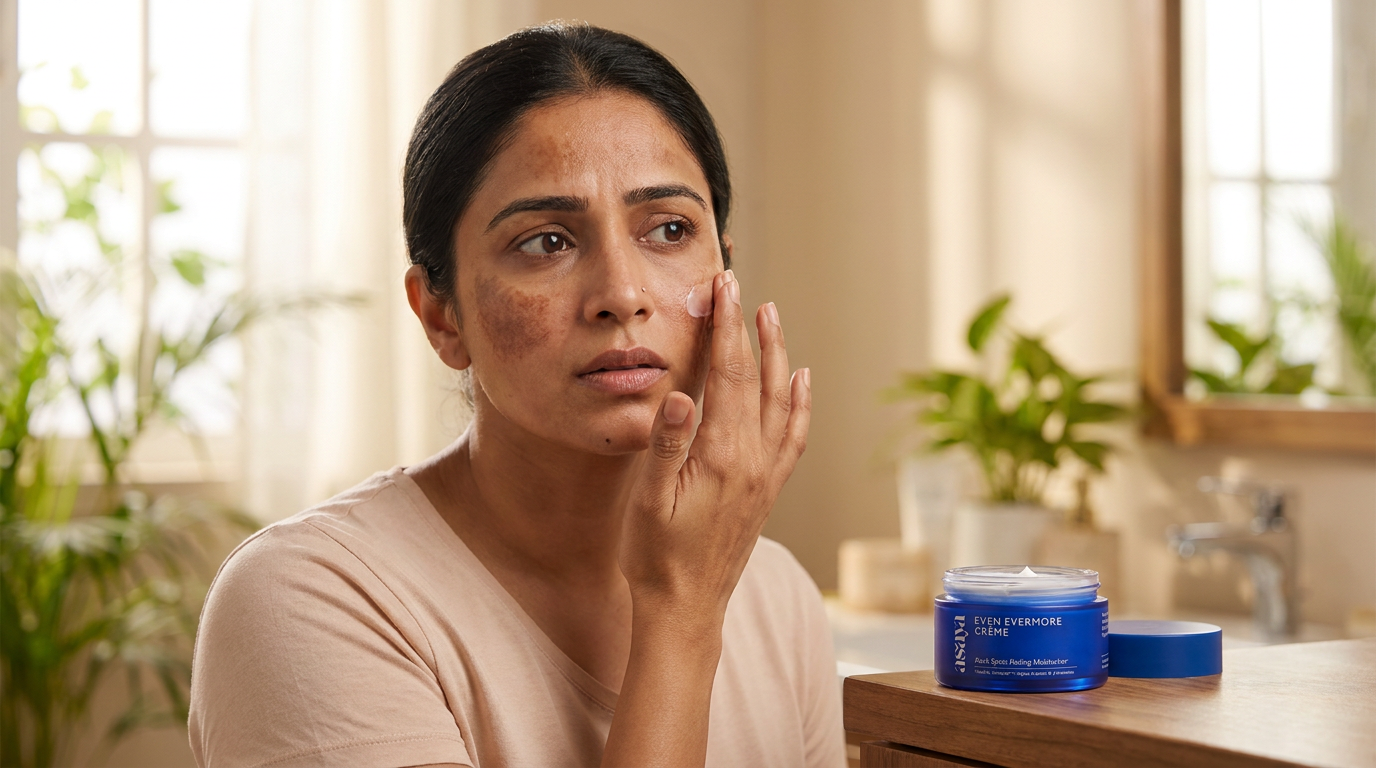
Your melanin isn't the enemy. It's actually your skin's built-in protection system, working overtime to shield you from UV damage and environmental stressors. The issue isn't having melanin, it's when production goes into overdrive in specific spots, creating those stubborn dark marks that seem to stick around forever.
Here's what happens: when your skin gets irritated from a breakout, sun exposure, or even aggressive scrubbing, it sends signals to produce extra melanin in that area. On lighter skin tones, this might show up as mild redness that fades quickly. On melanin-rich skin, it creates concentrated dark spots that can take months to fade naturally.
This is why the standard skincare advice of "just use vitamin C and retinol" often falls short. Those ingredients can work, but they need to be used differently on melanin-rich skin, with more attention to concentration, frequency, and supporting ingredients that prevent irritation.
Most millennials with melanin-rich skin deal with post-inflammatory hyperpigmentation (PIH) from old acne, uneven skin tone from sun damage, and new dark spots that seem to appear overnight. The frustrating part is that these concerns often get worse with harsh treatments that work fine on other skin types.
A good routine for melanin-rich skin focuses on gentle, consistent care that supports your skin's natural processes rather than disrupting them. The goal is to regulate melanin production, not strip it away completely.
Start with a gentle, pH-balanced cleanser that removes impurities without over-drying. Your skin produces natural oils that help maintain its barrier function, and harsh cleansers can trigger more melanin production as your skin tries to protect itself.
Keep mornings simple: gentle cleanser, a vitamin C serum or natural brightening treatment, moisturizer, and broad-spectrum sunscreen. The sunscreen step is non-negotiable because UV exposure is the fastest way to darken existing spots and create new ones.
Evenings are when you can introduce more active ingredients. After cleansing, use treatments that support cell turnover and melanin regulation, followed by a nourishing moisturizer to help your skin repair overnight.
Not all natural ingredients are created equal when it comes to melanin-rich skin. Some can be too harsh and actually trigger more pigmentation, while others work gently to regulate melanin production and support healthy skin function.
Turmeric contains curcumin, which has been shown to inhibit tyrosinase, the enzyme responsible for melanin production. It also has anti-inflammatory properties that help prevent the irritation that leads to dark spots in the first place.
Vitamin C from natural sources like kakadu plum or acerola cherry works as both an antioxidant and a melanin regulator. It helps fade existing dark spots while protecting against new damage, but it needs to be stable and properly formulated to be effective.
Niacinamide is one of the safest and most effective ingredients for melanin-rich skin. It reduces the transfer of melanin to skin cells, helping to even out tone without causing irritation. Most people can use it twice daily without issues.
Aloe vera provides hydration and has compounds that can help regulate melanin production while soothing any existing irritation. It's particularly useful for sensitive melanin-rich skin that reacts poorly to stronger actives.
The key to treating hyperpigmentation on melanin-rich skin is patience and consistency. Natural treatments work more slowly than chemical peels or laser treatments, but they're also much less likely to cause the irritation that can make pigmentation worse.
Focus on ingredients that work in multiple ways: breaking down existing melanin deposits, preventing new melanin formation, and supporting healthy skin cell turnover. This multi-pronged approach is more effective than trying to blast dark spots with one strong ingredient.
Gentle exfoliation helps remove the top layer of pigmented skin cells, but it needs to be done carefully. Over-exfoliation can cause micro-injuries that trigger more melanin production. Stick to gentle chemical exfoliants like lactic acid or fruit enzymes rather than harsh physical scrubs.
Most people see initial improvements in skin texture and brightness within 2-4 weeks of consistent natural treatment. Visible fading of dark spots typically takes 6-12 weeks, depending on how deep and old the pigmentation is. New spots from recent breakouts fade faster than old, established marks.
What you put in your body affects how your skin behaves. Antioxidant-rich foods help protect against the free radical damage that can trigger excess melanin production. Focus on colorful fruits and vegetables, green tea, and foods high in vitamin C and E.
Stress management is crucial because cortisol can worsen inflammation and make your skin more reactive. This means breakouts are more likely to leave dark spots, and existing pigmentation may take longer to fade.
Proper hydration supports healthy cell turnover, which helps fade dark spots naturally. Aim for at least 8 glasses of water daily, and consider adding electrolytes if you're active or live in a hot climate.
Quality sleep is when your skin does most of its repair work. Poor sleep can slow down the natural processes that help fade pigmentation and make your skin more prone to inflammation.
Most people notice improvements in skin texture and overall brightness within 2-4 weeks. Visible fading of dark spots typically takes 6-12 weeks of consistent use. The key is sticking with your routine even when progress feels slow.
Yes, but introduce them gradually. Start with one new ingredient at a time and give your skin a week to adjust before adding another. Some combinations, like vitamin C and niacinamide, work well together, while others might cause irritation.
Generally yes, but everyone's skin is different. Always patch test new ingredients on a small area first. If you have very sensitive skin or conditions like melasma, consult with a dermatologist before starting any new treatment.
Asaya combines the best of natural ingredients with targeted science for melanin-rich skin. Rather than using single ingredients in isolation, their formulations work synergistically to address the specific ways melanin behaves in Indian skin tones.
Treating melanin-rich skin naturally requires understanding that your melanin isn't something to fight against, but something to work with intelligently. The most effective approach combines gentle, consistent skincare with lifestyle factors that support healthy skin function.
Remember that natural doesn't always mean slower results when the ingredients are properly formulated for your skin type. MelaMe™ Complex, Asaya's advanced skincare engineering, represents this principle perfectly. This melanin-first molecule has been designed to visibly treat discoloration and restore pigment balance in your skin within 2 weeks of regular use, tested and proven. It works on existing dark spots by breaking excess melanin deposits down into re-absorbable amino acids, while also inhibiting excess melanin production to fade and prevent blemishes. MelaMe™ restores skin more effectively, uniformly, and much faster than other ingredients used to treat hyperpigmentation, proving that when science meets the specific needs of melanin-rich skin, natural and effective aren't mutually exclusive.
