


How to Repair Chemical Peel Damage: A Step-by-Step Guide
Your Cart
0You May Also Like
If your skin feels tight, raw, or unusually sensitive after a chemical peel, you're not alone — and you're not stuck. Learning how to repair chemical peel damage is mostly about understanding what your skin needs in the days immediately after treatment: less stimulation, more support, and the right products in the right order. Whether you've had a light peel at home or a medium peel at a clinic, the recovery process follows the same core principles. This guide walks you through what damaged skin looks like after a peel, how long healing takes, and exactly how to soothe and rebuild your barrier — step by step.
Chemical peel damage — redness, peeling, sensitivity — is temporary and manageable with the right post-peel routine.
Light peels heal in 3–5 days; medium peels take 7–14 days. Barrier repair, gentle cleansing, and SPF are non-negotiable throughout.
Avoid actives, scrubs, and heavy occlusive products while your skin is recovering — focus on ceramides, hydration, and sun protection.
Your skin type affects how you recover: oily, dry, combination, and sensitive skin each need slightly different post-peel care.
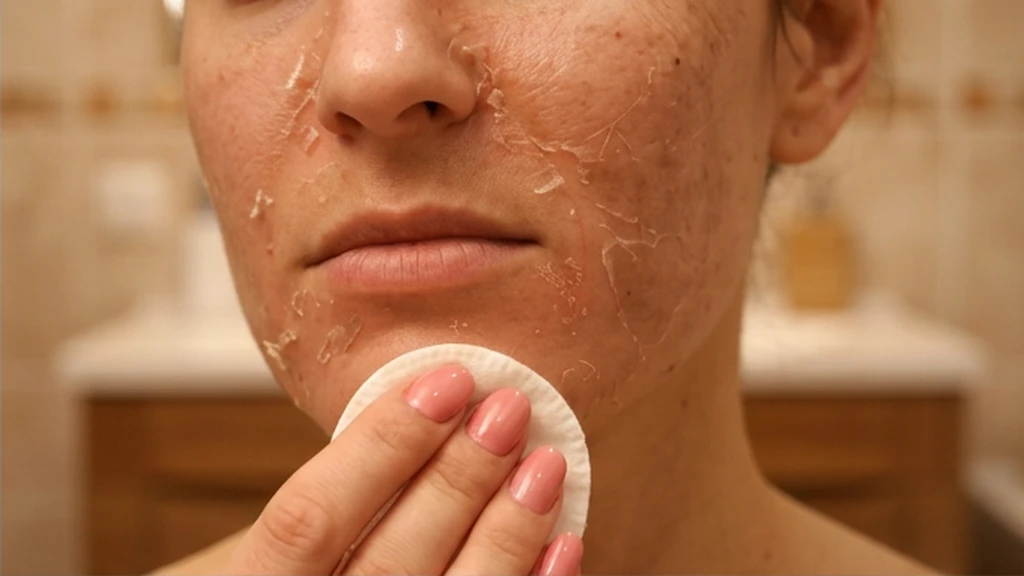
Recognising chemical peel side effects early helps you respond correctly instead of panicking or, worse, over-treating. After a light peel, you'll typically see mild redness, some tightness, and light flaking over the next two to five days. After a medium peel, the response is more pronounced — deeper redness, visible peeling or sheeting skin, and heightened sensitivity that can last up to two weeks. In both cases, the skin is in an active repair state: the outer layers have been exfoliated away, and the fresh skin underneath is temporarily more vulnerable to UV damage, irritation, and moisture loss. Signs that go beyond normal post-peel redness treatment territory — such as blistering, oozing, or prolonged burning — warrant a call to your dermatologist rather than a DIY fix.
If you're wondering what damaged skin looks like after a peel, think of it this way: controlled damage is the point of a peel, but the goal is to keep that damage within the expected range. Redness, dryness, and peeling are normal. Broken skin, infection, or severe swelling are not.
Healing timelines depend on peel depth. Light peels — using low concentrations of AHAs or BHAs — typically resolve within 3 to 5 days. Your skin may look slightly pink and feel dry, but most people can return to their normal routine within a week. Medium-depth peels, which penetrate further into the dermis, require 7 to 14 days for the surface to fully heal, with residual sensitivity sometimes lasting a few weeks beyond that. Deep peels are a clinical procedure with a recovery arc measured in weeks to months and should always be managed under professional supervision.
The most important thing you can do to support healing after a chemical peel is to keep the skin barrier intact — that means no scrubbing, no retinoids, no high-concentration acids, and consistent SPF during the day. Healing after a chemical peel is not passive; it requires active, gentle support.
Post-peel redness treatment and barrier repair follow a clear sequence. The steps below apply whether you're recovering from an at-home peel or a clinic treatment — adjust intensity based on how your skin is responding.
In the days immediately after a peel, your cleanser should do one thing: remove surface debris without stripping what's left of your barrier. Avoid foaming cleansers with sulphates, anything with fragrance, and any cleanser that contains active exfoliants. A soap-free gel cleanser is ideal. The Asaya D-Tan Face Cleanser works well here — it's a soap-free formula that cleans without stripping. It contains Glycolic Acid for gentle exfoliation, Manjistha and Mulberry Root Extract for brightening, and Hyaluronic Acid to keep moisture levels stable while it works. Use it once daily during the recovery window rather than twice, and use cool or lukewarm water — not hot.
If you're asking how to soothe skin after a chemical peel, the answer starts with cleansing: less is more, and gentle is non-negotiable for the first five to seven days.
Once your skin is clean, the priority is sealing moisture back in and supporting the barrier while it rebuilds. Look for ceramides, hyaluronic acid, and peptides — ingredients that work with your skin's natural repair process rather than pushing it harder. Avoid niacinamide at high concentrations, retinoids, vitamin C, and any AHA or BHA product during active recovery. The Asaya Even Evermore Creme is a good option here — it uses Ceramides to repair the barrier and Alpha Arbutin to gently address any pigmentation that surfaces post-peel, without the aggressive exfoliation that would set recovery back. It works for all skin types and is gentle enough for the post-peel window.
After any chemical peel — or any exfoliation — SPF is not optional. Fresh post-peel skin is significantly more vulnerable to UV-triggered pigmentation. Sun exposure during the recovery window can cause new dark spots to form on skin that's already been sensitised, which would undo the fading work entirely. Apply a broad-spectrum SPF 50 every morning, even if you're indoors. The Asaya Spot Light Sunscreen SPF 50 PA++++ is formulated to protect against both UVA and UVB damage while remaining lightweight enough not to suffocate recovering skin. Reapply every two hours if you're spending time outside.
Skipping SPF after a peel is one of the most common reasons people see post-inflammatory hyperpigmentation worsen rather than improve. It's the single most important step in chemical peel irritation relief and long-term recovery.
Once your skin has fully healed — no more peeling, no redness, no sensitivity — you can begin reintroducing targeted treatments. For ongoing pigmentation concerns, the Asaya Advanced Spot Targeting Serum works for all skin types, but its lightweight, hydrating formula makes it especially well-matched for dry and combination skin — you get treatment and moisture in one step. It combines the MelaMe™ Complex with Niacinamide (5%) and Alpha Arbutin (2%) to fade existing spots and prevent new ones from forming. For oily or acne-prone skin, the Advanced Spot Targeting Gel delivers the same active complex in a non-comedogenic gel format with Spicules that create microchannels for deeper absorption without heaviness.
Reintroduce one active at a time, starting every other day, and watch how your skin responds before adding anything else back into your routine.
Over-exfoliation damage repair is a slightly different challenge from standard post-peel recovery. If you've been using a peel too frequently — or layering it with other acids — your barrier may be more compromised than a single peel would cause. Signs of over-exfoliation include persistent redness that doesn't resolve after a few days, a shiny or waxy appearance to the skin, stinging from products that never used to sting, and increased breakouts or sensitivity. In this case, the recovery protocol is the same but extended: stop all actives completely, focus entirely on barrier repair for two to four weeks, and reintroduce exfoliation only once your skin has returned to its baseline.
The Asaya Super Fade Regenerative Peel is designed for weekly use — not daily — and its 30% AHA + BHA + PHA blend is paired with a Barrier-Calm Complex specifically to reduce the risk of over-exfoliation. If you've been using it more frequently than recommended, scaling back to weekly use and pairing it with a ceramide-based moisturiser is the right first step in over-exfoliation damage repair.
Used correctly, chemical peels do not damage skin over time — they improve it. Regular, appropriately spaced peels stimulate collagen production, accelerate cell turnover, and progressively fade pigmentation. The key phrase is "used correctly": the right peel depth for your skin type, the right frequency, and the right post-peel care. Where long-term damage occurs is when peels are used too often, at too high a concentration, or without adequate sun protection and barrier support between sessions. Indian skin, which has higher melanin activity, is particularly susceptible to post-inflammatory hyperpigmentation if peels are overdone or if sun protection is skipped — which is why SPF is a non-negotiable part of any peel routine, not an afterthought.
If you're wondering whether chemical peels damage skin over time, the honest answer is: misuse does, correct use doesn't. The difference is protocol.
Start with a gentle, soap-free cleanser and stop all actives — no retinoids, no acids, no scrubs. Apply a ceramide-based moisturiser to support barrier repair, and use SPF 50 every morning without exception. Let your skin peel naturally — don't pick or force it. Once redness and sensitivity have resolved (usually within 5–14 days depending on peel depth), you can slowly reintroduce targeted treatments like a brightening serum or spot gel.
Light peels typically heal within 3 to 5 days — you may see mild redness and flaking, but most people are back to their normal routine within a week. Medium peels take 7 to 14 days for the surface to fully heal, with some residual sensitivity beyond that. To support faster recovery, keep your routine minimal: gentle cleanser, barrier moisturiser, and SPF. Avoid anything that stimulates or exfoliates further until healing is complete.
No — when used correctly, chemical peels improve skin over time by stimulating collagen, accelerating cell turnover, and fading pigmentation progressively. Long-term damage occurs when peels are used too frequently, at too high a concentration, or without proper sun protection between sessions. For Indian skin in particular, skipping SPF after a peel can trigger post-inflammatory hyperpigmentation that worsens the very concerns the peel was meant to treat.
Normal post-peel skin looks red, feels tight, and may flake or peel visibly over 3 to 7 days — this is expected. Skin that's been over-treated may appear shiny or waxy, sting from products that previously caused no reaction, or break out more than usual. Blistering, oozing, or swelling that doesn't resolve within a day or two is not normal and should be assessed by a dermatologist rather than managed at home.
Knowing how to repair chemical peel damage comes down to one principle: give your skin what it needs to heal, and get out of the way. That means gentle cleansing, barrier-focused moisturising, consistent SPF, and the patience to let your skin recover before pushing it with actives again. The temptation to layer on more products when your skin looks rough is understandable — but it's usually what turns manageable post-peel redness into a longer, more complicated recovery.
Once your skin has healed, the Asaya range gives you a clear path forward: the Super Fade Regenerative Peel for weekly exfoliation, the Advanced Spot Targeting Gel or Serum for daily pigmentation treatment depending on your skin type, the Even Evermore Creme for barrier support and ongoing tone correction, and the Spot Light Sunscreen SPF 50 PA++++ to protect everything you've worked for. The MelaMe™ Complex running through the spot-targeting range breaks down existing dark spots into re-absorbable amino acids and inhibits excess melanin production — so it fades what's already there and works to prevent new spots from forming, with visible results in about two weeks of consistent use.
Repair first. Treat second. Protect always.
