

How to Accurately Figure Out Your Real Skin Type at Home
Your Cart
0You May Also Like

₹424 ₹499

₹509 ₹599

₹594 ₹699

₹424 ₹499

₹466 ₹549
Understanding your skin type is the foundation of any effective skincare routine, yet many people struggle with accurate identification. Whether you're dealing with persistent dark spots, uneven tone, or acne concerns, knowing your true skin type helps you choose the right products and treatments.
While professional consultations offer valuable insights, you can perform reliable skin type assessments from the comfort of your home using proven methods.
This comprehensive guide will walk you through scientifically-backed techniques to determine whether you have normal, dry, oily, or combination skin, helping you build a targeted routine that addresses your specific concerns.
Your skin type is primarily determined by genetics and represents your skin's natural oil production patterns. This baseline characteristic influences how your skin responds to products, environmental factors, and aging processes. Accurate skin type identification is crucial because using products designed for the wrong skin type can worsen existing concerns or create new problems.
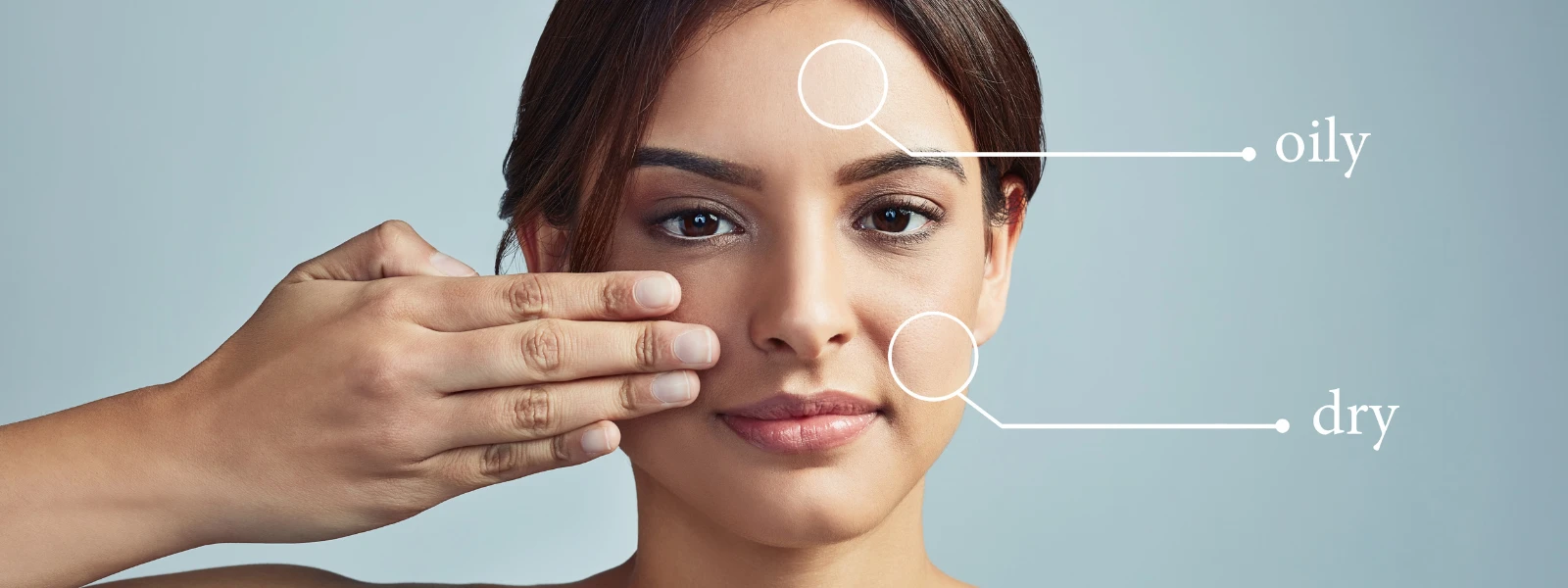
Dermatologists classify skin into four primary types based on sebaceous gland activity and natural moisture levels. Normal skin maintains balanced oil production with minimal concerns, while dry skin produces insufficient natural oils, leading to tightness and flaking. Oily skin overproduces sebum, resulting in shine and enlarged pores, particularly in the T-zone area. Combination skin exhibits different characteristics across facial zones, typically with an oily T-zone and normal to dry cheeks.
Many people confuse temporary skin conditions with their permanent skin type. Dehydrated skin, which lacks water rather than oil, often gets mistaken for dry skin. Similarly, over-cleansing can make oily skin appear dry temporarily, while hormonal fluctuations can cause normal skin to behave like combination skin. Environmental factors like air conditioning, heating, or seasonal changes can also mask your true skin type, making consistent assessment conditions essential.
The bare face test remains the most reliable method to determine skin type at home. This technique allows your skin to return to its natural state, revealing true oil production patterns and texture characteristics. The key is creating consistent conditions and observing your skin's behavior without external influences.
Begin by gently cleansing your face with a mild, pH-balanced cleanser to remove makeup, sunscreen, and daily buildup. Avoid harsh scrubs or products containing active ingredients like salicylic acid or retinoids, as these can temporarily alter your skin's behavior. Pat your face dry with a clean towel and avoid applying any products, including moisturizer or toner. Wait exactly 30 minutes in a comfortable, room-temperature environment away from direct sunlight or heating vents.
After the waiting period, examine your skin in natural light using a handheld mirror. Look for oil production in your T-zone (forehead, nose, and chin) and note any tightness or discomfort in your cheek areas. Normal skin will feel comfortable with minimal visible oil, while dry skin may feel tight or show flaking. Oily skin will display noticeable shine, particularly in the T-zone, and combination skin will show oil in the T-zone with normal or dry cheeks.
Beyond the basic bare face test, several additional methods can provide more detailed insights into your skin type. These techniques help confirm your initial assessment and identify subtle variations that might influence your skincare choices.
Blotting papers offer a visual representation of your skin's oil production patterns. Perform this test in the morning, about two hours after your usual skincare routine. Gently press clean blotting papers against different areas of your face for 10-15 seconds. Minimal oil absorption indicates normal or dry skin, while significant oil pickup suggests oily skin. Selective absorption from T-zone areas only points to combination skin.
Examine your pores using a magnifying mirror in bright, natural light. Oily skin typically displays enlarged, visible pores across the face, while dry skin shows smaller, less noticeable pores. Combination skin exhibits larger pores in the T-zone with smaller pores on the cheeks. Pay attention to skin texture as well – smooth, even texture suggests normal skin, while rough or flaky areas indicate dryness.
Your skin provides constant feedback about its type through daily behaviors and responses. Learning to interpret these signals helps you understand your skin's needs and make informed product choices.
Dry skin often feels tight, especially after cleansing, and may show visible flaking or rough patches. This skin type tends to absorb moisturizers quickly and may feel uncomfortable in air-conditioned or heated environments. You might notice fine lines appearing more prominent, and makeup may look cakey or emphasize dry patches. Seasonal changes often worsen these symptoms, with winter being particularly challenging.
Oily skin produces excess sebum throughout the day, creating a shiny appearance that's most noticeable in the T-zone. Makeup tends to slide off or break down quickly, and you may need to blot oil multiple times daily. Pores appear enlarged and may be prone to blackheads or whiteheads. However, oily skin often shows fewer signs of aging due to natural moisture retention.
Combination skin requires careful observation of different facial zones. The T-zone typically behaves like oily skin with visible shine and larger pores, while cheeks may feel normal or slightly dry. You might notice that products work well on some areas but cause problems in others. This skin type often requires different approaches for different facial zones.
Creating optimal conditions for skin type assessment ensures more accurate results. Environmental factors, timing, and preparation all influence how your skin behaves during testing periods.
Perform skin type tests during stable weather conditions when you're not experiencing hormonal fluctuations, stress, or illness. Avoid testing immediately after travel, during menstruation, or when using new medications. The ideal time is mid-morning when your skin has had time to settle after your nighttime routine but before environmental factors accumulate. Ensure room temperature is comfortable and humidity levels are moderate.
Keep a simple skin diary noting your observations during different tests and conditions. Record oil production patterns, comfort levels, and any reactions to products or environmental changes. Take photos in consistent lighting to track changes over time. This documentation helps identify patterns and confirms your skin type assessment accuracy.
While the four basic skin types provide a foundation, many people have additional characteristics that influence their skincare needs. Understanding these nuances helps create more effective routines.
Sensitivity can occur with any skin type and manifests as reactions to products, environmental factors, or physical stimuli. Sensitive skin may show redness, burning, stinging, or breakouts when exposed to certain ingredients or conditions. This overlay requires gentle formulations regardless of your primary skin type. Note that sensitivity differs from allergic reactions and may vary seasonally or with hormonal changes.
Skin type can evolve throughout life due to hormonal changes, aging, and environmental exposure. Oily skin may become more balanced with age, while normal skin might develop dry tendencies. Menopause often reduces oil production significantly, requiring routine adjustments. Regular reassessment ensures your skincare remains appropriate for your current skin type.
If cleansing isn't possible, observe your skin first thing in the morning before applying any products. Note oil production patterns, comfort levels, and overall appearance. While less accurate than the bare face test, morning observations can provide valuable insights into your natural skin behavior.
Photos can supplement but shouldn't replace hands-on assessment. Visual cues like pore size, shine, and texture are helpful, but photos can't capture comfort levels, tightness, or subtle oil production patterns that are crucial for accurate identification.
Reassess your skin type seasonally or whenever you notice significant changes in how your skin behaves. Major life changes, new medications, or persistent skin concerns may also warrant reassessment.
Acne is a skin condition, not a skin type. You can have acne with any skin type, though it's more common with oily skin. Focus on identifying your underlying skin type to choose appropriate acne treatments that won't disrupt your skin's natural balance.
Online quizzes provide general guidance but lack the nuance of hands-on assessment. They can't account for individual variations, environmental factors, or subtle skin behaviors. Use them as starting points but rely on physical testing methods for accurate identification.
Accurately determining your skin type at home requires patience, consistency, and proper technique. The bare face test remains the gold standard, but combining multiple assessment methods provides the most comprehensive understanding. Remember that skin type can change over time, making periodic reassessment important for maintaining an effective routine.
Once you've identified your true skin type, you can confidently select products and treatments that address your specific concerns, whether that's managing dark spots, controlling oil production, or maintaining healthy hydration levels. Trust your observations, document your findings, and don't hesitate to adjust your assessment as your skin evolves.
