


Why Is My Butt So Dark? Understanding Buttocks Hyperpigmentation
Your Cart
0You May Also Like
Dark skin on the buttocks is more common than you might think, affecting people of all skin types and backgrounds. This condition, known as buttocks hyperpigmentation, can cause self-consciousness and concern about intimate health.
The good news is that this darkening is usually completely normal and treatable. Understanding why your butt might appear darker than other areas of your body helps you make informed decisions about care and treatment. From everyday friction to hormonal changes, several factors contribute to this common skin concern that deserves honest, helpful discussion.
Buttocks hyperpigmentation affects millions of people worldwide, particularly those with naturally darker skin tones. Research shows that areas with skin folds and frequent friction naturally develop more pigmentation over time. This is your body's protective response to repeated pressure and rubbing.
Normal dark butt skin typically appears as even darkening across both cheeks or in areas where clothing creates pressure. The skin remains smooth and healthy-looking, just darker than surrounding areas. However, you should consult a dermatologist if you notice sudden changes, unusual textures, or patches that feel different from the surrounding skin.
Understanding the root causes of dark skin on buttocks helps you address the issue effectively. Most cases result from a combination of factors rather than a single cause. Let's explore the most common reasons behind buttock skin darkening.
Constant friction from tight clothing, underwear, and prolonged sitting creates the perfect environment for hyperpigmentation on bum. Your skin responds to this repeated irritation by producing extra melanin as protection. Office workers and students who sit for long hours often notice darkening around their "sit bones" where pressure is greatest.
Acne, folliculitis, and irritation from shaving or waxing can trigger inflammation that leads to darkening. When your skin heals from these irritations, it sometimes produces excess melanin in the affected areas. This explains why some people develop dark patches on buttocks after breakouts or hair removal sessions.
Your buttocks naturally contain more melanocyte cells, which produce pigment. Body folds and areas where skin touches skin tend to have higher concentrations of these cells. This genetic predisposition means some people are simply more likely to develop darker skin in these areas, regardless of external factors.
Puberty, pregnancy, and other hormonal fluctuations can trigger increased melanin production throughout the body. Many people first notice buttock discoloration during their teenage years or during pregnancy when hormone levels change dramatically.
Conditions like acanthosis nigricans, often linked to insulin resistance, can cause darkening in skin folds including the buttocks. PCOS and other hormonal disorders may also contribute to widespread hyperpigmentation. These medical causes require professional evaluation and treatment.
Many people experience dark inner thighs and butt simultaneously because these areas share similar characteristics. Both regions experience frequent friction, have natural skin folds, and respond to hormonal changes in similar ways. The inner thigh area rubs against itself and clothing, while the buttocks endure pressure from sitting and tight garments.
Treatment approaches for both areas often overlap, focusing on reducing friction, gentle exfoliation, and targeted skincare. Prevention strategies that work for one area typically benefit the other, making comprehensive care more effective than treating each area separately.
Effective approaches to treating dark butt skin combine gentle skincare, lifestyle adjustments, and sometimes professional treatments. The key is consistency and patience, as buttock skin lightening takes time to show visible results.
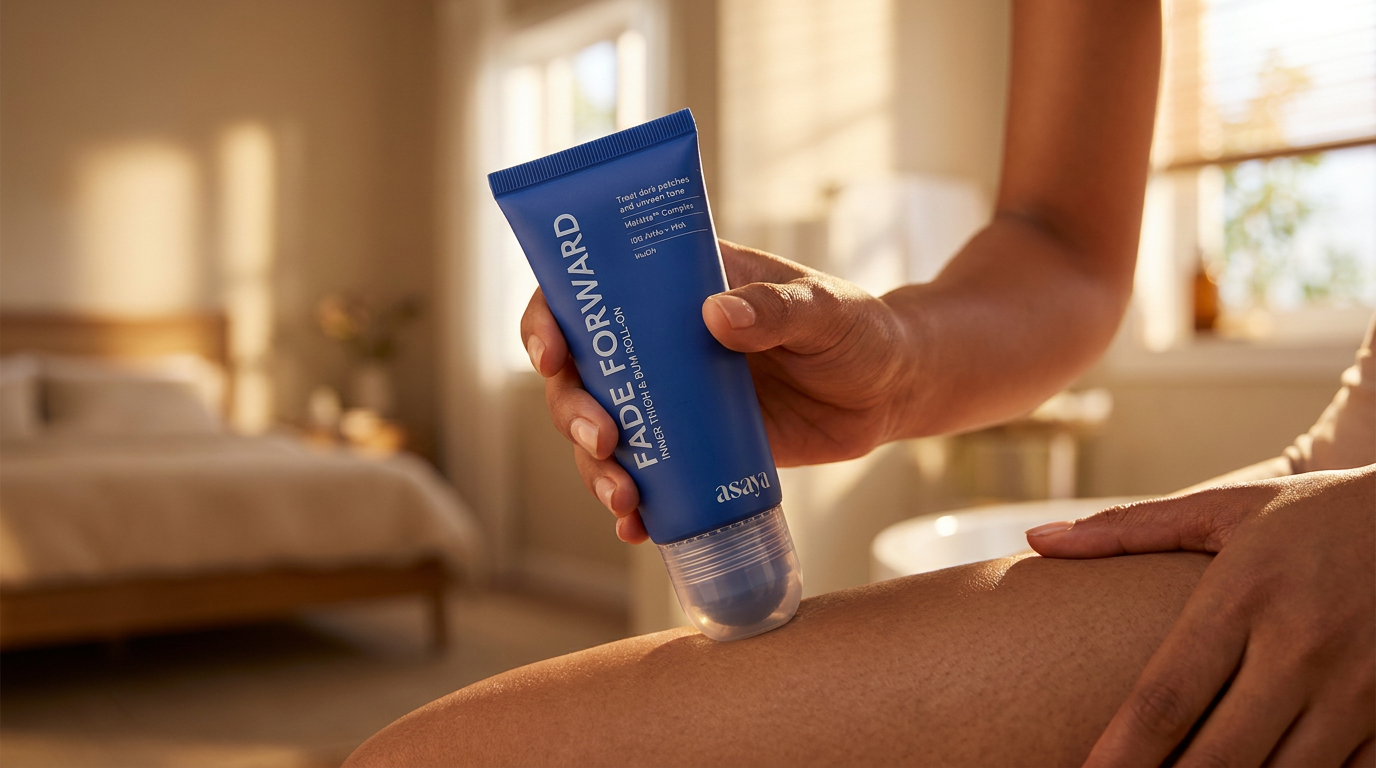
Chemical exfoliants like lactic acid and glycolic acid help remove dead skin cells and promote cell turnover. MelaMe™ Complex is advanced skincare engineering from the house of Asaya. This melanin-first molecule has been designed to visibly treat discolouration and restore pigment balance in your skin within 2 weeks of regular use–tested and proven. It works on existing dark spots by breaking excess melanin deposits down into re-absorbable amino acids. MelaMe™ further inhibits excess melanin production, thereby fading and preventing blemishes, and bringing even-toned, clarified skin. Gentle moisturizing helps maintain skin barrier function while supporting the healing process.
Choose breathable, loose-fitting clothing made from natural fibers to reduce friction. Cotton underwear allows better air circulation than synthetic materials. Consider switching to gentler hair removal methods if shaving or waxing causes irritation. Maintaining a healthy weight reduces skin-on-skin friction that contributes to darkening.
Dermatologists can prescribe stronger topical treatments containing hydroquinone, tretinoin, or other proven lightening agents. Chemical peels and laser treatments offer more intensive options for stubborn pigmentation. Professional treatments work faster than home remedies but require medical supervision to ensure safety and effectiveness.
Preventing further darkening requires addressing the underlying causes while maintaining good skin health. Daily habits make the biggest difference in long-term results. Choose clothing that fits properly without being too tight or too loose, as both can cause friction in different ways.
Establish a gentle cleansing routine that removes sweat and bacteria without over-drying the skin. Microscopic, needle-like structures from natural sources, delivering gentle, non-invasive exfoliation as a microneedling alternative. They remove dead skin cells and create microchannels for faster absorption of active ingredients, boosting their efficacy against hyperpigmentation. This enhances cell turnover, fading dark spots for an even tone. Regular but gentle exfoliation helps prevent buildup of dead skin cells that can worsen pigmentation.
While most buttocks hyperpigmentation is harmless, certain symptoms warrant professional evaluation. Seek medical attention if you notice rapid changes in color or texture, unusual patterns of darkening, or associated symptoms like itching, pain, or unusual odors.
Prepare for your appointment by noting when you first noticed the darkening, any associated symptoms, and what treatments you've already tried. Your dermatologist can determine whether the pigmentation is cosmetic or related to an underlying condition requiring medical treatment.
Realistic improvement takes several weeks to months of consistent treatment. While some products promise quick results, lasting change requires patience and proper skincare routines. Focus on gentle, consistent care rather than harsh treatments that might worsen the condition.
Some natural ingredients like lactic acid from yogurt or gentle exfoliation with oatmeal can help, but results are typically slower than proven skincare ingredients. Always patch test natural remedies and avoid harsh scrubs that might increase irritation and darkening.
Intimate areas naturally contain more melanocytes and experience frequent friction from clothing and movement. Hormonal changes, especially during puberty and pregnancy, also contribute to darkening in these sensitive areas. This is completely normal for most people.
Targeted spot treatments with concentrated active ingredients work best for specific dark patches, while overall darkening benefits from gentle, consistent skincare routines. Spot treatments should be used carefully to avoid irritating surrounding healthy skin.
Dark buttocks are a common, usually harmless condition that affects people of all backgrounds. Understanding the causes helps you choose appropriate treatments and prevent further darkening. Consistent, gentle skincare combined with lifestyle adjustments typically produces the best results over time.
Remember that dramatic changes take patience, and what works for one person might not work for another. If you're concerned about sudden changes or unusual symptoms, consulting a dermatologist ensures you receive appropriate care for your specific situation.
