


Why Does Indian Women Get Tanning? Your FAQ Answered
Your Cart
0You May Also Like
If you've ever wondered why your skin seems to tan faster than your friends', you're not alone. Many Indian women notice their skin darkens quickly with sun exposure, even with brief outdoor time. This happens because of how melanin-rich skin responds to UV radiation—it's actually a protective mechanism that's been working for thousands of years. Understanding why Indian skin tans easily can help you make better choices about sun protection and managing any unwanted pigmentation. At Asaya, we see this question come up often, especially from women dealing with uneven tanning or persistent dark spots that seem harder to fade than expected.
Indian women tan easily due to higher melanin content and larger melanosomes that respond quickly to UV exposure as a natural protection mechanism.
Environmental factors like India's intense UV index, hormonal changes, and lifestyle habits can increase tanning and lead to hyperpigmentation.
Prevention through proper sunscreen use and targeted skincare can help manage tanning, while existing dark spots need specific treatment approaches.
Indian skin typically falls into Fitzpatrick skin types III to V, which means it has more melanin than lighter skin types. This isn't just about color—it's about structure. Indian skin contains larger melanosomes (the packets that hold melanin) and more active melanocytes (the cells that produce melanin). When UV rays hit your skin, these melanocytes spring into action much faster than in lighter skin types.
This quick response is actually evolutionary protection. Over thousands of years, skin in regions with intense sun exposure developed this rapid melanin production to prevent DNA damage from UV radiation. The melanin acts like tiny umbrellas, absorbing and scattering UV rays before they can penetrate deeper skin layers. While this protects you from burning, it also means you tan—and sometimes develop dark spots—more readily than people with less melanin.
When UV radiation hits your skin, it triggers an enzyme called tyrosinase. This enzyme kickstarts melanin production in your melanocytes. In Indian skin, this process happens faster and produces more melanin per UV exposure. The newly produced melanin then travels up through your skin layers, creating the darker appearance we call tanning. This process can start within hours of sun exposure and continue for days afterward.
Several factors specific to Indian women and the Indian environment make tanning more likely. Understanding these can help you anticipate when your skin might be more vulnerable to darkening.
India's UV index regularly reaches 8-11, which is considered very high to extreme. This intense radiation means even short outdoor exposure can trigger significant melanin production. Urban pollution can also make skin more sensitive to UV damage, as pollutants can break down your skin's natural protective barrier. Seasonal changes matter too—summer months bring not just stronger UV rays but also longer daylight hours, increasing your total daily exposure.
Hormonal changes during pregnancy, menstruation, or while taking certain medications can make your skin more reactive to sun exposure. This is why some women notice they tan more easily during certain times of the month or develop melasma during pregnancy. Age also plays a role—as skin matures, it can become more prone to uneven pigmentation and slower to recover from sun exposure.
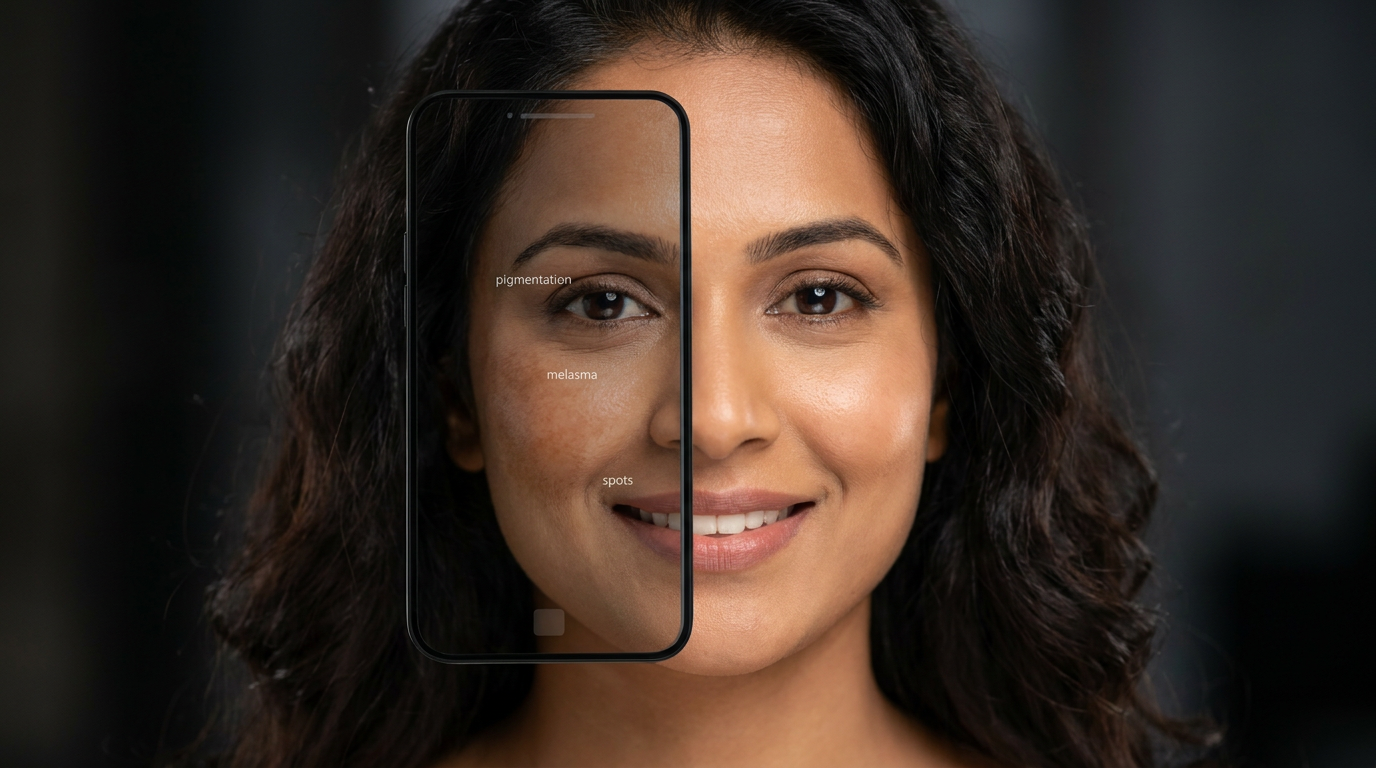
Not all skin darkening is the same. Regular tanning from sun exposure usually fades evenly over time as your skin naturally sheds and renews itself. Hyperpigmentation, however, creates persistent dark spots that don't fade on their own. This includes melasma (often triggered by hormones), post-inflammatory hyperpigmentation from acne or irritation, and solar lentigines from repeated sun damage.
Indian women are particularly prone to developing hyperpigmentation on the face, neck, and other frequently exposed areas. These dark spots form when melanin production becomes irregular or excessive in specific areas, creating patches that are darker than your natural skin tone. Unlike even tanning, these spots tend to persist and may even darken further with continued sun exposure.
The most effective approach to managing tanning starts with prevention. For Indian skin, this means using broad-spectrum sunscreen with at least SPF 30 every day, not just when you plan to be outdoors for extended periods. Reapply every two hours, or more frequently if you're sweating or in direct sunlight.
Physical protection matters just as much as sunscreen. Wide-brimmed hats, long sleeves, and seeking shade during peak UV hours (10 AM to 4 PM) can significantly reduce your exposure. In Indian cities, this might mean timing your outdoor activities for early morning or evening when possible.
Your daily skincare routine can help prepare your skin for sun exposure and recover from it. Antioxidants like vitamin C can help neutralize free radicals created by UV exposure, while ingredients like niacinamide can help regulate melanin production. After sun exposure, gentle hydration and avoiding harsh scrubbing helps your skin recover without triggering additional pigmentation.
Facial skin is thinner and more exposed to daily UV radiation than other body parts. It also has more melanocytes per square inch, making it more reactive to sun exposure. Additionally, the face receives reflected UV rays from surfaces like concrete and glass, increasing total exposure even when you think you're in shade.
Summer brings higher UV index levels, longer daylight hours, and more direct sun exposure. In India, the UV index can reach extreme levels (11+) during summer months, compared to moderate levels (3-5) in winter. This dramatic increase in UV intensity triggers much more melanin production.
While some tanning indicates your skin's protective mechanisms are working, excessive tanning can lead to premature aging, hyperpigmentation, and increased skin cancer risk. The goal should be maintaining your natural skin tone while protecting against damage, not achieving a darker color.
Natural skin cell turnover takes about 28 days, so light tanning typically fades within 4-6 weeks if you avoid further sun exposure. However, deeper tanning or hyperpigmentation can take months to fade naturally, and some dark spots may not fade completely without targeted treatment.
Yes, Asaya's formulations are specifically designed for melanin-rich Indian skin dealing with pigmentation concerns. The products work to address both existing dark spots and prevent new ones from forming, which is particularly helpful for managing post-tanning hyperpigmentation.
Understanding why Indian women tan easily comes down to skin biology—higher melanin content and more reactive melanocytes create faster, more noticeable responses to UV exposure. While this provides natural protection against sun damage, it also means you need to be more proactive about sun protection and managing any resulting pigmentation.
For existing dark spots and uneven pigmentation from tanning, targeted treatment can make a real difference. Asaya's MelaMe™ Complex represents advanced skincare engineering designed specifically for melanin-rich skin like yours. This melanin-first molecule works to visibly treat discoloration and restore pigment balance within 2 weeks of regular use. It addresses existing dark spots by breaking down excess melanin deposits into re-absorbable amino acids while inhibiting future excess melanin production. This dual approach means it both fades current spots and prevents new ones from forming, bringing you more even-toned, clarified skin faster than traditional hyperpigmentation ingredients.
