


Why Does Indian Skin Get Uneven Tone? FAQ
Your Cart
0You May Also Like
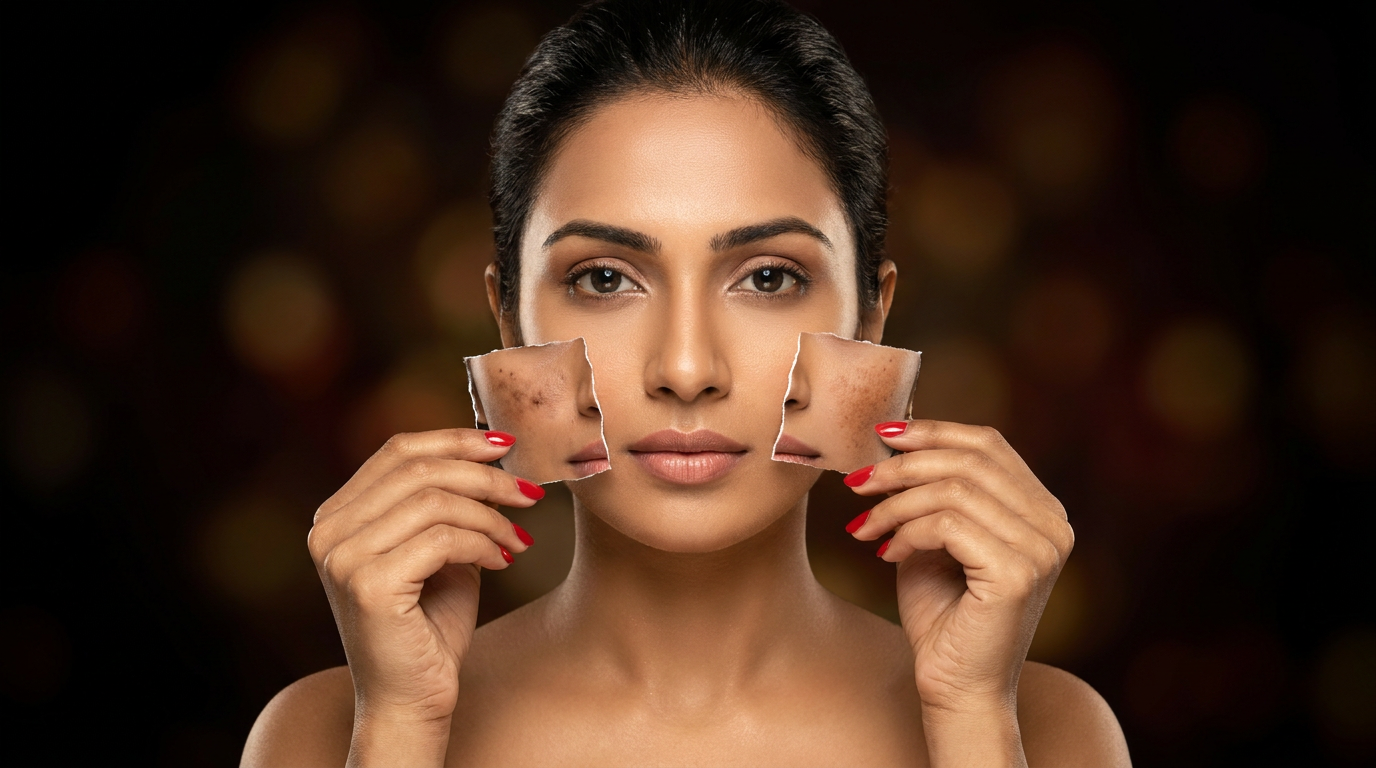
If you've noticed patches of darker skin on your face, neck, or other areas, you're not alone. Uneven skin tone affects nearly 70% of Indian women at some point in their lives, and there's real science behind why our skin behaves this way. Unlike the one-size-fits-all approach of most global skincare brands, understanding how melanin-rich skin responds to triggers like sun exposure, hormones, and inflammation is key to finding solutions that actually work. At Asaya, we've spent years researching exactly this problem, because pigmentation on Indian skin doesn't follow the same patterns you'll find in most dermatology textbooks.
• Indian skin produces more melanin and reacts more intensely to triggers like UV exposure, hormonal changes, and inflammation, leading to persistent dark spots and uneven tone.
• Common causes include post-inflammatory hyperpigmentation from acne, melasma from hormonal fluctuations, and cumulative sun damage from India's intense UV climate.
• Effective treatment combines consistent sun protection, gentle actives like vitamin C and niacinamide, and targeted ingredients that work specifically with melanin-rich skin.
Indian skin falls primarily into Fitzpatrick skin types IV through VI, which means we have naturally higher melanocyte activity compared to lighter skin tones. These melanocytes are the cells that produce melanin, our skin's natural pigment. While this gives us better natural sun protection, it also means our skin is more reactive to any kind of trigger.
Your melanocytes don't just produce more melanin, they also respond more quickly to stimulation. When something irritates your skin, whether it's a breakout, sun exposure, or even friction from tight clothing, these cells can go into overdrive. The result is localized dark spots that can persist for months or even years if left untreated.
Living in India's tropical climate means your skin deals with year-round humidity, intense UV radiation, and pollution. This combination creates a perfect storm for pigmentation issues. Your sebaceous glands also tend to be more active, which can lead to acne and subsequent dark spots.
The reasons behind hyperpigmentation on Indian skin are more complex than simple sun damage. Understanding these causes helps you target the right treatment approach and prevent new dark spots from forming.
This is probably the most common cause of dark spots on Indian skin. Every time your skin gets inflamed, whether from acne, a cut, an insect bite, or even aggressive scrubbing, your melanocytes respond by producing extra pigment. Unlike lighter skin tones where this fades relatively quickly, on Indian skin these marks can stick around for months.
India's UV index regularly hits 10 or higher, which is considered extreme. Even with our natural melanin protection, cumulative sun exposure leads to uneven pigmentation patterns. The areas that get the most sun, like your forehead, cheeks, and upper lip, often develop persistent dark patches over time.
Hormonal changes during pregnancy, while using birth control, or due to conditions like PCOS can trigger melasma. This appears as symmetrical brown patches, usually on the face, and affects up to 40% of pregnant women with darker skin tones. The combination of hormones and sun exposure makes these patches particularly stubborn.
Not all dark spots are created equal. Identifying the type of pigmentation you're dealing with helps determine the most effective treatment approach.
Melasma typically appears as brown or gray patches in a butterfly pattern across your cheeks, forehead, nose, and upper lip. It's triggered by hormonal changes and made worse by sun exposure. Unlike other types of pigmentation, melasma can be particularly challenging to treat and often requires ongoing management.
These are usually round or oval patches that develop from repeated sun exposure or acne scarring. They're more defined than melasma and often respond well to targeted treatments with ingredients like vitamin C, kojic acid, or arbutin.
This causes dark, velvety patches in skin folds like your neck, underarms, or groin. It's often related to insulin resistance and is more common in people with diabetes or PCOS. Unlike other types of pigmentation, this usually requires addressing the underlying metabolic condition.
The key to treating pigmentation on Indian skin is using ingredients and methods that work with your melanin production, not against it. Harsh treatments that work on lighter skin can actually make pigmentation worse on darker skin tones.
Vitamin C is one of the safest and most effective options for Indian skin. It inhibits tyrosinase, the enzyme responsible for melanin production, while also providing antioxidant protection. Niacinamide is another excellent choice as it reduces inflammation and helps regulate pigment transfer within the skin.
If you're considering professional treatments like chemical peels or laser therapy, make sure your dermatologist has experience with darker skin tones. Treatments that are too aggressive can cause post-inflammatory hyperpigmentation, making your pigmentation worse rather than better.
Prevention is always easier than treatment when it comes to pigmentation. Building the right habits now can save you months of trying to fade dark spots later.
Use a broad-spectrum SPF 30 or higher every single day, even when you're indoors. Reapply every two hours if you're outside. Physical sunscreens with zinc oxide or titanium dioxide are often gentler on sensitive skin than chemical sunscreens.
Avoid over-exfoliating or using harsh scrubs, which can trigger post-inflammatory hyperpigmentation. Stick to gentle cleansers and introduce active ingredients slowly to let your skin adjust.
Indian skin has higher melanocyte activity and produces more melanin in response to triggers like sun exposure, inflammation, and hormonal changes. This increased reactivity means that any irritation or damage can result in persistent dark spots that take longer to fade compared to lighter skin tones.
The top causes include post-inflammatory hyperpigmentation from acne or skin trauma, melasma triggered by hormonal changes, cumulative sun damage from intense UV exposure, and genetic predisposition to increased melanin production in response to various stimuli.
Most people start seeing initial improvements in 6-8 weeks with consistent treatment, but significant results typically take 3-6 months. Dark spots that took months or years to develop need time to fade, so patience and consistency are essential.
Asaya's formulations are specifically designed for melanin-rich Indian skin, with clinically tested ingredients that work with your skin's natural processes rather than against them. The gentle yet effective approach helps fade existing dark spots while preventing new ones from forming.
Melasma appears as larger, symmetrical patches usually triggered by hormonal changes, while regular dark spots are typically smaller, more defined areas caused by sun damage or acne scarring. Melasma often requires ongoing management and is more likely to return if triggers aren't controlled.
Understanding why Indian skin develops uneven tone is the first step toward effective treatment. Your skin's higher melanin content isn't a flaw to fix, it's a characteristic that requires targeted, science-backed solutions. The key is using ingredients that work with your skin's natural processes, not against them.
This is where Asaya's MelaMe™ Complex makes a real difference. This advanced skincare engineering has been designed specifically to treat discoloration and restore pigment balance in melanin-rich skin within 2 weeks of regular use. MelaMe™ works by breaking down existing melanin deposits into re-absorbable amino acids while inhibiting excess melanin production, effectively fading current dark spots and preventing new ones. It restores skin more effectively, uniformly, and much faster than traditional ingredients used to treat hyperpigmentation, because it was formulated specifically for how pigmentation behaves on Indian skin.
