


Why Are My Inner Thighs Dark? Expert Answers for Melanin-Rich Skin
Your Cart
0You May Also Like
If your body skin is fair but your inner thighs or groin look noticeably darker, you're not imagining it — and you're definitely not alone. Skin folds face more rubbing, sweat, and irritation than areas like your arms or stomach. In melanin-rich skin, those triggers can leave darker patches that linger. It does not mean your whole-body tone has changed. It means one area is making and holding more pigment. Asaya formulates for this pattern because pigmentation on Indian skin often needs a careful, low-irritation approach.
Dark inner thighs often come from friction, moisture, irritation, or hormonal and metabolic changes.
New, thick, velvety, or fast-spreading dark skin patches need medical advice.
Gentle care and consistent pigment treatment can help fade dark spots over time.
Dark inner thighs are usually localised hyperpigmentation, not a change in your natural skin tone. The groin and thigh folds get more friction and moisture, so pigment can build up there.
This contrast may look sharp when the rest of your body is lighter. It can still be a normal response to repeated irritation.
Melanin-rich skin can react strongly after rubbing, bumps, shaving, or a rash. The skin produces extra melanin as part of that response. This is why post-inflammatory hyperpigmentation may stay visible longer, even after the trigger has settled.
A stable patch linked to chafing is often harmless. But a new area that becomes thick, velvety, widespread, or rapidly darker needs a doctor's review. These changes can sit alongside hormonal or metabolic concerns.
Groin hyperpigmentation rarely has one single cause. Looking at when it began and what irritates the area can help you narrow it down.
The goal is not to blame your body. It is to reduce the trigger before you focus on skin tone correction.
Thigh-on-thigh contact can cause repeated low-level irritation. Sweat and close-fitting fabric can add to it. This is why people in larger bodies may notice dark inner thighs more often: it is a mechanical issue, not a hygiene issue.
Darkening in body folds can occur with hormonal changes, PCOS, insulin resistance, or pre-diabetes. Acanthosis nigricans often looks darker and may feel thicker or velvety. A dermatologist can assess the skin, while an endocrinologist can assess hormonal or metabolic concerns.
Razor bumps, ingrown hairs, dryness, and harsh depilatory products can cause irritation. The mark left after that irritation is PIH. Avoiding repeated hair-removal irritation is an important part of skincare for pigmentation.
Dark inner thighs can be normal, especially when friction or past irritation explains them. Still, do not assume every dark patch is simple hyperpigmentation.
Seek medical advice if the area changes quickly, feels thick, or appears with other body-fold darkening. This helps separate ordinary PIH from acanthosis nigricans and related concerns.
Treatment depends on the cause. If friction or hormonal changes continue, a cream alone may not give lasting results. Addressing the underlying trigger — whether that is chafing, a hormonal imbalance, or repeated irritation from hair removal — is just as important as the topical you choose.
A dermatologist may suggest topical treatment or consider procedures for stubborn pigmentation. Chemical peels and laser procedures need extra care in melanin-rich skin because irritation can worsen uneven skin tone. Always discuss your full skin history before committing to an in-office procedure.
Ask a dermatologist which medical cream suits your skin and the exact area involved. Do not use strong treatments meant for another body part without guidance. The groin is sensitive, and irritation can create more dark spots. If a prescription option is recommended, follow the usage instructions carefully and report any stinging or increased darkening early.
Procedures may be considered after the cause is clear and the skin is calm. Your clinician should account for your pigment response and use a cautious plan. Patch testing and aftercare matter — and in melanin-rich skin, a conservative approach with longer intervals between sessions tends to produce safer, more even results.
If you're looking for a cream or targeted product for dark inner thighs, the key is choosing one formulated for body-fold skin, not a face product repurposed for the area. For skin lightening thighs, choose a formula made for body-fold pigmentation and use it consistently. Alpha arbutin and gentle exfoliating acids appear in products designed for uneven tone.
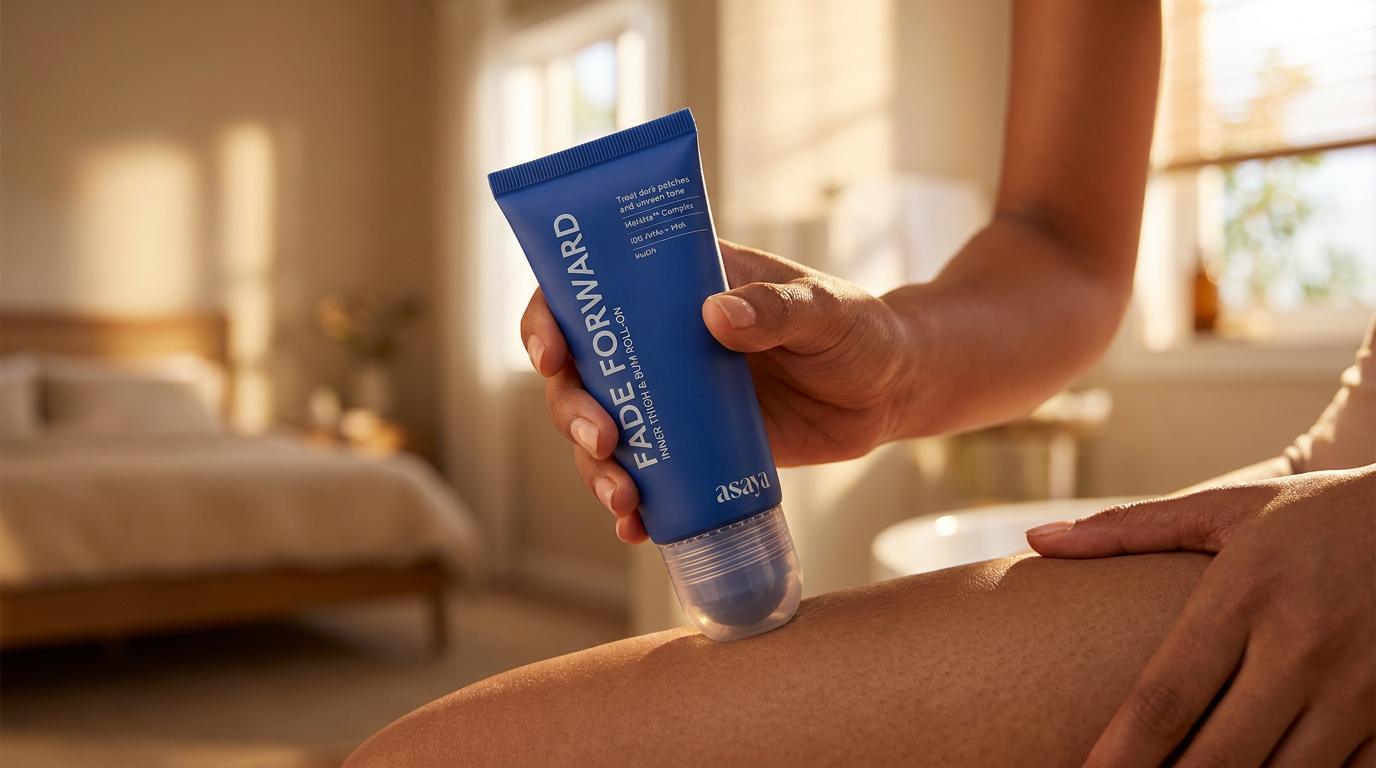
Asaya Fade Forward Inner Thigh & Bum Roll-On contains MelaMe™ Complex, an AHA and PHA blend, and inulin. It is made for dark inner thighs linked to friction, sweat, irritation, and chafing. Stop if it stings or causes a rash.
Home remedies like scrubbing or DIY acid mixes tend to irritate more than they help — and on melanin-rich skin, that irritation can deepen the very marks you're trying to fade. Harsh mixtures and abrasive tools are especially risky in the groin area, where skin is thinner and more reactive.
Keep the area clean and dry, then use a gentle targeted product as directed. The Asaya Fade & Fresh Duo and Target & Fade Duo are body-care options for underarms, inner thighs, and bum pigmentation. If you're also dealing with pigmentation on your face alongside body concerns, the Asaya Spot Fade Duo — which pairs the Fade Forward Roll-On with the Advanced Spot Targeting Serum — covers both areas in one routine.
Prevention means reducing the irritation that started the marks. Choose clothing that lowers rubbing and change out of damp clothes after sweating.
Use breathable, comfortable fabrics.
Manage sweat and moisture in skin folds.
Use gentle hair-removal methods and avoid repeated irritation.
Monitor hormonal or metabolic symptoms with a clinician.
It is not realistic to expect long-standing pigmentation to disappear in a week. Pigment fades gradually, and melanin-rich skin needs a calm routine to avoid new irritation.
Asaya describes visible results from about two weeks for its Fade Forward Roll-On. Your timeline can differ based on friction, irritation, and any underlying cause.
These answers can help you choose a safer next step.
Start by reducing friction and irritation, then use melanin-safe care consistently. Avoid harsh DIY methods. A targeted product such as Asaya Fade Forward Inner Thigh & Bum Roll-On is formulated for body pigmentation, but thick or fast-changing patches need a clinician.
Thigh contact can create friction, especially with heat and sweat. That irritation can trigger extra melanin. It is common and does not reflect cleanliness or worth.
The groin has more friction, moisture, and exposure to irritation. Hormonal changes can also play a role. If the skin becomes velvety or spreads, ask a doctor about acanthosis nigricans.
Dark inner thighs are a skin response, not a personal failure. Focus on the cause, protect the area from irritation, and give treatment time. That's where MelaMe™ Complex comes in: it works on two fronts, slowing down new melanin production and helping your skin clear the deposits already there — breaking excess melanin into re-absorbable amino acids so marks fade and are less likely to return. Most people see a visible difference in about two weeks with consistent use, based on clinically tested results. Be patient with your skin, keep the routine gentle, and let the process work.
