


Skin Pigmentation Causes vs. Solutions: A Comprehensive Comparison
Your Cart
0You May Also Like
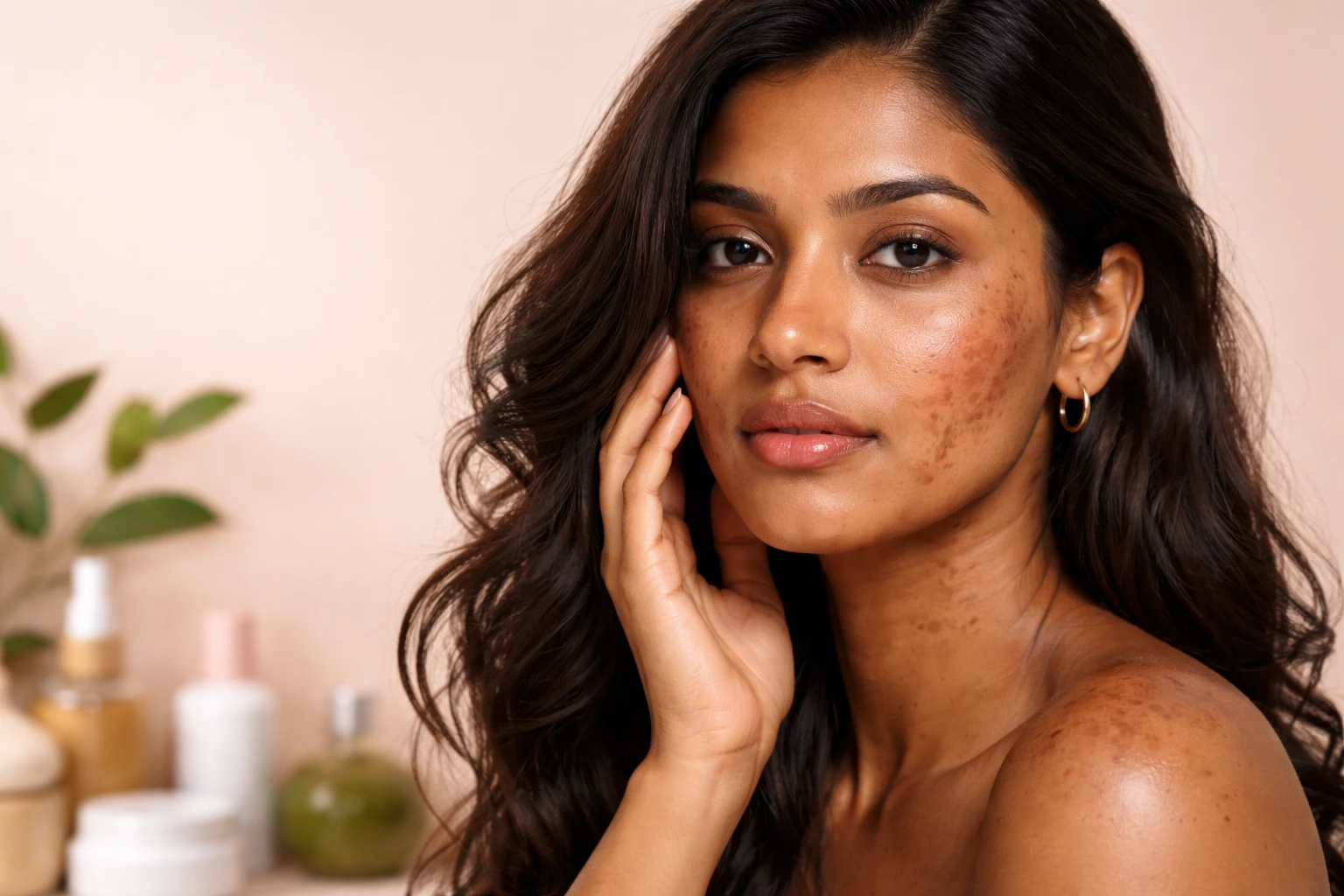
What causes dark spots and uneven skin tone? If you're dealing with skin pigmentation, you're definitely not alone. Nearly 90% of people with melanin-rich skin experience some form of hyperpigmentation during their lifetime, yet finding the right solution often feels like navigating a maze of conflicting advice. The truth is, understanding what's causing your specific type of pigmentation is just as important as knowing how to treat it. Whether you're dealing with post-inflammatory hyperpigmentation from old breakouts, melasma triggered by hormonal changes, or sun spots from years of UV exposure, each type requires a slightly different approach. That's where Asaya's research-backed solutions come in — formulated specifically for Indian skin tones and the unique pigmentation challenges we face.
• Skin pigmentation has multiple causes including UV damage, hormones, inflammation, and genetics — identifying your specific trigger helps choose the right treatment approach. • Professional treatments like chemical peels and lasers work faster but cost more, while at-home solutions with proven actives like niacinamide and alpha arbutin offer gradual, affordable results. • Prevention through consistent SPF use and gentle skincare prevents new dark spots while treating existing ones with targeted ingredients like kojic acid and vitamin C.
Skin pigmentation happens when your melanocytes — the cells that produce melanin — go into overdrive in certain spots. Think of melanin as your skin's natural shield against damage, but sometimes that shield gets a bit too enthusiastic and creates uneven patches.
Your skin produces melanin through a complex process involving an enzyme called tyrosinase. When this enzyme gets triggered by factors like UV rays, inflammation, or hormonal changes, it kickstarts melanin production. In healthy skin, this process happens evenly across your face. But when certain areas produce more melanin than others, you get those frustrating dark spots and uneven patches. Genetics play a huge role here too. If your family tends to develop pigmentation easily, you're more likely to experience it yourself. This is especially true for people with higher melanin content in their skin — which is why pigmentation is such a common concern for Indian skin tones.
UV radiation tops the list of pigmentation triggers. Even brief sun exposure without proper protection can stimulate melanin production, leading to sun spots and overall darkening. But it's not just about being in direct sunlight — UV rays bounce off surfaces like concrete and glass, meaning you're getting exposure even when you think you're protected. Hormonal fluctuations, particularly during pregnancy or while using birth control, can trigger melasma. This type of pigmentation typically appears as symmetrical patches on the cheeks, forehead, and upper lip. Inflammation from acne, cuts, or even aggressive skincare treatments often leads to post-inflammatory hyperpigmentation, where the healing process leaves behind a dark mark.
Not all dark spots are created equal. Understanding which type you're dealing with helps you choose the most effective treatment approach.
Melasma appears as brown or gray-brown patches, usually on both sides of your face in a symmetrical pattern. It's often called the "pregnancy mask" because hormonal changes during pregnancy frequently trigger it, though it can also develop from birth control pills or hormone replacement therapy. The tricky thing about melasma is that it tends to be deeper in the skin layers, making it more stubborn to treat than other types of pigmentation. Sun exposure makes it significantly worse, which is why many people notice their melasma darkening during summer months.
This is probably the most common type of pigmentation people deal with, especially if you've had acne. PIH develops after any kind of skin inflammation — a pimple, a cut, an insect bite, or even an overly aggressive facial treatment. The darker your natural skin tone, the more likely you are to develop PIH. It can range from light brown to almost black, and unlike melasma, PIH spots are usually irregular in shape and don't follow a symmetrical pattern. The good news is that PIH typically responds well to treatment since it's usually in the upper layers of skin.
These are the flat, brown spots that develop from years of cumulative sun damage. They're often called "age spots," though they're really "sun spots" since age itself doesn't cause them — UV exposure does. Solar lentigines typically appear on areas that get the most sun exposure: your face, hands, shoulders, and arms. They're usually well-defined with clear borders and can range from light brown to dark brown.
Some medications can cause pigmentation as a side effect, particularly antimalarials and certain antibiotics. Café-au-lait spots are genetic and appear as light brown patches, usually present from birth or early childhood. On the flip side, vitiligo causes loss of pigmentation, creating white patches where melanocytes have stopped functioning. While this isn't hyperpigmentation, it's still a pigment disorder that affects many people.
Professional treatments work faster than at-home options, but they also come with higher costs and potential downtime.
Chemical peels use acids to remove the top layers of skin, taking pigmented cells along with them. Glycolic acid peels work well for surface-level pigmentation, while deeper peels using trichloroacetic acid (TCA) can address more stubborn spots. Most people need a series of peels spaced 2-4 weeks apart. Laser treatments like IPL (Intense Pulsed Light) and Q-switched lasers target melanin directly, breaking it down so your body can naturally eliminate it. These treatments can be quite effective but require multiple sessions and careful post-treatment care to avoid complications. Microneedling creates tiny channels in your skin, allowing serums with active ingredients to penetrate deeper. When combined with vitamin C or kojic acid serums, it can significantly improve pigmentation over several sessions.
Hydroquinone is considered the gold standard for pigmentation treatment, but it requires careful monitoring by a dermatologist. It works by inhibiting tyrosinase, the enzyme responsible for melanin production. Tretinoin and other retinoids speed up cell turnover, helping pigmented cells shed faster while preventing new pigmentation from forming. They're often combined with other ingredients for maximum effectiveness. Kojic acid, derived from fungi, inhibits melanin production and is gentler than hydroquinone. Many dermatologists prescribe combination treatments that include kojic acid alongside other actives.
At-home treatments take longer to show results but offer more affordable, convenient options for managing pigmentation.
Vitamin C serums work as antioxidants while inhibiting melanin production. The Asaya 15% Vitamin C + E Serum with Ferulic Acid combines high-strength vitamin C with vitamin E and ferulic acid for enhanced stability and effectiveness against dark spots and sun damage. Niacinamide reduces inflammation and helps prevent melanin transfer to skin cells. It's particularly effective for post-inflammatory hyperpigmentation and works well with other active ingredients. Alpha hydroxy acids like glycolic and lactic acid gently exfoliate the skin surface, helping pigmented cells shed faster. They also improve overall skin texture and can enhance the penetration of other active ingredients. Alpha arbutin, derived from bearberry plants, inhibits tyrosinase activity without the irritation potential of hydroquinone. The Asaya 2% Kojic Acid & 1% Alpha Arbutin Serum combines these two powerful melanin inhibitors for gentle yet effective pigmentation correction.
Morning routines should focus on protection. Start with a gentle cleanser like the Asaya Even Tone Face Cleanser, which contains alpha arbutin and kojic acid to address pigmentation while cleansing. Follow with your treatment serum, moisturizer, and always finish with broad-spectrum SPF. Evening routines are when you can use stronger actives. The Asaya Advanced Spot Targeting Serum, formulated specifically for Indian pigmentation-prone skin, contains 5% niacinamide and 2% alpha arbutin in their proprietary MelaMe™ Complex for visible results in about 2 weeks. Layering products correctly matters. Apply thinnest to thickest consistency, and always wait a few minutes between layers to ensure proper absorption. The Asaya Even Evermore Creme works as both a moisturizer and pigmentation treatment, containing ceramides and alpha arbutin to hydrate while fading dark spots.
Preventing new pigmentation is often easier than treating existing spots.
SPF 30 is the minimum for daily use, but SPF 50 offers better protection for pigmentation-prone skin. Look for broad-spectrum formulas that protect against both UVA and UVB rays. Physical sunscreens with zinc oxide or titanium dioxide sit on top of skin and reflect UV rays, while chemical sunscreens absorb UV radiation. Both work well when applied generously and reapplied every 2 hours. Reapplication is crucial but often forgotten. If you wear makeup, consider powder sunscreens for touch-ups, or use a setting spray with SPF.
Hormonal balance affects pigmentation, especially melasma. While you can't always control hormonal changes, managing stress through meditation, adequate sleep, and regular exercise can help keep hormones more stable. An anti-inflammatory diet rich in antioxidants may help prevent pigmentation. Foods high in vitamin C, vitamin E, and omega-3 fatty acids support skin health from the inside out. Gentle skincare prevents the inflammation that leads to post-inflammatory hyperpigmentation. Avoid harsh scrubs, over-exfoliation, and picking at blemishes.
The right treatment depends on your pigmentation type, skin sensitivity, budget, and timeline expectations.
Mild pigmentation often responds well to consistent use of over-the-counter ingredients like vitamin C, niacinamide, and alpha arbutin. You'll typically see improvement in 4-8 weeks with daily use. Moderate pigmentation may require stronger actives like kojic acid or glycolic acid, or combination treatments. The Asaya Advanced Spot Targeting Gel combines alpha arbutin with peptides and spicules for targeted treatment of stubborn acne marks and sun spots. Severe or deep pigmentation often needs professional intervention, though maintaining results requires ongoing at-home care.
Sensitive skin needs gentler approaches. Start with lower concentrations of actives and gradually increase as your skin builds tolerance. Niacinamide is typically well-tolerated by sensitive skin types. Oily, acne-prone skin can usually handle stronger actives but needs non-comedogenic formulations. Gel-based treatments often work better than cream formulations for oily skin. Dry skin benefits from hydrating ingredients alongside pigmentation treatments. Look for products that combine actives with moisturizing ingredients like ceramides and hyaluronic acid.
Professional treatments cost more upfront but may work faster. A series of chemical peels might cost ₹15,000-30,000 but show results in 6-8 weeks. At-home treatments cost less initially and offer more control over your routine. A complete pigmentation routine with quality products might cost ₹3,000-5,000 and provide 2-3 months of treatment. Consider long-term costs too. Professional treatments often require maintenance sessions, while at-home routines need consistent product replenishment.
Most people start seeing visible improvement in 2-4 weeks with consistent use of effective ingredients. However, significant fading typically takes 8-12 weeks for surface pigmentation and 3-6 months for deeper pigmentation like melasma. The Asaya Advanced Spot Targeting Serum is formulated to show visible results in approximately 2 weeks with regular use.
Many types of pigmentation can be significantly faded or completely cleared with proper treatment. However, the underlying tendency to develop pigmentation often remains, which is why ongoing prevention and maintenance are crucial. Sun spots and PIH typically respond very well to treatment, while melasma tends to be more persistent and may require long-term management.
Melasma appears as symmetrical patches, usually on both sides of the face, and is triggered by hormonal changes. Age spots (solar lentigines) are individual spots caused by cumulative sun damage and can appear anywhere on sun-exposed areas. Melasma tends to be more challenging to treat because it's often deeper in the skin.
When used properly, most skin lightening ingredients are safe for all skin types. However, people with darker skin tones need to be more cautious with certain treatments like chemical peels and lasers, as they carry a higher risk of post-inflammatory hyperpigmentation. Always patch test new products and consider consulting a dermatologist familiar with treating melanin-rich skin.
Dealing with skin pigmentation can feel overwhelming, but understanding the cause of your specific type of dark spots puts you in control of finding the right solution. Whether you choose professional treatments for faster results or prefer the gradual approach of at-home care, consistency is key to seeing improvement. The most effective approach often combines prevention through diligent sun protection with targeted treatment using proven ingredients. For those dealing with stubborn pigmentation, Asaya's MelaMe™ Complex represents a breakthrough in pigmentation treatment. This advanced, melanin-first molecule is specifically engineered to visibly treat discoloration and restore pigment balance within 2 weeks of regular use. It works by breaking down excess melanin deposits into re-absorbable amino acids while inhibiting future melanin production, making it more effective than traditional hyperpigmentation ingredients. Remember, pigmentation didn't develop overnight, and it won't disappear overnight either. But with the right approach, patience, and consistent care, you can achieve the even-toned, clear skin you're working toward. The key is starting with products formulated for your skin type and concerns, then staying committed to your routine while protecting your progress with daily SPF.
