


How to Remove Stubborn Acne Marks Effectively
Your Cart
0You May Also Like
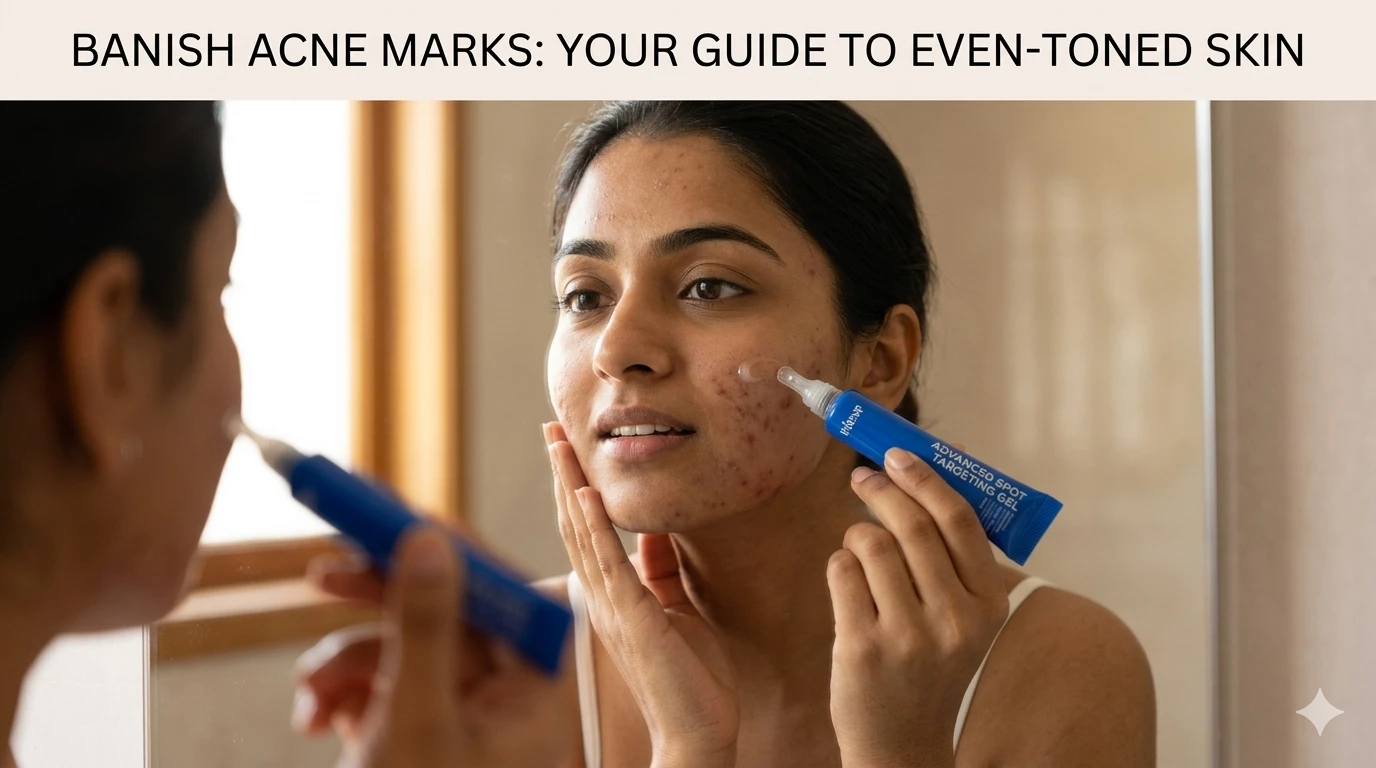
Acne marks can linger long after the breakout has healed, leaving behind dark spots, red patches, and textural changes that affect your confidence. Whether you're dealing with flat brown spots from old pimples or deeper indented scars, understanding the difference between various types of acne marks is the first step toward effective treatment. The good news? Most acne marks can fade significantly with the right approach, though it requires patience and consistency. From proven topical treatments to professional procedures, there are multiple ways to address stubborn post-acne discoloration and restore clearer, more even-toned skin.
Acne marks include flat dark spots (PIH), red marks (PIE), and textural scars that require different treatment approaches
Topical treatments like vitamin C, niacinamide, and retinoids can fade most flat marks within 2-8 weeks with consistent use
Professional treatments like chemical peels and microneedling work faster for stubborn marks and textural scars
Not all acne marks are created equal. What you're seeing in the mirror might be flat discoloration that will fade with time and treatment, or it could be actual scarring that needs a different approach entirely. Knowing which type you're dealing with helps you choose the most effective treatment.
These are the flat, dark brown or black spots that appear after a pimple heals. PIH happens when your skin produces extra melanin in response to inflammation. On deeper skin tones, these marks tend to be darker and more noticeable. The good news is that PIH is purely a pigmentation issue, not actual scarring, so it responds well to brightening treatments.
Red or pink marks that remain after acne are called PIE. These are caused by dilated capillaries under the skin and are more common on lighter skin tones. PIE can be trickier to treat than PIH because it's vascular, not pigment-related.
True acne scars involve changes in skin texture. Ice pick scars are deep, narrow holes. Boxcar scars are wider with defined edges. Rolling scars create a wavy texture. These require professional treatment because they involve actual tissue damage, not just surface discoloration.
The most accessible way to tackle acne marks is through consistent use of proven active ingredients. These work by either speeding up cell turnover to reveal fresh skin or by directly targeting the excess pigment.
Vitamin C works by inhibiting tyrosinase, the enzyme responsible for melanin production. Look for stable forms like magnesium ascorbyl phosphate or sodium ascorbyl phosphate in concentrations between 10-20%. Apply in the morning under sunscreen for best results.
This form of vitamin B3 is particularly effective for acne-prone skin because it reduces inflammation while fading marks. The Asaya 2% Salicylic Acid & 5% Niacinamide Serum combines pore-clearing BHA with mark-fading niacinamide, making it ideal for treating active breakouts while preventing new marks from forming. Niacinamide works well with most other actives and is gentle enough for daily use.
Retinoids speed up skin cell renewal, helping marks fade faster while preventing new breakouts. Start with over-the-counter retinol or adapalene, using it every other night initially. Prescription tretinoin works faster but requires dermatologist supervision.
AHAs like glycolic acid and BHAs like salicylic acid help remove dead skin cells that can make marks look darker. The Asaya Daily Clear Salicylic Face Cleanser provides gentle daily exfoliation with 2% salicylic acid, perfect for maintaining clear pores while gradually fading existing marks.
When topical treatments aren't enough, professional procedures can provide more dramatic results. These work by either removing damaged skin layers or stimulating new collagen production.
Professional peels use higher concentrations of acids to remove damaged skin layers. Light peels with glycolic or salicylic acid can be done monthly, while deeper peels require more downtime but provide more dramatic results. Most people see improvement after 3-6 sessions.
This procedure creates controlled micro-injuries that stimulate collagen production. It's particularly effective for rolling scars and can improve the appearance of ice pick and boxcar scars. Professional microneedling typically requires 4-6 sessions spaced 4-6 weeks apart.
Fractional lasers target specific areas without damaging surrounding skin. They're effective for both pigmentation and textural issues but require careful selection based on skin tone to avoid post-inflammatory hyperpigmentation.
Consistency is key when treating acne marks. A well-structured routine that combines gentle cleansing, targeted treatments, and sun protection will give you the best results.
Start with a gentle cleanser, apply your vitamin C or niacinamide serum, follow with moisturizer, and finish with broad-spectrum sunscreen. The Asaya Spot Light Sunscreen SPF 50 PA++++ for Dark Spots & Hyperpigmentation is specifically formulated to fade existing marks while protecting against UV damage that can darken them further.
Evening is the time for stronger actives like retinoids or chemical exfoliants. Always follow with a good moisturizer to support your skin barrier. If using multiple actives, alternate nights to prevent irritation.
Consider adding a weekly treatment mask or higher-concentration exfoliant. For body areas like inner thighs or underarms where friction can cause darkening, the Asaya Fade Forward Inner Thigh & Bum Roll-On provides targeted treatment with a convenient application method.
Patience is crucial when treating acne marks. Understanding realistic timelines helps you stay consistent with your routine and know when to adjust your approach.
Fresh marks typically fade faster than older ones. PIH usually shows improvement in 2-4 weeks with consistent treatment, while complete fading can take 2-6 months. PIE often takes longer, sometimes 6-12 months. True scars require professional treatment and may never completely disappear, though significant improvement is possible.
Skin tone, age, mark depth, sun exposure, and treatment consistency all impact how quickly marks fade. Deeper skin tones may see slower fading but often have better results with consistent treatment. Protecting marks from sun exposure is crucial, as UV rays can darken them and slow healing.
The best acne mark is the one that never forms. Preventing new marks is just as important as treating existing ones.
UV exposure is the biggest factor in making acne marks darker and more persistent. Use broad-spectrum SPF 30 or higher daily, even indoors. Reapply every 2 hours when outdoors.
Avoid picking, squeezing, or scrubbing acne. These actions increase inflammation and make marks more likely to form. Use gentle, non-comedogenic products that won't clog pores or irritate skin.
The faster you treat a breakout, the less likely it is to leave a mark. Keep spot treatments on hand and address new pimples immediately. Consider seeing a dermatologist for persistent acne that doesn't respond to over-the-counter treatments.
Stubborn acne marks persist due to continued melanin production, inadequate sun protection, or deeper collagen damage requiring professional treatment. If marks haven't improved after 3 months of consistent treatment, consider consulting a dermatologist.
While significant improvement is possible, complete removal depends on scar type and depth. Most people see 50-80% improvement with proper treatment. Flat pigmentation marks have the best chance of complete fading.
Combine multiple approaches: use proven topical treatments consistently, protect from sun exposure religiously, consider professional treatments for stubborn marks, and maintain a gentle skincare routine that supports skin barrier function.
Asaya products are specifically formulated for melanin-rich skin and stubborn pigmentation. The brand's targeted approach to post-acne discoloration, combined with gentle yet effective formulations, makes them particularly suitable for treating acne marks without causing additional irritation.
Removing stubborn acne marks requires patience, consistency, and the right combination of treatments. While topical treatments can effectively fade most flat marks, deeper scars may need professional intervention. The key is understanding what type of marks you're dealing with and choosing treatments accordingly. Remember that prevention is just as important as treatment, so maintain good skincare habits and always protect your skin from sun damage. With the right approach, most acne marks can fade significantly, revealing clearer, more even-toned skin. Asaya's MelaMe™ Complex represents a breakthrough in treating post-acne discoloration, specifically engineered for melanin-rich skin. This advanced molecule works by breaking down excess melanin deposits into re-absorbable amino acids while inhibiting future melanin overproduction, delivering visible results within 2 weeks of regular use. For those dealing with persistent acne marks, products containing MelaMe™ Complex offer a scientifically-backed solution that addresses the root cause of post-inflammatory hyperpigmentation more effectively than traditional brightening ingredients.
