


How to Identify Common Hyperpigmentation Causes for Indian Skin
Your Cart
0You May Also Like
Dark spots and uneven skin tone affect nearly 80% of Indian women, yet most skincare advice treats all skin the same way. The truth is, melanin-rich skin responds differently to triggers like sun exposure, hormonal changes, and inflammation. Understanding the specific common hyperpigmentation causes for Indian skin is the first step toward clearer, more even-toned skin. At Asaya, we've seen how identifying the root cause changes everything about how effectively you can treat pigmentation.
Indian skin types are genetically predisposed to hyperpigmentation due to higher melanin content and specific environmental triggers
The five most common causes are melasma, post-inflammatory hyperpigmentation, sun damage, drug-induced pigmentation, and perioral darkening
Proper identification of the cause determines the most effective treatment approach and timeline for results
Your skin produces melanin as protection, but hyperpigmentation Indian skin types experience happens when this process goes into overdrive. People with Indian ethnicity typically have Fitzpatrick skin types III to V, which contain more active melanocytes than lighter skin tones. This means your skin is naturally more reactive to triggers.
The tropical climate in India adds another layer of complexity. High UV exposure, humidity, and pollution create a perfect storm for pigmentation issues. Research shows that people living in urban Indian cities experience 40% more pigmentation concerns than those in temperate climates, largely due to environmental stressors combined with genetic predisposition.
What makes this particularly frustrating is that skin pigmentation Indian ethnicity often develops faster and fades slower than in other skin types. A small pimple can leave a dark mark that lingers for months, while sun exposure that barely affects lighter skin can create lasting spots on yours.
Not all dark spots are created equal. Each type has distinct characteristics, triggers, and treatment approaches. Here's how to identify what you're dealing with.
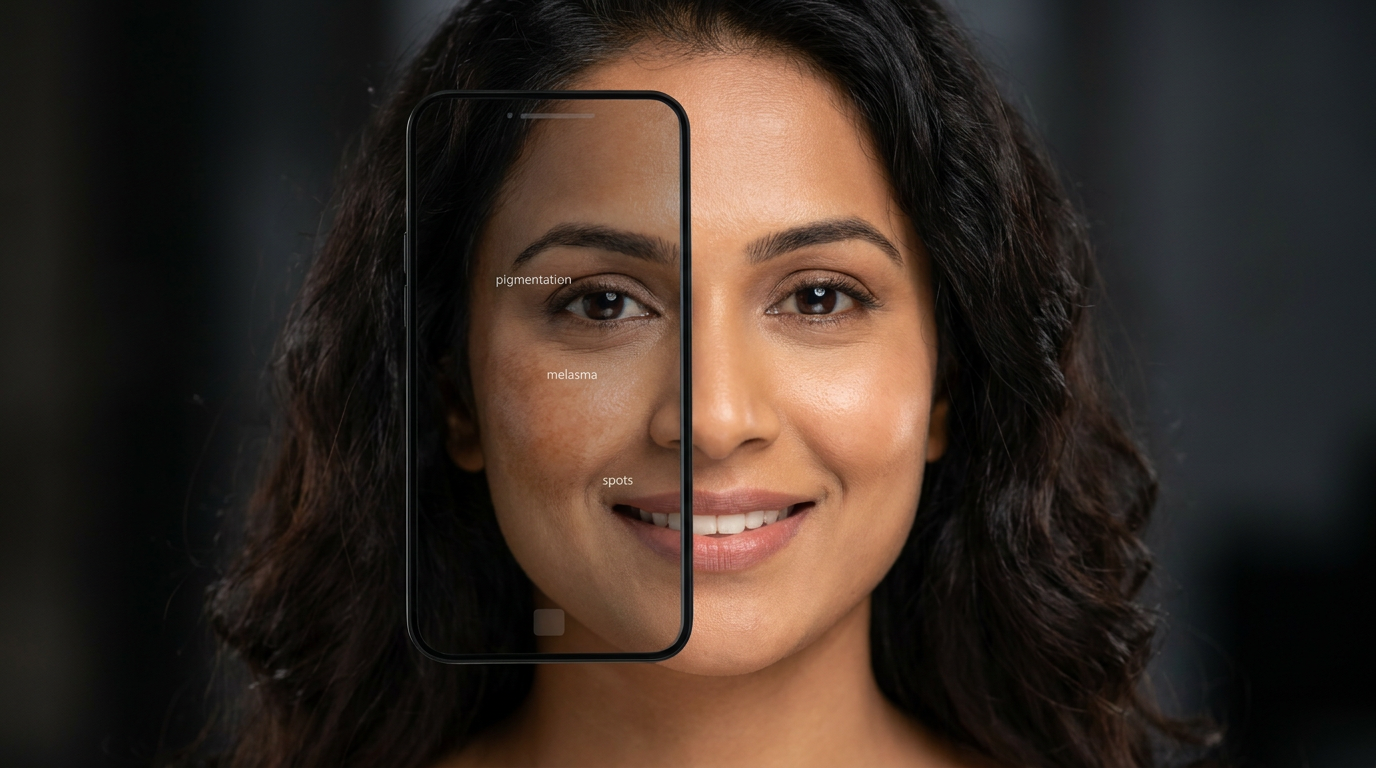
Melasma Indian skin appears as symmetrical brown patches, usually in a butterfly pattern across your cheeks, forehead, and upper lip. This type of hyperpigmentation is triggered by hormonal changes during pregnancy, while taking birth control pills, or during menopause. About 25% of Indian women develop melasma at some point, particularly those aged 20-40.
You can identify melasma by its even, smooth texture and bilateral appearance. Unlike acne scars or sun spots, melasma patches are usually the same size and shape on both sides of your face. The color ranges from light brown to dark brown, and it often gets darker during summer months due to increased sun sensitivity.
Post-inflammatory hyperpigmentation Indian skin develops after any kind of inflammation or injury. This includes acne breakouts, cuts, burns, or even aggressive skincare treatments. The darker your natural skin tone, the more likely you are to develop these marks after inflammation.
Acne scars hyperpigmentation Indian patterns are particularly common. Even a small pimple can leave a dark mark that takes 6-12 months to fade naturally. These spots are usually round or oval, matching the size of the original breakout, and they're darker at the center, fading to lighter edges.
Sun damage hyperpigmentation Indian skin shows up as irregular brown spots on areas that get the most sun exposure. Your face, hands, shoulders, and décolletage are prime targets. Unlike melasma, sun spots are usually asymmetrical and vary in size.
In India's intense UV environment, sun damage can develop earlier and more aggressively than in other climates. You might notice these spots appearing in your late twenties or early thirties, especially if you spend time outdoors without consistent sun protection.
Certain medications can trigger pigmentation in melanin-rich skin. Antimalarials, some antibiotics, and even common pain relievers can cause darkening, particularly when combined with sun exposure. Chemical exposure from pollution and industrial environments also contributes to uneven skin tone Indian populations experience.
This type of hyperpigmentation often appears as a general darkening rather than distinct spots, and it may affect areas that aren't typically sun-exposed.
Dark patches around the mouth are particularly common in Indian skin types. This can be caused by certain toothpastes, lip products, or even habits like lip licking. The skin around your mouth is thinner and more sensitive, making it prone to developing dark spots Indian complexion concerns in this area.
Look at the pattern, not just the color. Melasma is symmetrical and smooth. Post-inflammatory hyperpigmentation follows the exact shape of whatever caused the inflammation. Sun spots are irregular and appear on sun-exposed areas. Drug-induced pigmentation tends to be more diffuse and general.
Pay attention to when the spots appeared. Did they show up after a breakout? During pregnancy? After starting a new medication? The timeline often reveals the cause.
Take photos in natural light to track changes over time. This helps you see whether spots are fading, staying the same, or getting darker, which informs your treatment approach.
Living in Indian cities exposes your skin to unique challenges. Air pollution doesn't just affect your lungs; it also triggers inflammation that can lead to pigmentation. The combination of dust, vehicle emissions, and industrial pollutants creates free radicals that damage skin cells and trigger excess melanin production.
Stress, poor sleep, and inflammatory foods can also worsen existing pigmentation. Your skin reflects your overall health, so causes of dark patches on Indian skin often involve lifestyle factors beyond just sun exposure and genetics.
While many types of hyperpigmentation can be managed with proper skincare, some situations require professional evaluation. See a dermatologist if spots appear suddenly, change shape or color rapidly, or don't respond to consistent treatment after 3-4 months.
A dermatologist can use tools like a Wood's lamp to examine pigmentation patterns that aren't visible to the naked eye, helping distinguish between different types and ruling out more serious conditions.
Indian skin contains more active melanocytes and produces melanin more readily in response to triggers like sun exposure, inflammation, and hormonal changes. This evolutionary adaptation for sun protection also makes the skin more prone to developing dark spots when triggered.
Asaya's MelaMe™ Complex is designed to address multiple types of pigmentation by regulating melanin production and supporting the skin's natural process of clearing existing deposits. However, hormonal melasma may require additional medical management alongside topical treatments.
Most people see initial fading within 2-4 weeks of consistent treatment, but complete clearing can take 3-6 months depending on the depth and age of the pigmentation. Post-inflammatory hyperpigmentation typically responds faster than melasma or deep sun damage.
While no specific foods cause hyperpigmentation, inflammatory foods like excess sugar, processed foods, and dairy can worsen existing inflammation. Focus on anti-inflammatory foods rich in antioxidants like berries, leafy greens, and turmeric.
Understanding the specific hyperpigmentation treatment Indian skin requires starts with identifying what's causing your dark spots in the first place. Whether you're dealing with hormonal melasma, acne marks, or sun damage, the right approach depends on addressing the root cause, not just the symptoms.
This is where MelaMe™ Complex makes a difference. This advanced skincare engineering from Asaya has been designed to visibly treat discoloration and restore pigment balance in your skin within 2 weeks of regular use. It works on existing dark spots by breaking excess melanin deposits down into re-absorbable amino acids while inhibiting excess melanin production to prevent new spots from forming. For melanin-rich Indian skin that's been underserved by one-size-fits-all solutions, MelaMe™ offers a targeted approach that works with your skin's natural processes rather than against them.
