


Everything About Tranexamic & Kojic Acid Together for Pigmentation
Your Cart
0You May Also Like
Dark spots can feel stubborn, especially after acne, sun exposure, or irritation. That is because pigment is not made through one simple step. Tranexamic acid and kojic acid together for pigmentation can make sense because each targets a different part of the pigment process. Tranexamic acid helps interrupt melanin signals linked with UV exposure. Kojic acid helps slow the enzyme involved in melanin production. For melanin-rich Indian skin, a calm routine matters as much as active ingredients. Too much irritation can leave new marks behind. Asaya approaches this concern with formulas made for dark spots, acne marks, and uneven skin tone, while keeping daily skin comfort in view.
Tranexamic acid and kojic acid work at different points in pigmentation, so they can complement each other.
Use leave-on formats carefully, add sunscreen each morning, and avoid piling on strong exfoliants.
If your skin stings, peels, or spots look darker, pause the new active and simplify your routine before reintroducing it.
These ingredients are not doing the same job. Tranexamic acid acts on pigment signalling, while kojic acid acts closer to melanin production. That difference is why a combined pigmentation serum may suit a multi-pathway hyperpigmentation treatment. Understanding how each one works helps you use them more intentionally, rather than layering actives and hoping for the best. For Indian skin tones, where post-inflammatory pigmentation can linger longer, choosing ingredients that address different stages of the melanin process is a more considered approach than relying on a single active.
Tranexamic acid is linked with plasminogen blocking. This may interrupt UV-triggered signals between keratinocytes and melanocytes. Keratinocytes are surface skin cells. Melanocytes are the cells that make melanin. By reducing this signalling, tranexamic acid can support a more even pigment response.
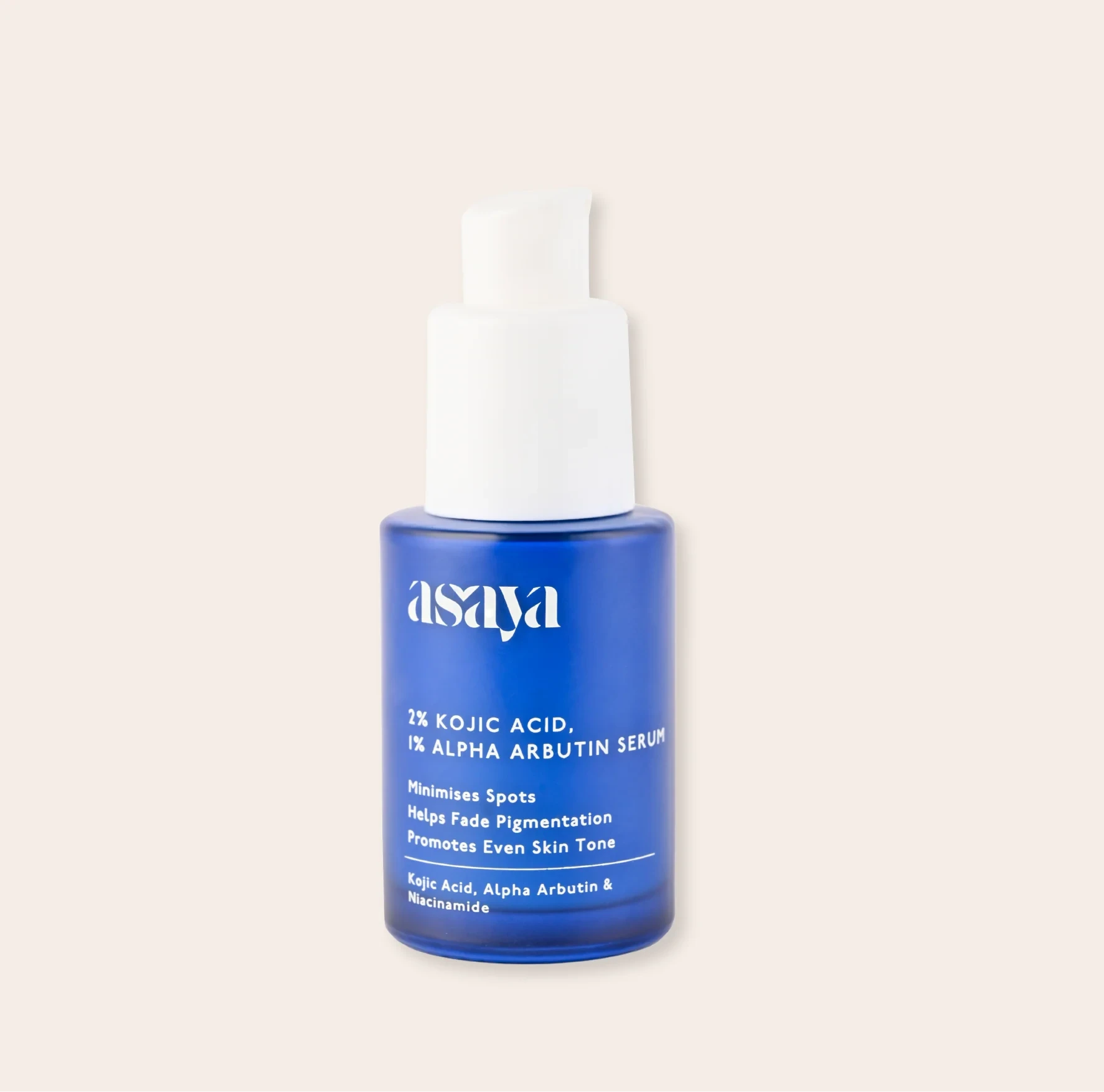
Kojic acid is a tyrosinase inhibitor. It binds with copper involved in tyrosinase activity. Tyrosinase helps drive melanin production. Less activity may mean less excess pigment formation. Asaya 2% Kojic Acid & 1% Alpha Arbutin Serum is a leave-on option built around this melanin reduction pathway.
Think of the pair as addressing two stages. Tranexamic acid focuses on the message that can encourage pigment activity. Kojic acid focuses on the enzyme that helps make pigment. This is more targeted than expecting one active to cover every step.
It does not mean faster is always better. Introduce a new active slowly and keep the rest of your routine simple. While tranexamic and kojic acid each work on distinct parts of the pigment process, Asaya's MelaMe™ Complex takes yet another route — breaking down excess melanin into re-absorbable amino acids — which is worth keeping in mind when you reach the Final Thoughts section.
This pairing can be relevant for melasma-type discolouration, post-acne marks, sun-related dark spots, and uneven skin tone. These concerns may overlap, but they do not look or behave the same. Acne marks often follow inflammation. Sun spots relate to repeated exposure. Melasma-type patches can be persistent.
Use clear progress markers instead of expecting every mark to fade at the same pace. Newer acne marks may look different from older spots. Consistent sun protection helps prevent existing dark spots from becoming more noticeable.
Apply products from light to rich textures. A serum usually goes before a cream. If both actives sit in one formula, use that single leave-on step after cleansing. If they are separate, start with fewer applications and watch for dryness.
Asaya Even Tone Face Cleanser is a low-pH, rinse-off first step for dark spots and marks. Follow with one leave-on treatment, then moisturiser.
Kojic acid can make sun protection especially important. In the morning, finish with SPF — this is particularly relevant in humid Indian climates where skipping sunscreen can undo weeks of progress. The Asaya Advanced Anti-Pigmentation Set includes Spot Light Sunscreen SPF 50 PA++++ as part of a pigment-focused routine. Evening use can suit people who prefer fewer daytime layers, and it also gives actives uninterrupted time to work overnight without UV interference.
Formulas combining around 3% tranexamic acid with 2% kojic acid are a commonly referenced starting point, though comfort and formula design matter as much as concentration. Concentration alone does not decide comfort. Formula design, frequency, and your skin's response matter too. Patch test first, especially if you already use other active treatments.
Avoid using high-concentration AHAs or BHAs in the same routine when you start. Avoid oxidising agents alongside kojic acid unless the formula directions clearly allow it. Too many strong steps can cause irritation, and irritation can worsen uneven tone — particularly on melanin-rich skin, where inflammation itself can trigger new pigmentation. Keep exfoliation separate or reduce frequency. It is also worth noting that kojic acid and retinol used together can increase sensitivity, so if you use retinol, alternate nights rather than layering both at once. Similarly, kojic acid and niacinamide can generally be used together without issue, but introduce them one at a time so you can identify what your skin responds to.
Most people begin to see gradual fading in 4–8 weeks with consistent use and daily SPF. Dark spots take time to form, so they take time to fade. Watch for gradual changes: softer edges, less contrast, and fewer new marks. Do not judge a routine after only a few uses.
If your skin becomes sore, flaky, or more reactive, pause and simplify. More product is not a stronger acne marks treatment. Consistency, comfort, and daily SPF are the useful measures.
Serums are light leave-on formats. They fit well after cleansing and before cream. Creams add moisture and can suit dry skin or areas that need more comfort. The Asaya Even Evermore Creme is included in its pigment-care sets as the moisturising step, providing hydration support that helps maintain the skin barrier without interfering with the active ingredients you have already applied.
Can kojic acid soap remove pigmentation? A soap has limited contact time because it is rinsed away. It may be a useful cleansing step, but a leave-on dark spot corrector gives the active more time on skin. Avoid harsh scrubbing with any format.
Good signs include comfortable skin, gradual fading, and a more even-looking tone. Take photos in similar light if you want a clearer comparison. One day of brighter-looking skin is not a reliable result.
Warning signs include burning, persistent redness, peeling, itching, or paradoxical darkening. Stop the new active if these appear. A simpler routine is often kinder to pigmentation-prone skin.
Tranexamic acid helps block plasminogen-related, UV-triggered signalling between keratinocytes and melanocytes. This may reduce signals that encourage excess melanin production.
There is no single proven fastest route for every dark spot. A multi-pathway routine, such as tranexamic acid with kojic acid, can address more than one pigment step. Daily sunscreen and low irritation remain essential. Asaya's pigment-care routines also combine treatment, moisturising, and SPF steps.
Do not crowd kojic acid with high-strength AHAs, BHAs, or oxidising agents in the same routine. This can raise the risk of irritation. Start slowly and separate strong exfoliating steps.
Yes, kojic acid and niacinamide are generally considered compatible. Niacinamide works on a different part of the pigment pathway and can actually complement kojic acid's tyrosinase-inhibiting action. Introduce them one at a time so you can track how your skin responds to each.
It is possible, but both can be sensitising, especially for reactive or melanin-rich skin. If you use retinol, consider alternating nights rather than applying both at once. Build up slowly and always follow with SPF in the morning.
Tranexamic acid and kojic acid together for pigmentation can be a thoughtful option when you want to address signalling and melanin production. Keep the routine steady, gentle, and protected from sun exposure.
For a different melanin-first route, Asaya's MelaMe™ Complex takes a different approach: it works on existing spots by breaking down excess melanin into re-absorbable amino acids, while also slowing down new spot formation. Clinically tested, with visible results in about 2 weeks.
