


Acne Marks on Darker Skin FAQ: Why They Last Longer
Your Cart
0You May Also Like
If you've ever wondered why your acne marks seem to stick around forever while your friends with lighter skin see theirs fade quickly, you're not alone. The truth is, darker skin tones face unique challenges when it comes to healing from acne. Your melanin-rich skin produces more pigment in response to inflammation, creating those stubborn dark spots that can last months or even years. Understanding why this happens is the first step toward finding effective solutions that work specifically for your skin type.
Your skin's response to acne inflammation is fundamentally different from lighter skin tones. When acne occurs, your melanocytes (pigment-producing cells) go into overdrive, creating excess melanin as a protective response.
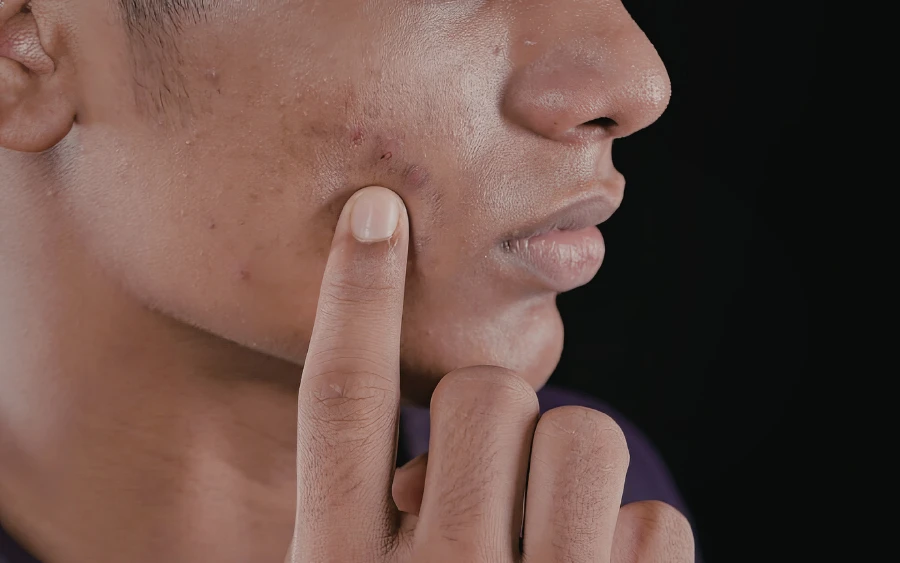
In melanin-rich skin, melanocytes are naturally more active and sensitive to triggers. When acne causes inflammation, these cells produce significantly more melanin than in lighter skin tones. This excess pigment gets deposited in the deeper layers of your skin, creating those persistent dark spots that define post-inflammatory hyperpigmentation darker skin experiences.
Tyrosinase, the key enzyme in melanin production, works more actively in darker skin. When acne triggers inflammation, this enzyme ramps up production, leading to the hyperpigmentation causes darker skin faces. The process can continue for weeks after the original acne has healed, explaining why marks persist long after the pimple is gone.
The healing timeline for acne marks varies dramatically between skin tones. While lighter skin might see marks fade in 2-4 months, darker skin often requires 6-12 months or longer for complete healing.
Research shows that dark spots after acne on melanin-rich skin contain 3-5 times more melanin than similar marks on lighter skin. This concentrated pigmentation takes significantly longer to break down and fade naturally.
Darker skin also faces higher risks of developing keloid scars on darker skin. These raised, thick scars form when your body produces too much collagen during healing. Unlike PIH, keloid scars are permanent without professional treatment.
Not all acne marks are created equal. Understanding the different types helps you choose the right treatment approach for your specific concerns.
PIH appears as flat, dark spots in shades of brown, black, or gray. These marks occur when melanin gets trapped in your skin after inflammation. PIH is the most common type of skin discoloration after acne in darker skin tones.
These raised scars form when your body produces excess collagen during healing. Keloid scars extend beyond the original wound area, while hypertrophic scars stay within the original boundaries. Both types are more common in darker skin.
These depressed scars include ice pick, boxcar, and rolling scars. While less common in darker skin than PIH, they can still occur and often appear alongside hyperpigmentation, creating complex acne scars on brown skin patterns.
Many conventional acne treatments can actually worsen hyperpigmentation in darker skin. Understanding these risks helps you avoid treatments that might set back your progress.
Aggressive treatments like high-concentration benzoyl peroxide or harsh scrubs can cause additional inflammation. This inflammation triggers more melanin production, creating new dark spots while you're trying to treat existing ones.
Many acne treatments increase sun sensitivity. Without proper protection, UV exposure can darken existing marks and create new pigmentation. This is why sun protection is crucial when treating acne marks on deep skin tones.
The good news is that with the right approach, you can successfully fade acne marks on darker skin. The key is using gentle yet effective treatments that target pigmentation without causing additional inflammation.
Chemical peels with glycolic or lactic acid can help accelerate cell turnover and fade pigmentation. Microneedling stimulates collagen production while breaking up pigmented areas. Laser treatments, when performed by experienced professionals, can target deep pigmentation.
Ingredients like kojic acid, alpha arbutin, and vitamin C work specifically to inhibit melanin production. Niacinamide helps regulate pigment transfer, while retinoids accelerate cell turnover to reveal fresh, even-toned skin. These ingredients form the foundation of effective routines to fade acne scars on black skin.
With consistent treatment, you might see initial improvements in 4-6 weeks, with significant fading occurring over 3-6 months. Complete resolution of deep pigmentation can take 6-12 months or longer, depending on the severity and depth of the marks.
Preventing new acne marks is often easier than treating existing ones. Building a gentle, consistent routine helps minimize inflammation and subsequent pigmentation.
Use mild cleansers and avoid over-exfoliation. Introduce active ingredients gradually and always follow up with moisturizer to maintain your skin barrier. A compromised barrier can lead to increased inflammation and more pigmentation.
Daily SPF 30 or higher is non-negotiable. UV exposure can darken existing marks and trigger new pigmentation even in areas without active acne. Make sunscreen the final step in your morning routine, regardless of weather or indoor activities.
Darker skin produces more melanin in response to inflammation, creating deeper pigmentation that takes 6-12 months to fade naturally, compared to 2-4 months for lighter skin tones. The increased melanocyte activity in melanin-rich skin means more pigment gets deposited in deeper skin layers.
Yes, darker skin is more prone to keloid scarring and post-inflammatory hyperpigmentation due to increased melanocyte activity and inflammatory response. The genetic predisposition to produce more collagen and melanin makes darker skin more susceptible to both raised scars and pigmentation.
Microneedling can be effective for darker skin when performed by experienced professionals, but requires careful technique to avoid triggering additional hyperpigmentation. The treatment should be done at appropriate depths with proper post-care to prevent complications.
PIH occurs after acne or injury and appears as individual dark spots, while melasma creates larger, symmetrical patches often triggered by hormones or sun exposure. Both conditions affect darker skin more severely, but they require different treatment approaches.
While significant improvement is possible, complete removal depends on scar type and depth. PIH typically fades completely with proper treatment, while keloid scars may require ongoing management. Atrophic scars can be improved but rarely disappear entirely.
Natural methods include consistent sunscreen use, gentle exfoliation with AHAs, vitamin C serums, and patience. However, professional treatments often provide faster and more dramatic results for stubborn pigmentation.
Avoid harsh scrubs, high-concentration benzoyl peroxide, and aggressive retinoids without proper introduction. These can cause irritation that triggers more pigmentation. Always patch test new products and introduce actives gradually.
Understanding why acne marks last longer on darker skin empowers you to make better treatment choices. Your melanin-rich skin requires gentle, consistent care with ingredients specifically chosen to address hyperpigmentation without causing additional inflammation. While the journey to clear, even-toned skin may take longer, the right approach can deliver significant improvements. Remember that patience and consistency are your best allies in fading stubborn acne marks and preventing new ones from forming.
