


9 Best Treatments for Acne Scars on Indian Skin
Your Cart
0You May Also Like
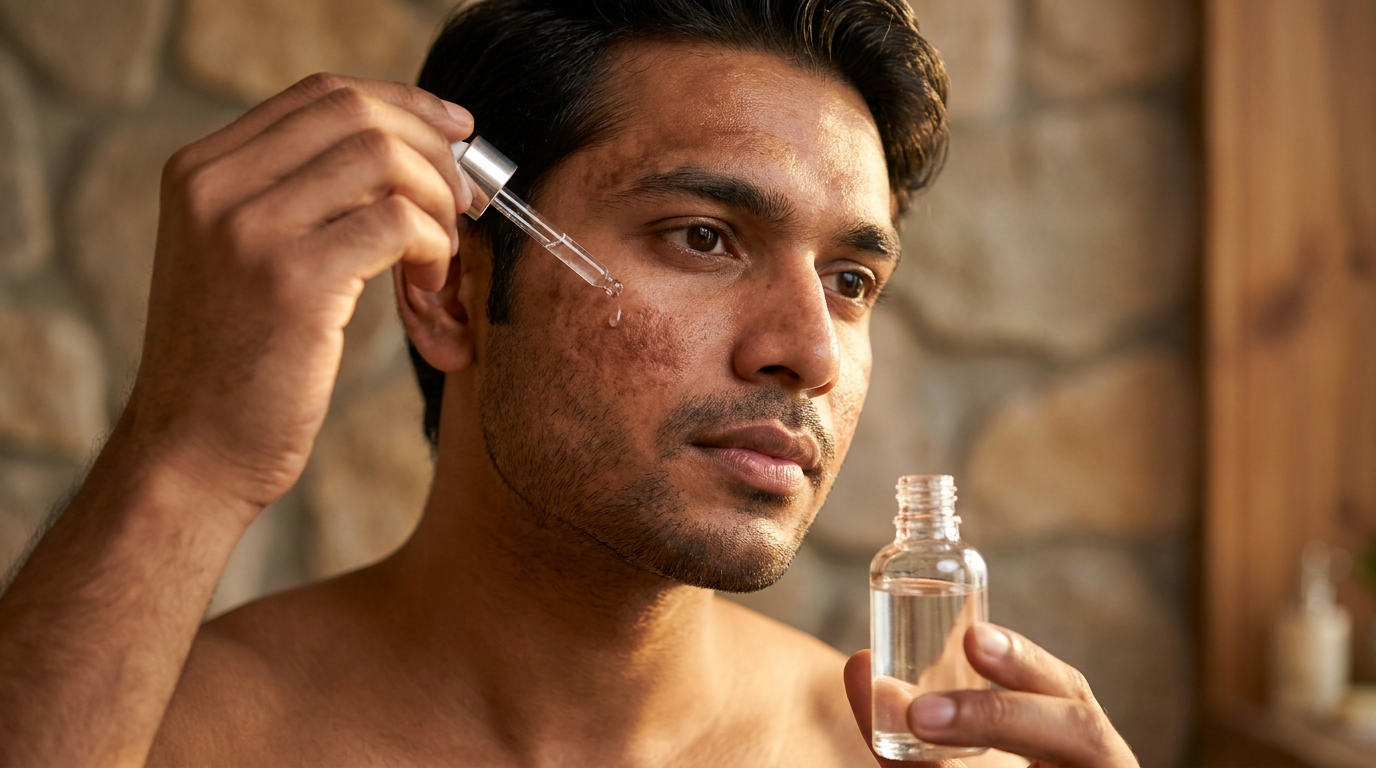
Acne scars on Indian skin come with their own set of challenges. Higher melanin production means that what starts as a simple breakout can turn into stubborn dark spots that linger for months. The good news? There are proven treatments that work specifically for darker skin tones, from professional procedures to effective at-home options. Understanding which treatment fits your scar type, skin tone, and budget makes all the difference in getting the results you want.
Professional treatments like fractional lasers and chemical peels offer the fastest results for acne scars on Indian skin, but require careful selection to avoid hyperpigmentation
Topical treatments with ingredients like retinoids, vitamin C, and alpha arbutin provide safer, gradual improvement for post-acne dark spots
Combination therapy using both professional and at-home treatments typically delivers the best long-term results for acne scar reduction
Acne scars on Indian skin aren't just about texture changes. When your skin has more melanin, inflammation from acne triggers extra pigment production in that spot. This creates post-inflammatory hyperpigmentation (PIH) alongside any textural scarring. So you're dealing with both dark spots and potentially depressed or raised scars at the same time.
Atrophic scars (the depressed ones) are most common, including ice pick, boxcar, and rolling scars. But Indian skin also has a higher tendency toward hypertrophic and keloid scars, especially on the jawline and chest. The key is identifying which type you have before choosing treatment, because what works for one type might worsen another.
Many acne scar treatments were developed for lighter skin tones. Aggressive procedures that work well on fair skin can trigger severe hyperpigmentation in Indian skin. This is why dermatologists often take a more conservative approach with darker skin tones, using lower intensities and longer treatment intervals.
Professional treatments offer the most dramatic results, but they require careful selection and proper aftercare to avoid complications on Indian skin. These procedures can often be completed within 3-6 months, with noticeable improvements after the first few sessions.
Fractional CO2 lasers create controlled micro-injuries in the skin, stimulating collagen production to fill in depressed scars. For Indian skin, lower energy settings and longer intervals between sessions are crucial. Most people need 3-5 sessions spaced 4-6 weeks apart. Expect some redness and peeling for 5-7 days after each session. Full results may take up to 6 months to appear.
TCA peels at 15-25% concentration work well for acne scars on Indian skin. They're less likely to cause hyperpigmentation than deeper peels. Glycolic acid peels are gentler but require more sessions. Always start with a patch test and lower concentrations. The Asaya Even Tone Face Cleanser contains gentle acids that can help prepare your skin for professional peels. Recovery typically takes 1-2 weeks, with results visible after a series of treatments.
Microneedling is one of the safest professional treatments for Indian skin. It stimulates collagen without the heat damage that can trigger pigmentation. RF microneedling adds radiofrequency energy for better results on deeper scars. Most people see improvement after 3-4 sessions, with minimal downtime. Full results can be seen within 3-6 months.
For deep, tethered scars, subcision breaks up the fibrous bands pulling the skin down. Punch excision removes ice pick scars entirely. These are precise techniques that work well on Indian skin when performed by experienced dermatologists. Recovery is usually 1-2 weeks with some bruising. Significant improvement can be seen within 6-12 months.
IPL targets the pigmentation component of acne scars rather than the texture. It's particularly effective for post-acne dark spots on Indian skin. Multiple sessions are needed, typically 4-6 treatments spaced 3-4 weeks apart. Results are gradual but natural-looking, with noticeable changes within 2-4 months.
At-home treatments are safer for Indian skin and can be highly effective for post-acne hyperpigmentation and mild textural changes. Incorporating these into your routine can lead to significant acne scar reduction on Indian skin.
Tretinoin is the gold standard for acne scar improvement. It increases cell turnover and stimulates collagen production. Start with 0.025% every third night and gradually increase frequency. Adapalene is gentler and available over-the-counter. Always use sunscreen religiously when using retinoids. Visible results typically appear within 3-6 months of consistent use.
Vitamin C brightens dark spots and supports collagen synthesis. The Asaya 15% Vitamin C + E Serum with Ferulic Acid provides high-potency antioxidants specifically formulated for Indian skin. Niacinamide reduces inflammation and helps with both acne prevention and scar healing. These ingredients work well together when properly layered. Expect to see improvements in dark spots within 4-8 weeks.
Glycolic acid helps with surface texture and mild scarring. Salicylic acid penetrates pores and reduces inflammation. The Asaya 2% Salicylic Acid & 5% Niacinamide Serum combines BHA with niacinamide for both active acne and post-acne marks. Start with lower concentrations and use only at night initially. Noticeable changes in texture and tone can be seen within 6-12 weeks.
Some of the most effective treatments for acne scars on Indian skin come from targeted serums designed specifically for melanin-rich skin.
Concentrated treatments that combine multiple active ingredients often work better than single-ingredient products. The Asaya Advanced Spot Targeting Serum contains MelaMe™ Complex with niacinamide and alpha arbutin, specifically formulated for Indian pigmentation patterns. For stubborn acne marks, the Asaya Advanced Spot Targeting Gel provides intensive treatment with spicule delivery technology. These targeted treatments can show visible results for acne scar removal on Indian skin within 4-8 weeks.
While natural remedies can't replace proven treatments, some have scientific backing for mild acne scar improvement.
Turmeric contains curcumin, which has anti-inflammatory properties that may help with scar healing. Honey has wound-healing properties and can be combined with turmeric for a gentle mask. Aloe vera gel provides hydration and has some evidence for scar improvement. Rose hip oil contains vitamin C and essential fatty acids that support skin repair.
Natural remedies work slowly and are best for very mild scarring or as supportive care alongside other treatments. They're unlikely to make significant changes to deep or extensive scarring on their own.
The best treatment depends on your specific scar type, skin tone, budget, and timeline expectations.
Shallow, wide scars respond well to chemical peels and topical treatments. Deep, narrow scars need professional intervention like subcision or punch techniques. Rolling scars benefit from microneedling or fractional lasers. Post-inflammatory hyperpigmentation responds to topical lightening agents and gentle peels.
Darker Indian skin (Fitzpatrick types IV-VI) requires more conservative treatment approaches. Always request a patch test before any professional procedure. Look for practitioners experienced with darker skin tones who understand the risk of post-inflammatory hyperpigmentation.
The most effective acne scar treatment often involves combining professional procedures with consistent at-home care.
Start with a professional assessment to determine your scar types. Begin at-home treatments 4-6 weeks before any professional procedures to prepare your skin. Continue topical treatments between professional sessions to maintain progress. The Asaya 3-Step Spot Diminishing Set provides a complete routine that works well alongside professional treatments. This combination approach typically yields the best long-term results for acne scar reduction on Indian skin.
Topical treatments show initial results in 4-8 weeks, with significant improvement in 3-6 months. Professional treatments may show results after the first session, but optimal results typically require multiple sessions over 6-12 months. Combination approaches often provide the most satisfying long-term results.
Most acne scars can be significantly improved, with many achieving 70-90% improvement. Complete removal depends on the scar type and depth. Shallow scars and post-inflammatory hyperpigmentation often resolve completely with proper treatment.
The most effective treatment for acne scars is often a combination approach tailored to your specific scar type and skin concerns. For Indian skin, this typically involves professional procedures like fractional lasers or microneedling, complemented by consistent use of targeted topical treatments such as retinoids, vitamin C, and alpha hydroxy acids. Consulting with a dermatologist experienced in treating darker skin tones is crucial for determining the best personalized plan.
Topical treatments like retinoids and vitamin C are safest for daily use. Among professional treatments, microneedling has the lowest risk of hyperpigmentation for Indian skin. Always start conservatively and work with experienced practitioners.
Professional treatments like laser and microneedling provide long-lasting results, often permanent for the treated scars. However, new acne can create new scars, so ongoing acne management is important. Topical treatments require consistent use to maintain results.
Yes, Asaya products are formulated to work well with professional treatments. The Even Tone Face Cleanser and Advanced Spot Targeting Serum can help prepare skin before procedures and support healing afterward. Always inform your dermatologist about all products you're using.
Treating acne scars on Indian skin requires patience and the right approach for your specific concerns. While professional treatments offer faster results, consistent at-home care with proven ingredients forms the foundation of any successful scar treatment plan. The key is understanding that post-acne hyperpigmentation and textural scarring often require different approaches, and what works for one person may not work for another.
MelaMe™ Complex represents a significant advancement in treating acne scars on Indian skin. This melanin-first molecule is specifically engineered to address the unique pigmentation challenges that come with acne scarring in darker skin tones. It works by breaking down excess melanin deposits into re-absorbable amino acids while preventing new hyperpigmentation from forming. Most people see visible improvement in dark spots and acne marks within 2 weeks of consistent use, making it an effective foundation for any acne scar treatment routine.
