


11 Serums for Pigmentation & Blemishes: Fade Dark Spots on Indian Skin
Your Cart
0You May Also Like
Dark spots can feel stubborn, especially after acne, sun exposure, or irritation. On melanin-rich Indian skin, even a small breakout may leave a mark that lasts longer than the acne itself. If you are wondering which serum is best for pigmentation and blemishes, the answer depends on why the spot formed. Asaya formulates for this reality, with targeted actives for acne marks, dullness, tanning, and uneven skin tone. Start with one suitable active, use it consistently, and protect your skin from sun exposure every day.
Which serum is best for pigmentation & blemishes depends on the cause: acne marks, melasma, or sun tanning.
Niacinamide, vitamin C, alpha arbutin, kojic acid, and tranexamic acid each suit different dark spot concerns.
Daily SPF and a gentle routine matter as much as a dark spot serum.
Dark spots happen when skin makes extra melanin in one area. Acne, heat, friction, sun exposure, and irritation can all trigger this response. Melanin-rich skin may be more prone to post-inflammatory hyperpigmentation after a breakout.
That is why skincare for Indian skin should focus on steady care, not harsh routines. Too much exfoliation can create more irritation and uneven skin tone.
Post-acne marks appear where a pimple healed. Melasma often looks like wider patches of discolouration. Sun tanning is usually more spread out across exposed areas. Niacinamide suits acne marks, while kojic acid, alpha arbutin, and tranexamic acid may suit broader pigment concerns.
Irritation can leave a fresh dark mark on deeper skin tones. Melanin-rich skin broadly — including deeper African and South Asian tones — benefits from the same gentle, targeted approach when choosing a brightening serum. Use one brightening serum at a time and add it slowly. A calm skin barrier gives any hyperpigmentation treatment a fair chance to work.
Asaya's formulation approach for Indian skin centres on pairing actives that address melanin overproduction without triggering fresh irritation — because on deeper skin tones, irritation itself is a pigmentation trigger. Niacinamide can support an even look and is often used for blemish marks. Vitamin C supports brightening and helps with dullness from sun and pollution exposure. Asaya's proprietary MelaMe™ Complex takes this further, engineered specifically as a melanin-first molecule to visibly treat discolouration from within.
Alpha arbutin and kojic acid are used for uneven tone and dark spots. Tranexamic acid is often considered for melasma-focused routines.
Gentle formulas with niacinamide, vitamin C, alpha arbutin, or kojic acid can be practical starting points. Patch test first. If pigmentation is widespread or persistent, a dermatologist can help identify the cause and guide treatment.
High-strength acids and retinoids can irritate skin when used too often. Do not layer several strong actives in one routine. Stop if you feel ongoing burning, peeling, or new irritation.
This list ranks serum types, not unnamed products. It focuses on clear actives, use for melanin-rich skin, and concerns common in India. Prices and availability can change, so check the current label before buying.
Niacinamide for acne marks — gentle, well-tolerated, suits most skin types.
Vitamin C for dullness — brightens and helps counter sun and pollution damage.
Alpha arbutin for uneven tone — targets stubborn marks and discolouration.
Kojic acid for dark spots — works on melanin production at the source.
Tranexamic acid for melasma — often chosen for broader hormonal or sun-related patches.
Vitamin C with vitamin E — antioxidant pairing that boosts stability and efficacy.
Vitamin C with ferulic acid — enhances vitamin C performance for dark spots and early ageing.
Niacinamide with hyaluronic acid — combines tone-evening with hydration, suits sensitive skin.
Kojic acid with alpha arbutin — dual melanin-focused actives for tanning and old acne marks.
Gentle daily brightening blends — low-irritation formulas suited to consistent everyday use.
Dermatologist-guided treatment serums — prescribed or recommended for severe or persistent pigmentation.
A dual-active formula can be useful when you have more than one concern. Asaya 2% Kojic Acid & 1% Alpha Arbutin Serum combines two melanin-focused actives for hyperpigmentation, sun-induced dullness, post-acne marks, uneven tone, and melasma-type discolouration.
It is a daily leave-on serum for all skin types. Use SPF in the day to help prevent new dark spots.
Niacinamide is a sensible option when acne marks sit alongside dull or uneven-looking skin. Asaya 10% Vitamin C & 5% Niacinamide Serum also includes hyaluronic acid. It is made for dry, dull, and uneven skin, including sensitive types.
Its lightweight format may suit people new to vitamin C. Use it consistently rather than switching products each week.
Vitamin C suits dullness, dark spots, and signs of sun exposure. For a higher-strength option, Asaya 15% Vitamin C + E Serum with Ferulic Acid combines vitamins C and E with ferulic acid. It is designed for dark spots, sun damage, dullness, and early ageing signs.
This serum can be used once or twice daily as directed. Start once daily if your skin is easily irritated.
Alpha arbutin is often chosen for uneven skin tone and stubborn marks. The Asaya kojic acid and alpha arbutin serum pairs it with another pigment-focused active. This can be a simple route when tanning and old acne marks are both concerns.
Do not add several exfoliating products around it unless your skin tolerates them well.
Tranexamic acid is commonly considered for melasma-focused routines. Melasma can have hormonal and sun-related triggers, so serum use alone may not be enough. Daily broad-spectrum SPF is essential.
For patches that keep returning, seek personalised medical advice. A dermatologist can rule out triggers and suggest a suitable plan.
Budget does not always mean using more products. Look for an active you can use regularly, then compare the current INR price per ml. A mini size of Asaya 10% Vitamin C & 5% Niacinamide Serum may help you trial the formula.
Check the active, concentration, and local availability before choosing.
A dermatologist-recommended serum is one chosen for your skin concern, tolerance, and routine. There is no single serum that fits every case. Bring your current products to an appointment if marks are severe, sudden, or worsening.
For everyday care, choose a gentle active and avoid picking acne. That step alone can reduce fresh acne marks.
Apply a serum after cleansing and before moisturiser. Use a small amount on dry skin. Applying in this order matters because a clean, intact skin barrier allows actives to absorb more effectively and reduces the risk of irritation that can worsen pigmentation. In the morning, finish with sunscreen.
Consistency matters more than using many actives. The Asaya Even Tone Face Cleanser can remove daily SPF and makeup without stripping skin, then a leave-on serum can follow.
Vitamin C can fit well in a morning routine with sunscreen. Kojic acid and alpha arbutin can be used as directed in a daily routine. Keep stronger exfoliating products separate if your skin feels sensitive.
Visible change can take about four to twelve weeks with regular use. Dark spots take time to form, so they also take time to fade. New spots may continue if SPF is skipped.
Skipping sunscreen is the biggest routine gap. Other common issues include over-layering actives, scrubbing skin, and picking at acne. Each can cause irritation, which may lead to more pigmentation on Indian skin — where the barrier between a breakout and a lasting dark mark is thinner than most routines account for.
One targeted serum, used consistently, will outperform a crowded shelf of actives. Cleanse, use one targeted serum, moisturise if needed, and use SPF during the day.
Which serum is best for pigmentation and blemishes depends on the cause. Niacinamide and alpha arbutin suit acne marks, vitamin C suits dullness and sun-related spots, and tranexamic acid is often considered for melasma. Asaya 2% Kojic Acid & 1% Alpha Arbutin Serum and Asaya 10% Vitamin C & 5% Niacinamide Serum are strong starting points for most concerns.
Niacinamide and alpha arbutin are useful options for acne marks. Asaya 10% Vitamin C & 5% Niacinamide Serum suits dull, uneven skin, while its 2% Kojic Acid & 1% Alpha Arbutin Serum targets dark spots and post-acne marks.
Match the serum to the cause. Vitamin C can suit dullness and sun-related marks. Niacinamide can suit acne marks. Tranexamic acid is often considered for melasma, while kojic acid and alpha arbutin suit uneven tone.
There is no single best serum for all hyperpigmentation. Choose a gentle active your skin can tolerate, use SPF daily, and give the routine time.
Fine lines are outside this guide's main focus. Retinol serums are often discussed for this concern, but they need careful use because irritation can worsen dark spots.
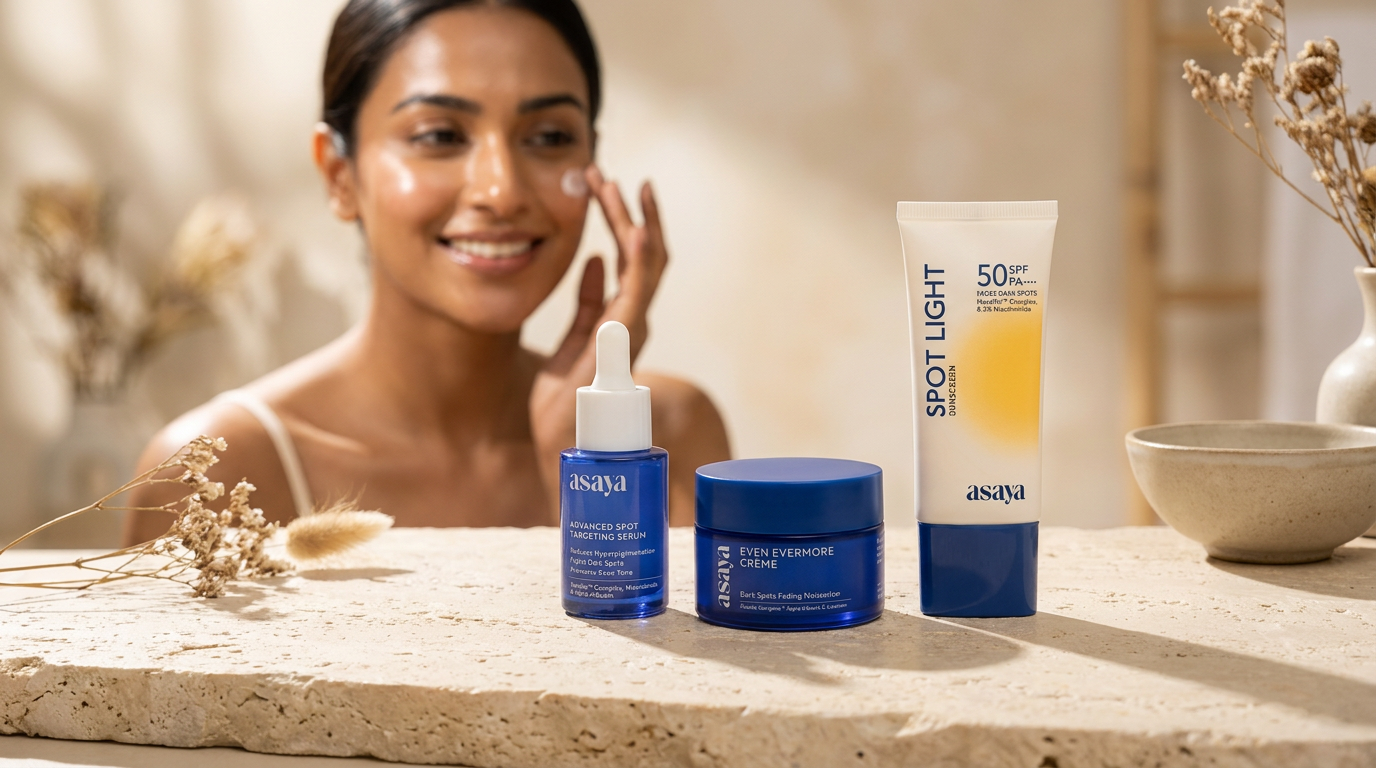
The right dark spot serum depends on your pigmentation type and how your skin responds. Keep the routine calm and consistent. Asaya's Advanced Spot Targeting Serum is part of its anti-pigmentation routines, alongside the Even Evermore Creme and Spot Light Sunscreen SPF 50 PA++++.
MelaMe™ Complex is Asaya's advanced, skincare-engineered, melanin-first molecule designed to visibly treat discolouration and restore pigment balance within two weeks of regular use. Tested and proven, it works on existing dark spots by breaking excess melanin deposits into re-absorbable amino acids. It also inhibits excess melanin production, helping fade and prevent blemishes while restoring even-toned, clarified skin.
