


Oily Dehydrated Skin FAQ: Gel vs Cream Moisturizers
Your Cart
0You May Also Like
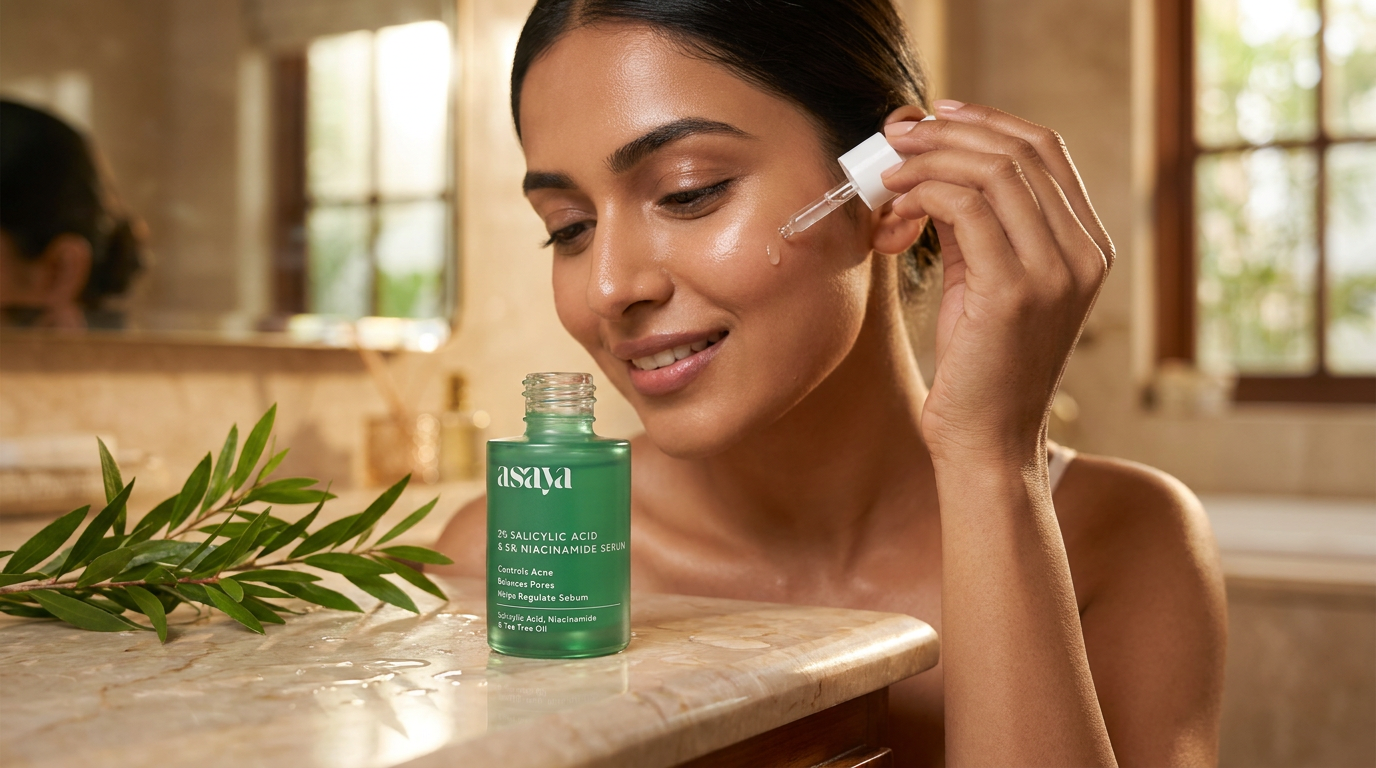
If your skin feels tight and looks shiny at the same time, you're dealing with one of skincare's most confusing combinations: oily dehydrated skin. It sounds contradictory, but it's actually quite common, especially in urban environments where pollution and air conditioning strip moisture while stress and hormones ramp up oil production. The good news is that understanding why gel moisturizers work better than creams for this skin type can finally give you the hydration you need without the greasiness you don't want. At Asaya, we see this concern frequently among people with melanin-rich skin, where the signs of dehydration can be subtler but the effects just as frustrating.
Oily dehydrated skin needs water-based hydration, not oil-based moisture, making gel moisturizers the better choice over heavy creams.
Gel formulations absorb quickly without clogging pores, deliver humectants effectively, and won't trigger excess oil production.
Look for gels with hyaluronic acid, niacinamide, and ceramides while avoiding heavy oils and comedogenic ingredients.
Oily dehydrated skin happens when your skin produces excess sebum but lacks water content. Think of it like a sponge that's been coated in oil but never soaked in water. Your skin overcompensates for the lack of hydration by producing more oil, creating a cycle where you feel both greasy and tight.
The confusion comes from mixing up oily skin with well-hydrated skin. Oily skin refers to sebum production, while hydrated skin refers to water content. You can absolutely have both conditions at once. Signs include a shiny T-zone with flaky patches, makeup that slides off but skin that feels tight after cleansing, and pores that look enlarged but skin that shows fine lines.
Traditional cream moisturizers often contain occlusive ingredients like petrolatum or heavy plant oils. On oily dehydrated skin, these create a barrier that can trap oil and bacteria, leading to clogged pores. The skin gets the message that there's enough moisture on the surface, so it doesn't absorb the water-based ingredients it actually needs.
The molecular structure of gel moisturizers makes them ideal for oily dehydrated skin. Gels are typically water-based with a lighter molecular weight, allowing them to penetrate the skin barrier more easily. They deliver humectants like hyaluronic acid and glycerin directly to the deeper layers where dehydration occurs.
Creams, on the other hand, rely on emulsifiers to blend water and oil phases. This creates a heavier texture that sits on top of oily skin rather than absorbing into it. The oil phase in creams can also signal your sebaceous glands to reduce their own oil production temporarily, but this often leads to a rebound effect where oil production increases later.
Clinical studies show that water-based gel formulations absorb into the skin within 2-5 minutes, while cream formulations can take 15-30 minutes. For oily skin that's already producing excess sebum, faster absorption means less time for the product to mix with natural oils and create that greasy feeling.
Gel moisturizers offer several advantages that directly address the unique needs of oily dehydrated skin. Here's why they consistently outperform creams for this skin type.
Most gel formulations are naturally non-comedogenic because they don't contain the heavy oils that can clog pores. They deliver hydration without adding to the oil load that's already causing congestion.
Gels absorb rapidly and often dry to a matte or semi-matte finish. This means you get the hydration benefits without the shine that makes oily skin look even oilier throughout the day.
The water-based nature of gels makes them excellent vehicles for humectants like hyaluronic acid and sodium hyaluronate. These ingredients can draw moisture from the environment and deeper skin layers to hydrate the surface where dehydration is most visible.
Many people with oily dehydrated skin also deal with inflammation or sensitivity. Gel moisturizers often provide a cooling sensation that can help calm irritated skin and reduce the appearance of redness.
Not all gel moisturizers are created equal. When choosing the best moisturizer for oily dehydrated skin, focus on the ingredient list rather than just the texture.
Look for hyaluronic acid or sodium hyaluronate as primary hydrating ingredients. These can hold up to 1000 times their weight in water. Niacinamide is another excellent addition because it regulates oil production while supporting the skin barrier. Ceramides help repair the barrier function that's often compromised in dehydrated skin.
Skip gels with high alcohol content, which can initially feel refreshing but ultimately worsen dehydration. Avoid comedogenic oils like coconut oil or cocoa butter, even in small amounts. Fragrances can also irritate already-compromised skin barriers.
Using the right gel moisturizer is just one part of treating oily dehydrated skin effectively. The key is building a routine that addresses both the excess oil and the lack of hydration without overwhelming your skin.
Start with a gentle, non-stripping cleanser that removes oil without disrupting your skin barrier. Follow with a hydrating toner or essence to prep your skin for better product absorption. Apply your gel moisturizer while your skin is still slightly damp to lock in extra hydration.
The lightweight nature of gel moisturizers makes them perfect for layering. You can apply a hydrating serum underneath and even add a few drops of facial oil on top if your skin needs extra nourishment, especially during drier months.
Gel moisturizers provide water-based hydration that absorbs quickly without adding oil or clogging pores. They deliver humectants effectively while allowing oily skin to breathe, unlike heavy creams that can trap oil and bacteria.
Yes, when formulated with effective humectants like hyaluronic acid and barrier-supporting ingredients like ceramides. The key is choosing a gel with proven hydrating ingredients rather than just water and alcohol.
Signs include excess oil production combined with tightness, flaky patches, or fine lines. Your skin may feel greasy but look dull, or makeup may slide off while your skin feels tight after cleansing.
Most people with oily dehydrated skin benefit from using gel moisturizer twice daily. You might need a slightly richer formula at night or can layer a facial oil over your gel if your skin needs extra nourishment.
Asaya formulates specifically for melanin-rich skin, where dehydration signs can be subtler but the effects on pigmentation more pronounced. Our lightweight formulations focus on barrier repair while addressing the uneven tone that often accompanies skin barrier disruption.
Choosing gel over cream for oily dehydrated skin isn't just about texture preference—it's about understanding what your skin actually needs. When you provide water-based hydration that absorbs efficiently, you break the cycle of overcompensating oil production and chronic dehydration.
The key is consistency and patience. It can take 2-4 weeks for your skin to adjust to proper hydration and regulate its oil production accordingly. During this time, you might notice that areas of uneven tone or post-acne marks become more apparent as your skin barrier improves. This is where Asaya's MelaMe™ Complex becomes particularly relevant—this advanced skincare engineering has been designed to visibly treat discoloration and restore pigment balance within 2 weeks of regular use. It works by breaking down excess melanin deposits while inhibiting future production, helping to address the pigmentation concerns that often accompany barrier-compromised skin more effectively than traditional ingredients alone.
