


How to Stop Popping Pimples: Debunking Common Acne Myths
Your Cart
0You May Also Like

₹599 ₹749

₹424 ₹499

₹479 ₹599

₹559 ₹699

₹424 ₹499

₹439 ₹549
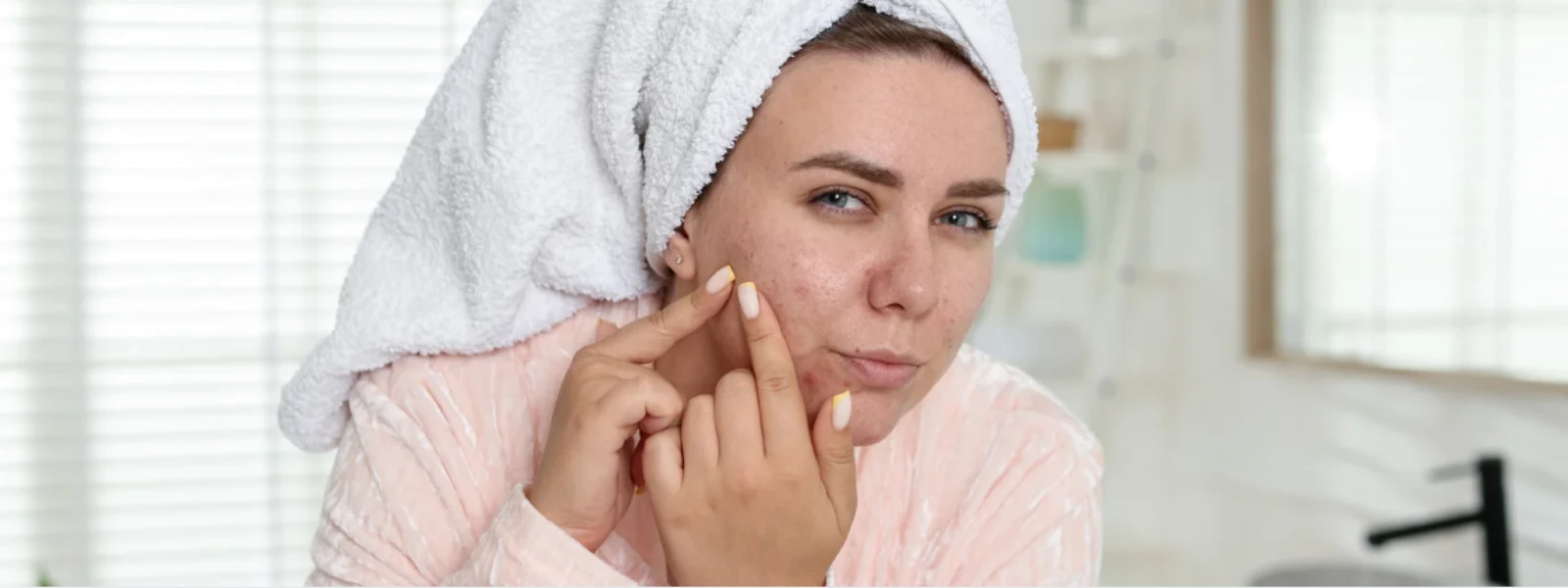
We've all been there. You spot a whitehead in the mirror, and suddenly your fingers are moving before your brain can stop them. The satisfaction feels instant, but the consequences last weeks. Despite what you might have heard, popping pimples isn't just harmless stress relief—it's one of the most damaging acne myths that keeps your skin stuck in a cycle of breakouts and scarring.
Popping pimples pushes bacteria deeper into skin, causing more breakouts and permanent scarring
The urge to pop is psychological, but the damage is very real—from dark spots to enlarged pores
Safe alternatives like targeted serums and proper cleansing work better without the risks
The urge to pop feels almost primal. You see a bump, your brain says "get it out," and your fingers follow. This isn't weakness—it's how we're wired. The instant visual change tricks us into thinking we've solved the problem, when really we've just pushed it deeper.
Social media doesn't help either. Those satisfying pimple-popping videos make extraction look clean and simple. But what you don't see is the inflammation happening beneath the surface, or the dark spots that show up weeks later. The myth that popping speeds up healing has stuck around because the immediate deflation feels like progress.
The reality is different. When you squeeze a pimple, you're not just removing the visible part—you're forcing infected material deeper into your skin, where it can't heal properly. This is why that same spot often comes back bigger and angrier within days.
Here's what actually happens when you squeeze that whitehead. The pressure doesn't just push contents up and out—it also forces bacteria, oil, and dead skin cells deeper into the surrounding tissue. Think of it like squeezing a tube of toothpaste from the middle instead of the end.
Your skin responds to this trauma by sending inflammatory cells to the area. What started as a small, contained infection now becomes a larger zone of irritation. The original pore wall, already weakened by acne bacteria, tears further under pressure. This creates more space for bacteria to spread and multiply.
Meanwhile, your body's natural healing process gets disrupted. Instead of the pimple resolving in 3-5 days, the damaged tissue now needs weeks to repair itself. During this extended healing time, your skin produces extra melanin to protect the injured area—hello, dark spots. Clarifying that 3-5 days refers to surface healing, while complete resolution may take longer, is crucial to avoid misleading readers.
Using the Asaya Daily Clear Salicylic Face Cleanser with 2% Salicylic Acid and 2% Lactic Acid helps prevent this cycle by keeping pores clear and reducing the bacteria that cause breakouts in the first place, without the trauma of manual extraction.
The damage from popping goes far beyond a temporary red mark. Here's what you're really risking every time you squeeze.
When you pop a pimple, you're essentially creating a wound in already inflamed skin. The pressure can tear the follicle wall completely, leading to ice pick scars, rolling scars, or raised keloid tissue. These textural changes are permanent and much harder to treat than the original pimple ever was.
Your fingers carry bacteria, and that bacteria gets pushed into the open wound you've just created. This can lead to secondary infections that are more serious than the original breakout. In rare cases, infections from popped pimples can even spread to deeper tissue layers.
This is especially common on Indian skin tones. The trauma from popping triggers excess melanin production, leaving dark spots that can last months or even years. These post-inflammatory marks often bother people more than the original pimple did.
Repeated pressure and trauma can permanently stretch pore openings. Once a pore is enlarged from aggressive squeezing, it rarely returns to its original size. This creates more space for oil and debris to accumulate, leading to more blackheads and breakouts.
Popped pimples take significantly longer to heal than those left alone. The inflammation you create can last weeks, during which time the area remains red, raised, and prone to further infection.
Yes, popping absolutely can spread acne, but not in the way most people think. The myth that pimple "seeds" will sprout new breakouts if they touch other skin isn't true. But the bacteria on your hands and the inflammatory response you trigger definitely can create new problem areas. Understanding these acne myths debunked is key to proper skin care.
When you pop one pimple, then touch another area of your face, you're transferring acne-causing bacteria. More importantly, the inflammation you create sends signals to nearby follicles, making them more likely to develop breakouts too. This is why people often notice clusters of pimples appearing after a popping session.
The domino effect is real. One popped pimple can lead to a week of new breakouts in the surrounding area. Studies show that people who regularly pop their pimples have more widespread acne and longer healing times than those who leave their skin alone. These acne treatment myths can be harmful if not addressed.
The Asaya 2% Salicylic Acid & 5% Niacinamide Serum works differently—it penetrates pores to dissolve blockages from the inside out, reducing inflammation instead of creating it.
Professional extractions exist for a reason. Dermatologists and trained aestheticians use sterile tools, proper technique, and follow up with antibacterial treatments. They also know which pimples are safe to extract and which ones need to be left alone.
At home, your best bet is targeted spot treatments that work with your skin's natural healing process. Look for ingredients like salicylic acid to penetrate pores, niacinamide to reduce inflammation, and tea tree oil for its antibacterial properties. For more information on effective acne treatments, explore our guide to best acne treatments.
For active breakouts, patience pays off. Most pimples resolve naturally within 3-7 days when left alone. Compare that to the weeks or months it takes popped pimples to fully heal, and the math is clear.
If you're dealing with persistent acne, see a dermatologist. They can prescribe treatments that prevent breakouts from forming, rather than just dealing with them after they appear.
Breaking the popping habit takes conscious effort, but it's absolutely doable. Start by identifying your triggers. Do you pop when you're stressed? Bored? Standing too close to a magnifying mirror?
Keep your hands busy with a stress ball or fidget toy. When you feel the urge to touch your face, redirect that energy elsewhere. Some people find that putting hydrocolloid patches on active breakouts helps—they create a physical barrier while also drawing out fluid safely.
Maintain a consistent skincare routine that keeps your skin clear, so there's less temptation to begin with. When your skin looks good, you're less likely to scrutinize every tiny bump in the mirror.
Cut your nails short. It's much harder to do damage when you don't have the tools for it. And if you do slip up and pop something, resist the urge to "finish the job." Clean the area gently and apply a spot treatment instead.
Yes, popping pushes bacteria deeper into skin and creates inflammation that can trigger more breakouts in the surrounding area. It also delays healing and increases your risk of scarring and dark spots.
The urge to pop is partly psychological—it provides instant gratification and a sense of control. Some people also have a condition called dermatillomania, which is a compulsive skin-picking disorder that may need professional help.
Clean the area gently with a mild cleanser, apply a spot treatment with salicylic acid or tea tree oil, and avoid touching it further. The Asaya 2% Salicylic Acid & 5% Niacinamide Serum can help reduce inflammation and prevent secondary infections.
Most pimples resolve naturally within 3-7 days when left alone. Popped pimples can take weeks to heal completely and often leave behind dark spots or scars.
The next time you're tempted to pop, remember that patience really is a virtue when it comes to skincare. Your skin has its own healing timeline, and working with it—not against it—gives you the best results. The temporary satisfaction of popping isn't worth weeks of inflammation, potential scarring, and the dark spots that follow.
For those dealing with persistent dark spots from past popping sessions, Asaya's MelaMe™ Complex offers hope. This advanced, melanin-first molecule is specifically designed to treat discoloration and restore pigment balance within 2 weeks of regular use. It works by breaking down excess melanin deposits into re-absorbable amino acids while preventing future dark spots from forming—giving you clearer, more even-toned skin without the risks that come with DIY extractions.
