


How to Layer Niacinamide Serum with Hyaluronic Acid
Your Cart
0You May Also Like

₹599 ₹749

₹424 ₹499

₹479 ₹599

₹559 ₹699

₹424 ₹499

₹439 ₹549
If you have been wondering how to pair a niacinamide serum with a moisturiser containing hyaluronic acid, you are not alone. Yes, you can use niacinamide and hyaluronic acid together — and for acne-prone skin, they are actually one of the better combinations you can build a routine around. These two ingredients do a lot of the heavy lifting when it comes to calming breakouts, controlling oil, and keeping your skin barrier intact. Here is what you need to know about building a skincare routine with niacinamide and hyaluronic acid when acne is your main concern, and where Asaya's formulas fit into that.
Niacinamide and hyaluronic acid are safe to use together and actually complement each other well for acne-prone skin.
Layer hyaluronic acid first on damp skin, then follow with niacinamide serum, then moisturizer.
Niacinamide helps with oil control and post-acne dark spots; hyaluronic acid keeps your skin hydrated without clogging pores.
Acne-prone skin has a tricky balancing act to manage. It tends to overproduce oil, which can clog pores and trigger breakouts. But stripping it dry with harsh products only makes things worse, because a damaged skin barrier actually ramps up oil production to compensate. That is where niacinamide and hyaluronic acid come in as a team.
Niacinamide, a form of Vitamin B3, helps regulate sebum production, visibly reduces pore size over time, and calms the redness and inflammation that comes with active breakouts. It also works on the dark spots that acne leaves behind, which is a big deal for melanin-rich skin tones where post-inflammatory hyperpigmentation tends to linger longer. Hyaluronic acid, on the other hand, pulls moisture into the skin without adding any oil or heaviness, making it one of the best hydrating ingredients for oily and acne-prone skin. Together, niacinamide and hyaluronic acid for oily skin is one of the most practical combinations you can build a routine around — hydration without heaviness, oil control without dryness.
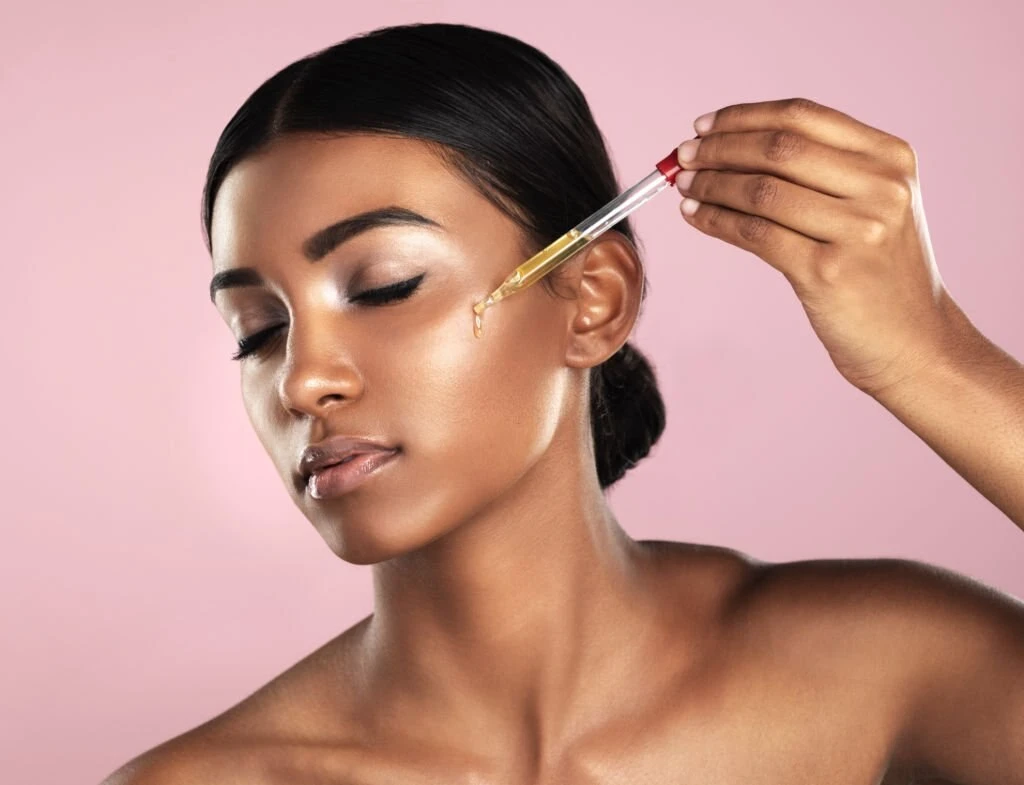
Layering these two correctly makes a real difference in how well they work. The general rule with skincare actives is to go from thinnest to thickest texture, and to apply humectants like hyaluronic acid on slightly damp skin so they have moisture to lock in.
A simple routine that works for most acne-prone skin types looks like this: cleanse, apply your hyaluronic acid serum on damp skin, let it absorb for about 30 seconds, then apply your niacinamide serum, and follow with a lightweight moisturizer. In the morning, always finish with sunscreen — the Asaya Sheer Milk Sunscreen SPF 50 is a practical option for acne-prone skin because it does not clog pores and gives a clean, non-shiny finish. This matters especially when niacinamide is working on your dark spots, since sun exposure will undo that progress fast.
If you are using a hyaluronic acid serum, apply it before niacinamide. If your hyaluronic acid is in your moisturizer, apply niacinamide serum first, then the moisturizer on top. Either way works, just keep serums under creams.
For oily or acne-prone skin, a heavy cream moisturizer can feel like too much. The Asaya New Light Gel Face Moisturiser is a good fit here. It is an ultra-light water-gel formula with Hyaluronic Acid, Snow Mushroom, 5 Ceramides, and MelaMe™ Complex, designed specifically for oily and acne-prone skin. It absorbs instantly, controls shine, and helps fade dark spots left behind by breakouts, all in one step.
If you are also using Vitamin C for brightening, the Asaya 10% Vitamin C and 5% Niacinamide Serum already combines both in one formula, which simplifies your routine and reduces the risk of over-layering. It also contains Hyaluronic Acid, so you are getting hydration, brightening, and barrier support in a single step.
Yes, both ingredients are gentle enough for daily use, morning and night. There is no risk of irritation from using them together, and consistent daily use is actually what gets you results over time.
Niacinamide is generally well-tolerated alongside most actives, but it is best not to apply it at the same time as high-concentration Vitamin C, as this can reduce the effectiveness of both. It is also worth avoiding layering it in the same step as strong AHAs or BHAs, which can cause temporary flushing in some skin types. Using them at different times of day — for example, Vitamin C in the morning and niacinamide at night — is a straightforward way to avoid any conflict.
Absolutely. Niacinamide works on existing dark spots, but sun exposure keeps triggering new melanin production. Without SPF, you are working against yourself. A matte, non-greasy option like the Asaya Sheer Milk Sunscreen SPF 50 works well for acne-prone skin because it does not clog pores and gives a clean, non-shiny finish.
Niacinamide and hyaluronic acid are two of the most reliable ingredients you can add to an acne routine. They are gentle, they work well together, and they address the two biggest side effects of acne: excess oil and the dark spots that stick around long after the breakout clears. Layer them correctly, stay consistent, and give it at least two to four weeks before expecting visible changes.
If post-acne dark spots are a bigger concern for you than the breakouts themselves, it is worth looking into MelaMe™ Complex, Asaya's melanin-first molecule that breaks down excess melanin deposits and inhibits further production. It is designed specifically for the kind of stubborn pigmentation that shows up more intensely on Indian and deeper skin tones, and most people see visible fading within two weeks of regular use. It is in several Asaya formulas, including the New Light Gel Face Moisturiser, so you can work it into your routine without adding extra steps.
