


9 Best Post Acne Treatments for Dark Spots
Your Cart
0You May Also Like
You finally get rid of a pimple, and then it leaves behind a dark spot that sticks around for weeks. If that sounds familiar, you are not alone. Acne is frustrating enough on its own, but the marks it leaves behind can feel even harder to deal with. On Indian skin, which naturally has more melanin, those post-acne dark spots tend to be deeper and more stubborn than on lighter skin tones. The skin overreacts to inflammation by producing extra pigment, and that pigment settles in long after the breakout is gone. Understanding why this happens, and what actually helps, makes the whole process a lot less overwhelming. This guide will help you find the best post-acne treatment for dark spots.
Acne triggers excess melanin production, leaving dark spots behind, especially on melanin-rich Indian skin.
The right combination of exfoliation, melanin-inhibiting ingredients, and sun protection is what actually fades acne marks over time.
Consistency matters more than intensity. Most people see visible fading in about two weeks with the right routine.
So, when your skin gets inflamed, like from a big zit or even one you couldn't resist picking, it kicks into repair mode. Part of that repair involves melanin, the pigment that gives your skin its colour. The problem is that inflamed skin often produces more melanin than it needs in that spot. That excess pigment is what shows up as a dark spot after the acne heals. This is called post-inflammatory hyperpigmentation, or PIH, which is just a fancy term for dark spots left after inflammation, and it is extremely common in people with deeper skin tones.
The darker your natural skin tone, the more melanin your skin produces in response to inflammation. That is not a flaw. It is just how melanin-rich skin works. But it does mean that treating hyperpigmentation after acne requires a slightly more targeted approach than generic brightening advice.
There is no shortage of products that promise to fade acne scar dark spots overnight. Most of them overpromise. What actually works is a combination of ingredients that slow down melanin production, break down existing pigment deposits, and protect the skin from making things worse. Here is what the science supports.
Ingredients like Niacinamide, Alpha Arbutin, and Kojic Acid work by interrupting the process that creates excess melanin in the first place. Niacinamide at 5% has solid research behind it for reducing dark spots from pimples over consistent use. Alpha Arbutin at 2% is gentler than older brightening actives and works well on deeper skin tones without the risk of rebound darkening. Kojic Acid at 2% is another well-studied option, particularly effective for sun-induced dullness and PIH.
Chemical exfoliants help by speeding up the skin's natural cell turnover, which means pigmented cells get shed faster and fresh skin comes through sooner. AHAs like Glycolic and Lactic Acid work on the surface. PHAs are gentler and better suited for sensitive or acne-prone skin. The Asaya Fade Forward Inner Thigh and Bum Roll-On uses a 10% AHA and PHA blend for body pigmentation. This concentration is effective for body pigmentation while remaining gentle enough for sensitive areas.
This one is non-negotiable. UV exposure makes dark spots darker, full stop. If you are doing everything right with your post-acne dark spot treatment but skipping SPF, you are working against yourself. A broad-spectrum SPF 50 PA++++ used every morning is not optional when you are treating acne marks. It is what keeps your progress from reversing.
The goal is not to pile on every active at once. Acne-prone skin is already dealing with inflammation, and overloading it with too many strong ingredients can trigger more breakouts. A simple, consistent routine tends to work better than an aggressive one.
A low-pH cleanser that does not strip your skin is the foundation. The Asaya Even Tone Face Cleanser is a good example of what to look for here. It is a gel formula that removes makeup and SPF without disrupting the skin barrier, and it contains Niacinamide, Alpha Arbutin, and Kojic Acid, so it is doing light pigment-correcting work even at the rinse-off stage. That kind of multi-tasking is useful when you are trying to keep your routine simple.
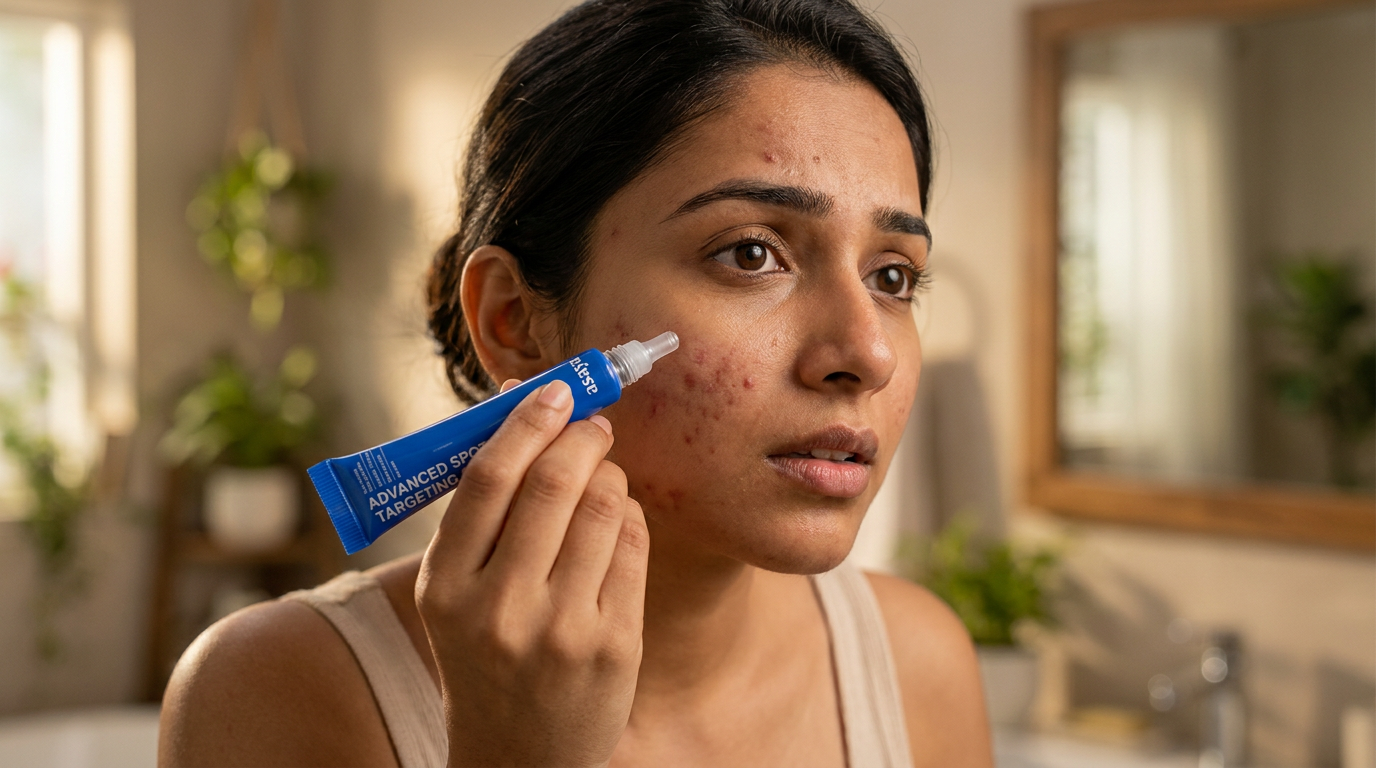
A leave-on serum is where most of the real work happens. For oily or acne-prone skin specifically, the Asaya Advanced Spot Targeting Gel for Dark Spots and Acne Marks is worth knowing about. It is a lightweight gel, not a serum, which means it sits well on skin that does not love heavy textures. It uses spicule microchannels (tiny structures that help ingredients penetrate deeper) to deliver the MelaMe Complex and Alpha Arbutin deeper into the skin, which is particularly useful for stubborn post-breakout PIH. Most people see visible fading in about 14 days with consistent use.
Acne-prone skin still needs hydration. Skipping moisturiser because your skin feels oily often backfires, leading to more oil production and more breakouts. The Asaya Even Evermore Creme is a barrier-repair moisturiser that also contains Alpha Arbutin and the MelaMe Complex, so it is fading pigment while it hydrates. It works for all skin types and can be used morning and night.
Dark spots take time to form, so they take a little time to fade too. With a consistent routine using the right ingredients, most people start to see visible improvement in about two weeks. Deeper or older marks may take longer, sometimes six to eight weeks of daily use. The key word is consistent. Skipping days, switching products too often, or forgetting SPF will slow things down significantly. This is part of treating post-acne discoloration effectively.
It also helps to manage expectations around what fading means. The goal is not to erase every trace of a past breakout. It is to bring your skin back to a more even tone over time. That is a realistic and achievable outcome with the right approach. Effective acne marks removal takes patience.
Yes, Vitamin C is a good addition to a post-acne dark spot treatment routine. It works differently from ingredients like Alpha Arbutin or Kojic Acid, targeting oxidative stress and collagen support alongside pigment correction. The Asaya 15% Vitamin C and E Serum with Ferulic Acid combines three antioxidants that work together, making it a strong option if you are also dealing with dullness or early signs of sun damage alongside your acne marks. Just introduce it gradually if your skin is sensitive.
The Asaya Advanced Spot Targeting Serum is formulated for all skin types, including acne-prone skin, and is designed to address both active PIH and deeper, more stubborn pigmentation. It contains 5% Niacinamide, which also has anti-inflammatory properties that can help calm active breakouts while working on existing dark spots. If your skin is very reactive, start with every other day and build up from there.
If your skin is oily or combination and you are dealing with post-breakout marks, the gel format tends to work better than a serum or cream. If your skin is drier or more balanced, the serum and creme combination gives you more hydration alongside pigment correction. Asaya also offers sets like the Rapid Dark Spot Correction Set, which includes a cleanser, gel, creme, and SPF in one routine, which takes the guesswork out of building a routine from scratch.
Acne marks are one of the most common skin concerns in India, and one of the most under-addressed. Most mainstream products were not formulated with melanin-rich skin in mind, which is why so many people end up cycling through options that do not quite work. The combination that does work is consistent: melanin-inhibiting actives, gentle exfoliation, barrier support, and daily SPF.
What makes a real difference for treating post-acne discolouration on Indian skin is targeting the melanin process itself, not just the surface. That is exactly what Asaya's MelaMe Complex is designed to do. It works by breaking down excess melanin deposits into re-absorbable amino acids and inhibiting further overproduction, which means it is addressing both the existing dark spot and the likelihood of new ones forming. In clinical testing, visible results showed up within two weeks of regular use. If pigmentation from past breakouts has been bothering you, that is a good place to start.
